Roblox ban in Russia sparks protest, debate on censorship
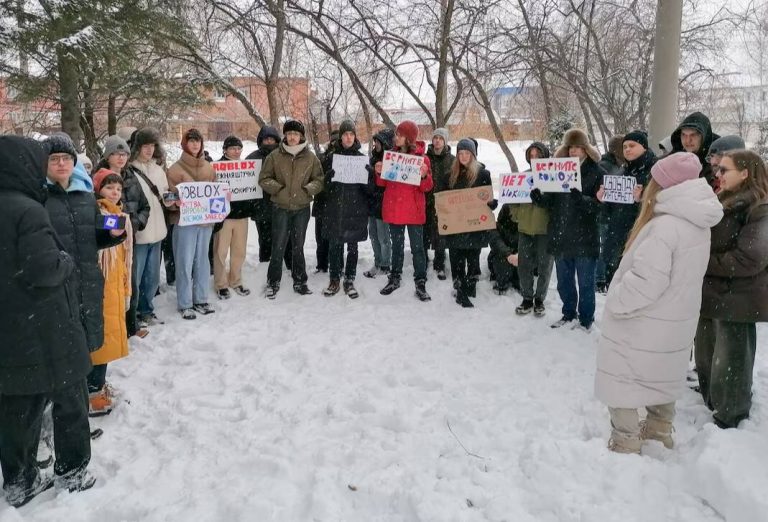
In a move that has sent shockwaves through the online gaming community, Russia has banned the popular gaming platform Roblox, sparking widespread opposition and debate in the country. The ban, which was implemented in early December, has been met with rare protests in the Siberian city of Tomsk, where hundreds of gamers and concerned citizens took to the streets to express their discontent.
The Russian government’s decision to block Roblox is not entirely surprising, given the country’s history of restricting access to social media platforms and online content. In recent years, Russia has blocked or restricted access to popular social media platforms like Snapchat, Facebook, Instagram, and YouTube, citing concerns over national security and the protection of minors. However, the ban on Roblox has struck a chord with many Russians, who see it as an overreach of government authority and an infringement on their freedom of expression.
The protests in Tomsk, which were organized by a group of local gamers and activists, were notable not only for their rarity but also for their passion and creativity. Protesters carried signs and banners bearing slogans like “Free Roblox” and “Don’t censor the internet,” and many donned Roblox-themed costumes and accessories to show their support for the platform. The protests were largely peaceful, although there were reports of minor scuffles between protesters and police.
The ban on Roblox has also sparked a heated debate over censorship, child safety, and the effectiveness of government restrictions on online content. While some have praised the Russian government for taking steps to protect children from potentially harmful or inappropriate content, others have argued that the ban is overly broad and will ultimately do more harm than good.
One of the main concerns surrounding the ban is that it will drive Roblox users underground, where they may be more vulnerable to exploitation and harm. By blocking access to the platform, the Russian government may be inadvertently pushing children towards alternative, unregulated platforms that offer similar content and features. This could ultimately put children at greater risk, rather than protecting them.
Another issue with the ban is that it is unlikely to be effective in the long term. In today’s digital age, it is relatively easy for children to bypass government restrictions on online content using virtual private networks (VPNs) and other circumvention tools. This means that determined Roblox users will likely find ways to continue accessing the platform, even if it is blocked by the government.
Furthermore, the ban on Roblox has raised questions about the role of government in regulating online content and the balance between censorship and free expression. While it is understandable that governments may want to protect children from harmful or inappropriate content, it is also important to ensure that such measures do not infringe on the rights of citizens to access information and express themselves online.
In the case of Roblox, the platform has its own built-in safety features and moderation tools, which are designed to protect users from harmful or inappropriate content. By banning the platform outright, the Russian government may be undermining these efforts and creating a power vacuum that could be exploited by malicious actors.
As the debate over the Roblox ban continues to unfold, it is clear that there are no easy answers. On the one hand, governments have a responsibility to protect children and ensure that online content is safe and suitable for all users. On the other hand, overly broad censorship measures can have unintended consequences and undermine the very principles of free expression and open communication that underpin the internet.
Ultimately, the solution to this dilemma will require a nuanced and multifaceted approach that balances the need for safety and protection with the need for freedom and creativity. By working together with online platforms, civil society, and other stakeholders, governments can develop more effective and targeted measures to protect children and promote online safety, without resorting to blanket censorship or restrictions on free expression.
As the world watches the situation in Russia unfold, it is clear that the debate over the Roblox ban is about more than just a single gaming platform. It is about the future of the internet, the role of government in regulating online content, and the balance between safety, freedom, and creativity in the digital age.
About the Author