Roblox Ban in Russia Sparks Protest, Debate on Censorship
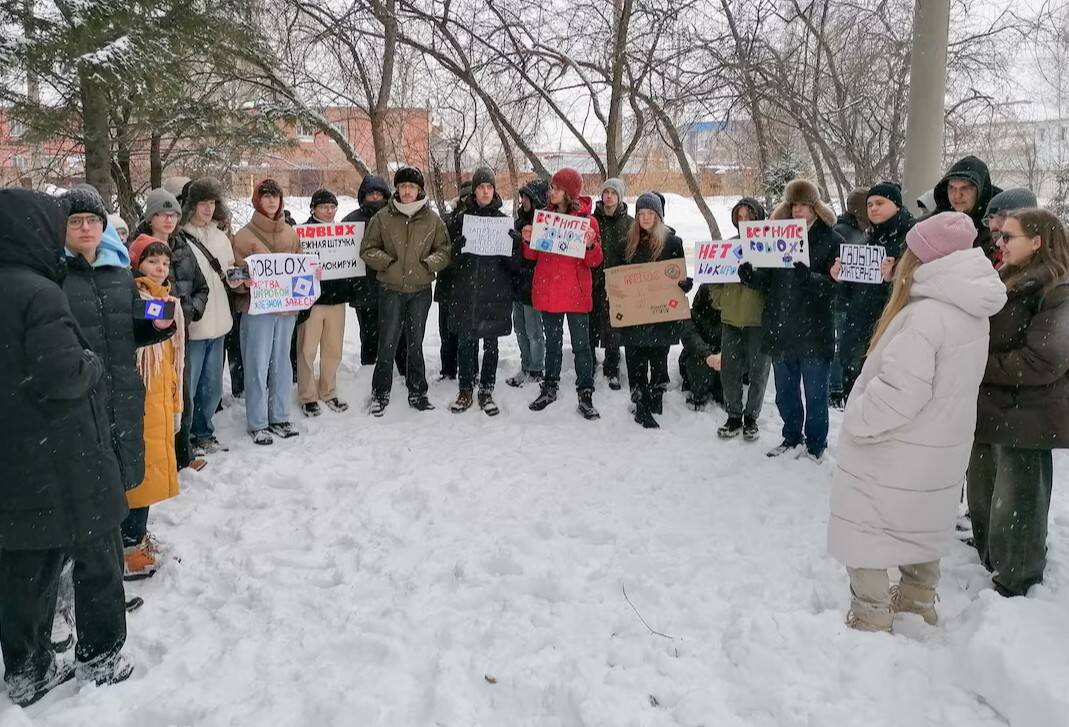
In a move that has sparked widespread controversy and opposition, Russia recently banned the popular gaming platform Roblox in early December. The ban, which was announced by the Russian government, has been met with rare protests in the Siberian city of Tomsk, where gamers and concerned citizens have taken to the streets to express their discontent. The ban on Roblox has not only ignited a heated debate on censorship but has also raised important questions about child safety, technology, and the effectiveness of censorship in the digital age.
While Russia has a history of blocking or restricting social media platforms like Snapchat, Facebook, Instagram, and YouTube, the ban on Roblox has brought a rare display of public opposition. The protests in Tomsk, which have been largely peaceful, have highlighted the growing concern among Russians about the increasing censorship of online content. The ban on Roblox has been seen by many as an overreach of government authority, with some arguing that it is an attempt to exert control over the online activities of children and young adults.
One of the primary reasons cited by the Russian government for the ban on Roblox is the need to protect children from online harm. According to officials, the platform has been used to spread inappropriate content, including violence, hate speech, and explicit material. However, critics of the ban argue that such concerns can be addressed through more targeted and nuanced measures, such as implementing stricter moderation policies and age restrictions, rather than imposing a blanket ban on the entire platform.
Moreover, the ban on Roblox has also raised questions about the effectiveness of censorship in the digital age. With the widespread availability of virtual private networks (VPNs) and other technologies that allow users to bypass online restrictions, many experts argue that such bans are ultimately futile. Children and young adults, who are often tech-savvy and familiar with online workarounds, can easily find ways to access banned platforms and content, rendering the ban ineffective.
The debate over the Roblox ban has also sparked a wider discussion about the role of government in regulating online content. While some argue that governments have a responsibility to protect children and citizens from online harm, others see such efforts as a form of censorship that infringes upon individual freedoms. The issue is complex, with valid arguments on both sides, and highlights the need for a more nuanced and balanced approach to online regulation.
In addition to the protests in Tomsk, the ban on Roblox has also sparked a lively debate on social media, with many Russians expressing their opposition to the move. Some have argued that the ban is an attack on freedom of expression and creativity, while others have expressed concern about the potential consequences for children who use the platform for educational and social purposes.
The Roblox ban is not the first instance of online censorship in Russia, and it is unlikely to be the last. In recent years, the Russian government has implemented a range of measures aimed at regulating online content, including laws requiring social media platforms to store user data within the country and restrictions on the use of VPNs. Such efforts have been met with criticism from human rights groups and technology companies, who argue that they are an attempt to exert control over the online activities of citizens and stifle free speech.
In conclusion, the ban on Roblox in Russia has sparked a rare protest and debate over censorship, child safety, and technology. While the Russian government has cited concerns about online harm as the reason for the ban, critics argue that such measures are ineffective and overly broad. The issue highlights the need for a more nuanced and balanced approach to online regulation, one that takes into account the complexities of the digital age and the need to protect individual freedoms. As the debate over online censorship continues to evolve, it is essential to consider the potential consequences of such measures and to ensure that they do not infringe upon the rights of citizens to freedom of expression and access to information.
News Source: https://www.reuters.com/business/media-telecom/russian-ban-roblox-gaming-platform-sparks-rare-protest-2025-12-14/
About the Author