NASA’s Perseverance rover completes 1st AI-planned drive on Mars
In a groundbreaking achievement, NASA’s Perseverance rover has successfully completed its first drive on Mars that was planned by artificial intelligence. The demonstration, which took place on December 8 and 10, was led by NASA’s Jet Propulsion Laboratory in Southern California. This milestone marks a significant step forward in the use of AI in space exploration, enabling more efficient and autonomous navigation of planetary surfaces.
According to NASA, the AI-planned drive was a complex operation that involved the rover navigating through a challenging terrain, avoiding obstacles, and adjusting its route in real-time. The demonstration was designed to test the capabilities of the rover’s autonomous navigation system, which uses a combination of sensors, cameras, and machine learning algorithms to map the Martian terrain and plan the most efficient route.
“This demonstration shows how far our capabilities have advanced and broadens how we will explore other worlds,” said NASA Administrator Jared Isaacman. “The use of AI in space exploration has the potential to revolutionize the way we explore the universe, enabling us to cover more ground, gather more data, and make new discoveries that will help us better understand the mysteries of the cosmos.”
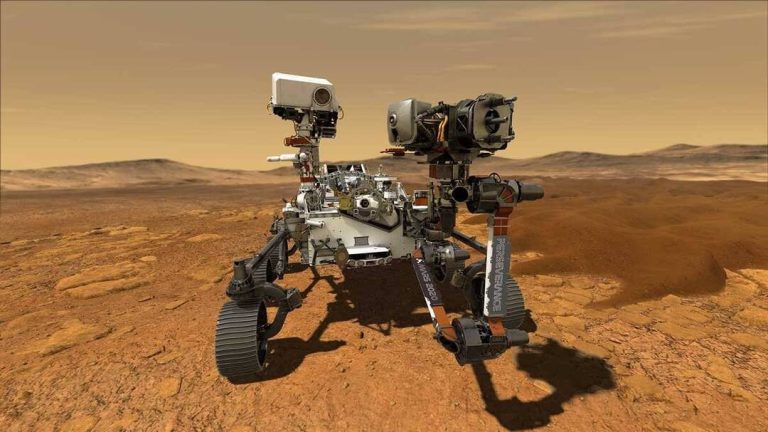
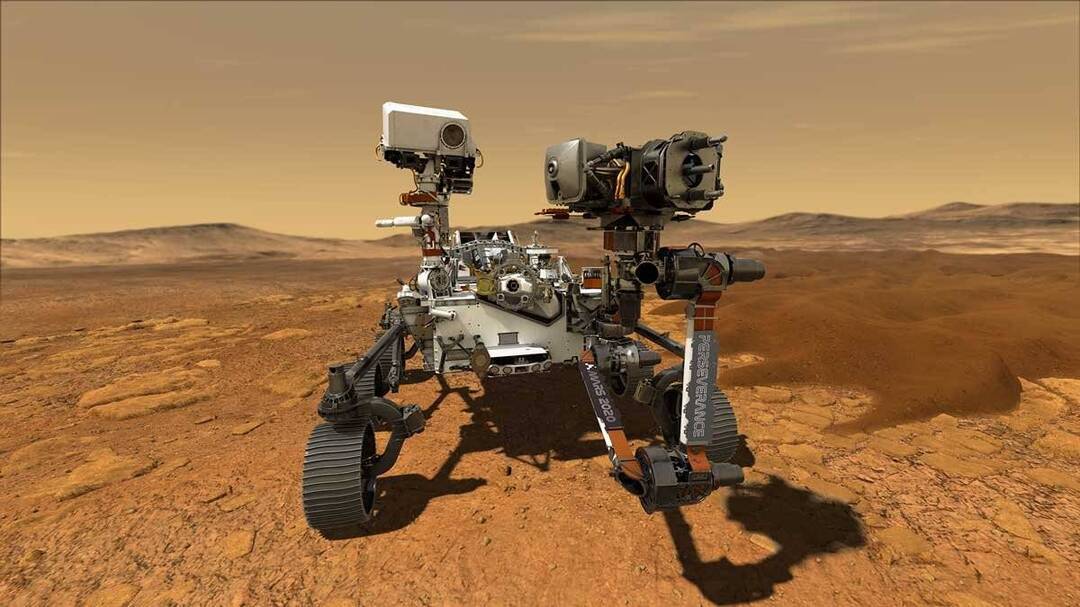
The Perseverance rover, which landed on Mars in February 2021, is equipped with a range of advanced instruments and technologies, including a robotic arm, a rock coring system, and a suite of scientific instruments designed to study the Martian geology and search for signs of past or present life. The rover’s autonomous navigation system is a key component of its operational capabilities, enabling it to navigate the Martian terrain with precision and accuracy.
The AI-planned drive demonstration was a significant test of the rover’s autonomous navigation system, which used a combination of machine learning algorithms and real-time sensor data to plan and execute the drive. The system used a range of data sources, including images from the rover’s cameras, lidar (light detection and ranging) data, and inertial measurement unit data, to build a detailed map of the Martian terrain and identify the most efficient route.
The demonstration was a complex operation that involved several stages, including planning, execution, and evaluation. During the planning stage, the AI system used machine learning algorithms to analyze the Martian terrain and identify the most efficient route. The system then executed the plan, using real-time sensor data to adjust the route and avoid obstacles. Finally, the system evaluated the results of the drive, using data from the rover’s instruments and sensors to assess the success of the demonstration.
The success of the AI-planned drive demonstration has significant implications for future space missions, which will rely increasingly on autonomous navigation systems to explore the Martian surface and beyond. The use of AI in space exploration has the potential to enable more efficient and effective exploration of planetary surfaces, allowing scientists to gather more data and make new discoveries that will help us better understand the universe.
In addition to the Perseverance rover, NASA is planning a range of future missions that will use AI and autonomous navigation systems to explore the Martian surface and beyond. These missions include the Mars Sample Return campaign, which will use a combination of robotic systems and AI to retrieve samples from the Martian surface and return them to Earth for analysis. The campaign will involve several stages, including sample collection, storage, and transport, and will rely on advanced autonomous navigation systems to ensure the success of the mission.
The use of AI in space exploration is not limited to NASA, with other space agencies and private companies also investing in the development of autonomous navigation systems. The European Space Agency, for example, is planning a range of missions that will use AI and autonomous navigation systems to explore the Martian surface and beyond. Private companies, such as SpaceX and Blue Origin, are also developing autonomous navigation systems for their spacecraft, which will enable more efficient and effective exploration of the Martian surface and beyond.
In conclusion, the success of the AI-planned drive demonstration by NASA’s Perseverance rover marks a significant milestone in the use of AI in space exploration. The demonstration shows how far our capabilities have advanced and broadens how we will explore other worlds. The use of AI in space exploration has the potential to revolutionize the way we explore the universe, enabling us to cover more ground, gather more data, and make new discoveries that will help us better understand the mysteries of the cosmos.
About the Author