NASA’s Perseverance rover completes 1st AI-planned drive on Mars
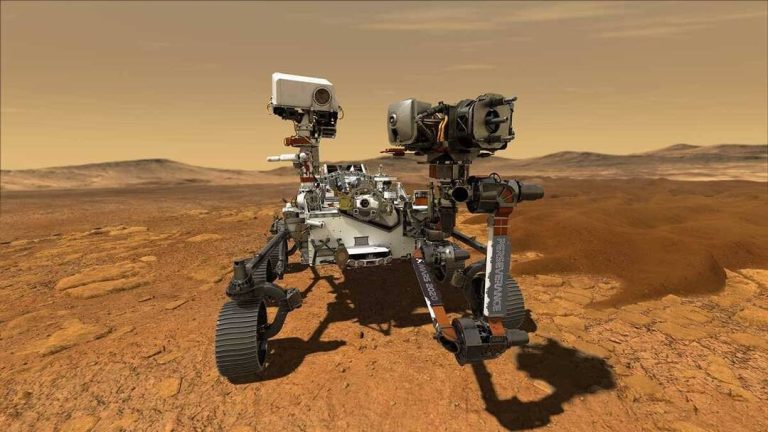
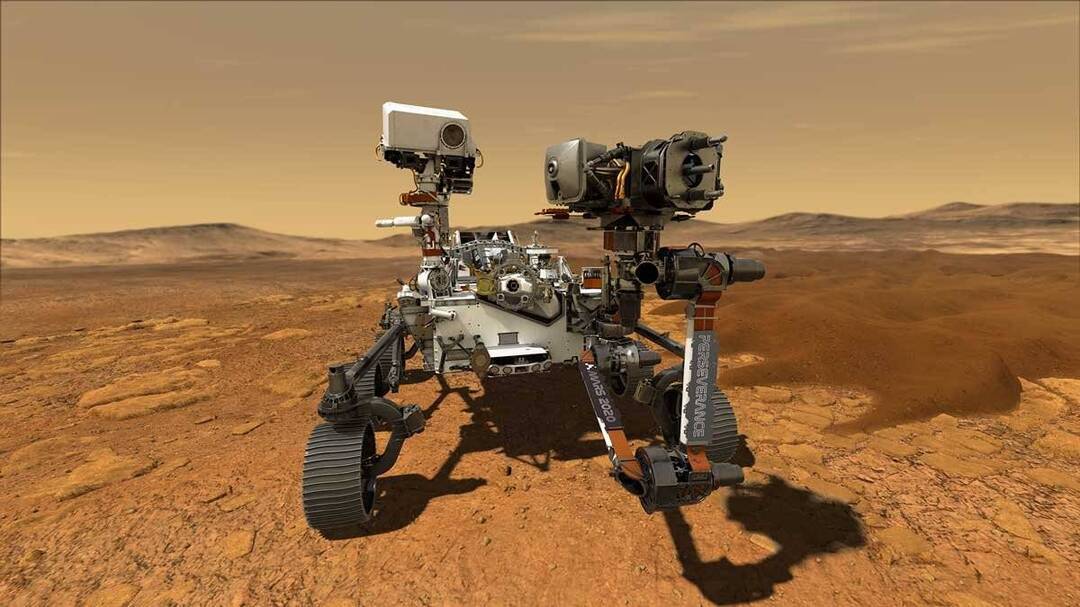
In a groundbreaking achievement, NASA’s Perseverance rover has successfully completed its first drive on Mars that was planned by artificial intelligence. The demonstration, which took place on December 8 and 10, was led by NASA’s Jet Propulsion Laboratory in Southern California. This milestone marks a significant advancement in the use of AI in space exploration and paves the way for more efficient and autonomous exploration of other worlds.
According to NASA, the AI-planned drive was a complex operation that involved navigating the rover through a challenging terrain. The rover had to avoid obstacles, climb steep slopes, and traverse rough terrain, all while being guided by an AI system that had been trained on a vast amount of data collected from previous Mars missions. The success of this demonstration shows how far NASA’s capabilities have advanced and broadens the scope of how we will explore other worlds in the future.
“This demonstration shows how far our capabilities have advanced and broadens how we will explore other worlds,” said NASA Administrator Jared Isaacman. The use of AI in space exploration has the potential to revolutionize the way we explore other planets and celestial bodies. By leveraging the power of machine learning and artificial intelligence, NASA can design more efficient and effective missions that can operate with greater autonomy and flexibility.
The Perseverance rover, which landed on Mars in February 2021, is equipped with a suite of advanced instruments and technologies that enable it to conduct a wide range of scientific experiments and exploration activities. The rover is designed to explore Jezero crater, a 45-kilometer-wide impact crater that was once home to a lake and is believed to have conditions that could have supported life. The rover’s primary mission is to search for signs of past or present life on Mars, as well as to study the planet’s geology and climate.
The use of AI in the Perseverance rover’s mission is a key aspect of NASA’s strategy to develop more autonomous and self-sufficient spacecraft. By leveraging the power of AI, NASA can design spacecraft that can operate for extended periods of time without human intervention, which is critical for deep space missions where communication with Earth is delayed or impossible. The success of the AI-planned drive on Mars demonstrates the potential of AI to enhance the capabilities of spacecraft and to enable more efficient and effective exploration of other worlds.
The demonstration also highlights the importance of collaboration and partnership in advancing space exploration. The AI-planned drive was the result of a collaborative effort between NASA’s Jet Propulsion Laboratory, the European Space Agency, and other international partners. The success of this demonstration shows how international cooperation and collaboration can drive innovation and advance our understanding of the universe.
In conclusion, NASA’s Perseverance rover has achieved a significant milestone by completing its first AI-planned drive on Mars. This demonstration shows how far our capabilities have advanced and broadens the scope of how we will explore other worlds in the future. The use of AI in space exploration has the potential to revolutionize the way we explore other planets and celestial bodies, and NASA is at the forefront of this effort. As we continue to push the boundaries of space exploration, we can expect to see more innovative applications of AI and machine learning that will enable us to explore the universe in ways that were previously unimaginable.
About the Author