NASA’s Perseverance rover completes 1st AI-planned drive on Mars
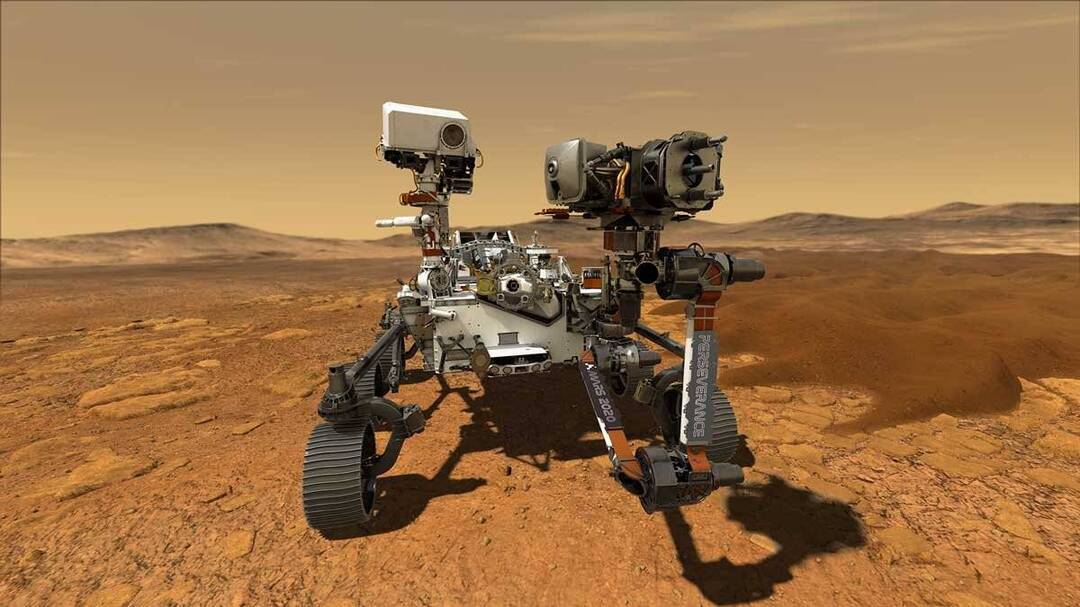
In a significant milestone for space exploration, NASA’s Perseverance rover has completed its first drive on Mars that was planned by artificial intelligence. The demonstration, which took place on December 8 and 10, was led by NASA’s Jet Propulsion Laboratory in Southern California. This achievement marks a major breakthrough in the use of AI in space exploration and paves the way for more autonomous and efficient exploration of other worlds.
According to NASA, the AI-planned drive was a complex operation that involved navigating the rover through a challenging terrain on Mars. The AI system, which was trained on a vast amount of data from previous Mars missions, was able to analyze the terrain and plan a safe and efficient route for the rover. The drive was approximately 100 meters long and took several hours to complete.
“This demonstration shows how far our capabilities have advanced and broadens how we will explore other worlds,” NASA Administrator Jared Isaacman said. “The use of AI in space exploration is a game-changer, and we are excited to see the potential it holds for future missions.”
The Perseverance rover, which landed on Mars in February 2021, is equipped with a range of advanced instruments and technologies, including a robust AI system. The rover’s AI system is designed to analyze data from its instruments and sensors, and make decisions in real-time to ensure the safe and efficient operation of the rover.
The AI-planned drive on Mars is a significant achievement for several reasons. Firstly, it demonstrates the ability of AI systems to analyze complex data and make decisions in real-time, which is critical for space exploration. Secondly, it shows that AI systems can be used to plan and execute complex operations, such as driving a rover on another planet. Finally, it highlights the potential of AI to enhance the efficiency and autonomy of space missions, which is essential for exploring other worlds.
The use of AI in space exploration is not new, but it has gained significant momentum in recent years. NASA and other space agencies have been investing heavily in AI research and development, with a focus on applying AI to space missions. The Perseverance rover’s AI-planned drive on Mars is a significant milestone in this effort, and it demonstrates the potential of AI to transform the way we explore other worlds.
One of the key benefits of using AI in space exploration is its ability to analyze vast amounts of data quickly and efficiently. Space missions generate enormous amounts of data, which can be difficult to analyze and interpret. AI systems can help to process and analyze this data, providing valuable insights and recommendations for mission operators.
Another benefit of using AI in space exploration is its ability to make decisions in real-time. Space missions often require quick decisions to be made in response to changing circumstances, such as a sudden change in weather or a technical issue with the spacecraft. AI systems can help to make these decisions, using data from sensors and instruments to inform their choices.
The Perseverance rover’s AI-planned drive on Mars is also significant because it demonstrates the potential of AI to enhance the autonomy of space missions. Autonomy is critical for space exploration, as it allows spacecraft to operate independently and make decisions without human intervention. This is essential for exploring other worlds, where communication with Earth can be delayed or disrupted.
In addition to its AI-planned drive, the Perseverance rover has been conducting a range of scientific experiments on Mars. The rover is equipped with a range of instruments, including a rock corer, a radar system, and a suite of cameras. These instruments have been used to study the geology and composition of Mars, providing valuable insights into the planet’s history and evolution.
The Perseverance rover’s mission on Mars is scheduled to last for several years, during which time it will conduct a range of scientific experiments and explore different regions of the planet. The rover’s AI system will play a critical role in this mission, helping to plan and execute complex operations and ensuring the safe and efficient operation of the rover.
In conclusion, NASA’s Perseverance rover has completed its first drive on Mars that was planned by artificial intelligence. This achievement marks a significant milestone in the use of AI in space exploration and demonstrates the potential of AI to transform the way we explore other worlds. The use of AI in space exploration has the potential to enhance the efficiency and autonomy of space missions, and to provide valuable insights into the composition and evolution of other planets.
As NASA and other space agencies continue to invest in AI research and development, we can expect to see even more significant achievements in the use of AI in space exploration. The Perseverance rover’s AI-planned drive on Mars is just the beginning, and it highlights the exciting potential of AI to enhance our understanding of the universe.
About the Author