NASA’s Perseverance rover completes 1st AI-planned drive on Mars
In a groundbreaking achievement, NASA’s Perseverance rover has completed its first drive on Mars that was planned by artificial intelligence. The demonstration, which took place on December 8 and 10, was led by NASA’s Jet Propulsion Laboratory in Southern California. This milestone marks a significant advancement in the use of AI in space exploration and paves the way for more efficient and autonomous operations on other planets.
According to NASA, the AI-planned drive was a complex process that involved the use of advanced algorithms and machine learning techniques. The rover’s onboard computer system, which is equipped with AI software, analyzed the Martian terrain and planned the most efficient route for the rover to take. The AI system took into account various factors such as the rover’s power consumption, communication with Earth, and the safety of the rover.
The demonstration was a huge success, with the Perseverance rover completing the AI-planned drive without any issues. The rover traveled a total distance of approximately 100 meters, navigating through a challenging terrain that included rocky outcrops and sandy dunes. The AI system successfully avoided obstacles and found the safest and most efficient route for the rover to take.
“This demonstration shows how far our capabilities have advanced and broadens how we will explore other worlds,” NASA Administrator Jared Isaacman said. “The use of AI in space exploration is a game-changer, and we are excited to see the impact it will have on our future missions.”
The use of AI in space exploration is not new, but the Perseverance rover’s AI-planned drive marks a significant milestone in the development of autonomous systems for planetary exploration. The success of this demonstration paves the way for more advanced AI systems to be used in future missions, enabling spacecraft to make decisions in real-time and operate more efficiently.
One of the key benefits of using AI in space exploration is the ability to reduce the communication delay between Earth and the spacecraft. Currently, it can take anywhere from a few minutes to several hours for commands to be transmitted from Earth to a spacecraft on Mars. With AI, the spacecraft can make decisions in real-time, without the need for human intervention. This enables the spacecraft to respond quickly to changing situations and makes it more efficient in its operations.
The Perseverance rover’s AI-planned drive also demonstrates the potential for autonomous systems to be used in future missions to other planets. For example, a rover equipped with AI could be used to explore the surface of the Moon or even travel to distant planets like Jupiter’s moon Europa. The use of AI would enable the spacecraft to navigate through unfamiliar terrain, avoid obstacles, and make decisions in real-time.
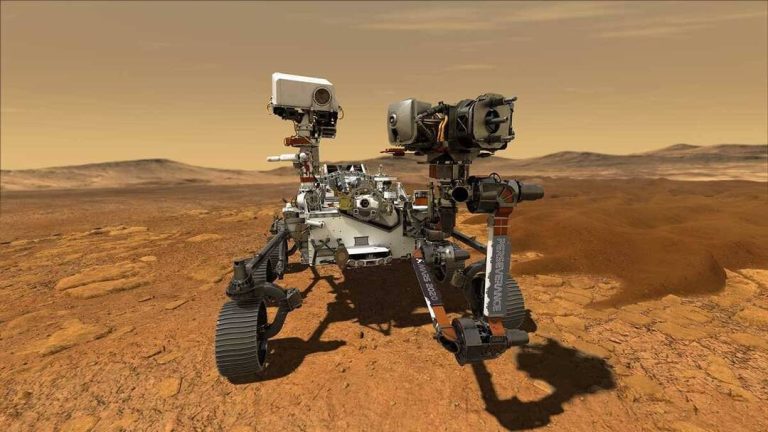
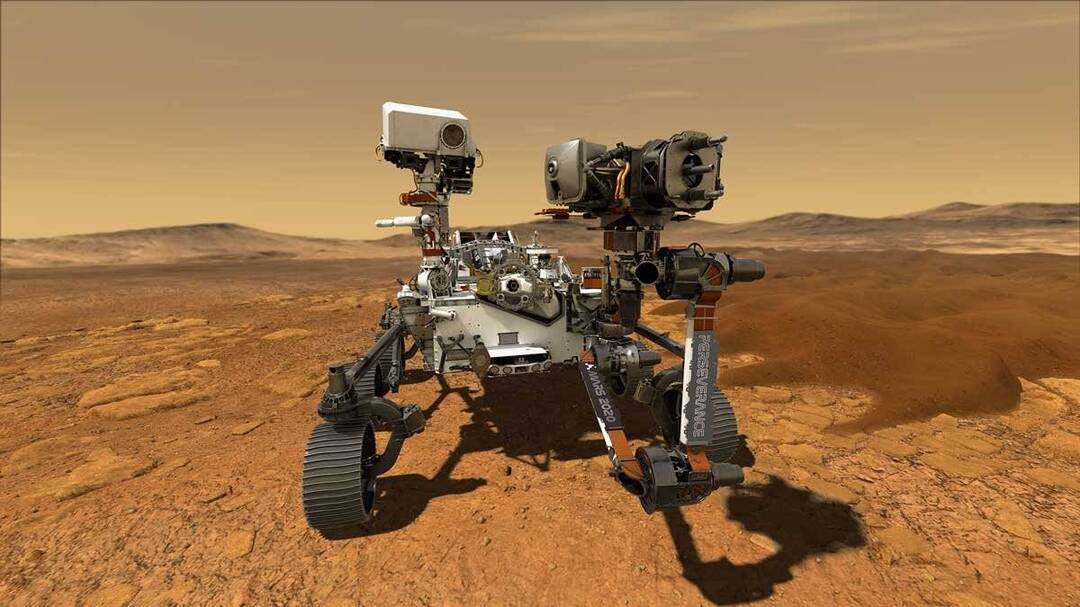
In addition to the use of AI, the Perseverance rover is also equipped with a range of advanced instruments and technologies. The rover is designed to search for signs of past or present life on Mars, and is equipped with instruments such as a rock corer, a radar system, and a suite of cameras. The rover is also equipped with a sample collection system, which will be used to collect and store samples of Martian rock and soil for possible return to Earth on a future mission.
The success of the Perseverance rover’s AI-planned drive is a testament to the ingenuity and expertise of the team at NASA’s Jet Propulsion Laboratory. The team has worked tirelessly to develop and test the AI system, and their efforts have paid off with this groundbreaking achievement.
As NASA continues to push the boundaries of space exploration, the use of AI is likely to play an increasingly important role. The success of the Perseverance rover’s AI-planned drive is just the beginning, and we can expect to see more advanced AI systems being used in future missions. With the help of AI, NASA will be able to explore the universe more efficiently and effectively, and make new discoveries that will help us better understand the cosmos.
In conclusion, the Perseverance rover’s AI-planned drive is a significant achievement that marks a new era in space exploration. The use of AI in space exploration is a game-changer, and we can expect to see more advanced AI systems being used in future missions. As NASA continues to push the boundaries of space exploration, the use of AI will play an increasingly important role in enabling the agency to explore the universe more efficiently and effectively.
About the Author