NASA’s Perseverance rover completes 1st AI-planned drive on Mars
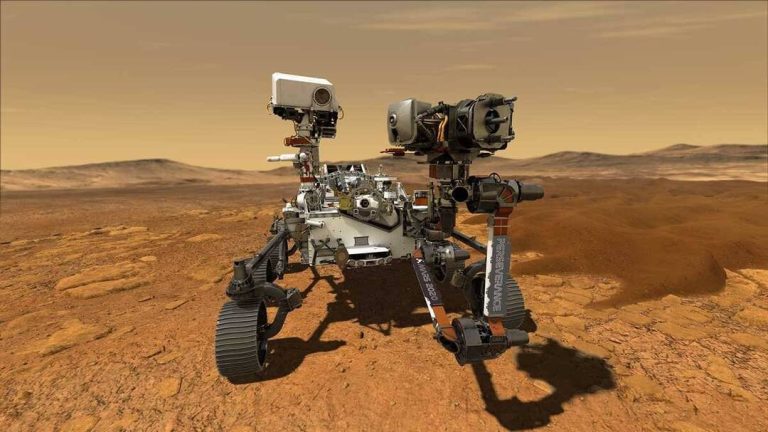
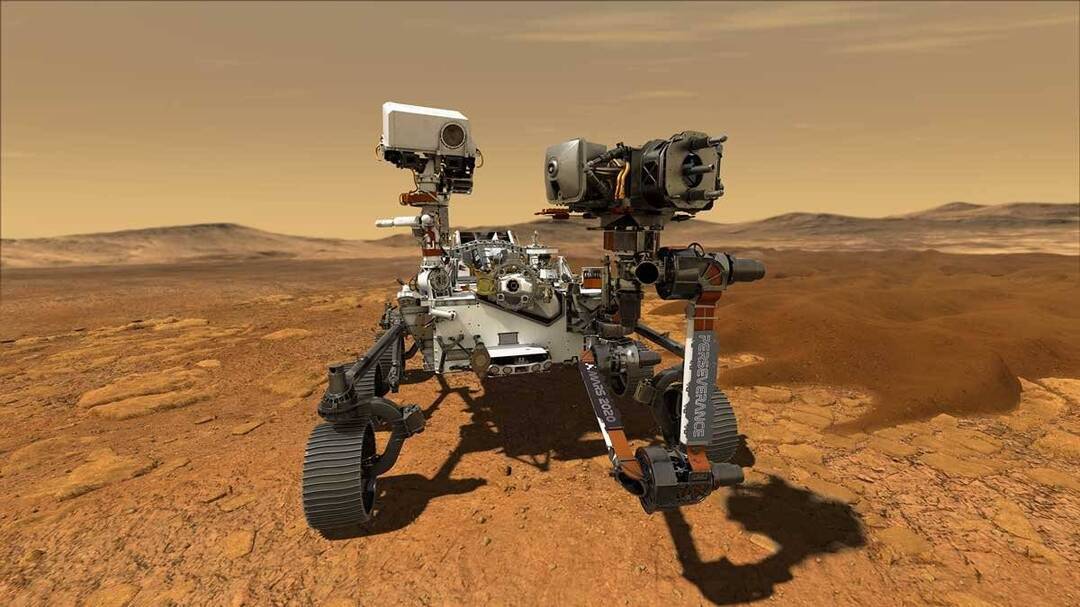
In a groundbreaking achievement, NASA’s Perseverance rover has successfully completed its first drive on Mars that was planned by artificial intelligence. This significant milestone marks a major step forward in the exploration of the Red Planet and paves the way for more autonomous and efficient space travel in the future.
The demonstration, which took place on December 8 and 10, was led by NASA’s Jet Propulsion Laboratory in Southern California. According to NASA, the AI-planned drive was a resounding success, showcasing the advanced capabilities of the Perseverance rover and the sophisticated technology that powers it.
“This demonstration shows how far our capabilities have advanced and broadens how we will explore other worlds,” NASA Administrator Jared Isaacman said. “The use of artificial intelligence in space exploration is a game-changer, and we are excited to see the impact it will have on our future missions.”
The Perseverance rover, which landed on Mars in February 2021, is equipped with a range of cutting-edge instruments and technologies designed to help scientists better understand the Martian environment and search for signs of past or present life on the planet. The rover’s AI system, which was used to plan the recent drive, is capable of analyzing vast amounts of data and making decisions in real-time, allowing it to navigate the Martian terrain with greater ease and precision.
The AI-planned drive, which covered a distance of approximately 100 meters, was designed to test the rover’s ability to navigate through challenging terrain and avoid obstacles. The drive was planned and executed using a combination of machine learning algorithms and computer vision, which enabled the rover to analyze its surroundings and make decisions based on the data it collected.
The success of the AI-planned drive is a significant milestone for NASA, as it demonstrates the agency’s ability to use artificial intelligence to control and navigate its spacecraft. This technology has the potential to revolutionize space exploration, enabling spacecraft to travel farther and more efficiently, and to make decisions in real-time without the need for human intervention.
The use of artificial intelligence in space exploration is not new, but the level of sophistication and autonomy demonstrated by the Perseverance rover is unprecedented. The rover’s AI system is capable of analyzing vast amounts of data, including images, sensor readings, and other information, to make decisions about its navigation and operations.
The implications of this technology are far-reaching, and have the potential to transform the way we explore space. With the ability to navigate and make decisions autonomously, spacecraft will be able to travel farther and more efficiently, and to respond to changing circumstances in real-time.
The success of the AI-planned drive is also a testament to the ingenuity and expertise of the team of scientists and engineers who designed and built the Perseverance rover. The rover’s advanced technology and sophisticated instruments are the result of years of research and development, and demonstrate the agency’s commitment to pushing the boundaries of space exploration.
As NASA continues to explore the Martian surface and beyond, the use of artificial intelligence will play an increasingly important role in its missions. The agency is already planning to use AI in a range of future missions, including the Artemis program, which aims to return humans to the Moon by 2024, and the Mars Sample Return mission, which will retrieve samples from the Martian surface and return them to Earth for study.
In conclusion, the completion of the first AI-planned drive on Mars is a significant milestone for NASA and a major step forward in the exploration of the Red Planet. The use of artificial intelligence in space exploration has the potential to revolutionize the way we travel through space, and to enable us to explore more efficiently and effectively. As NASA continues to push the boundaries of space exploration, the use of AI will play an increasingly important role in its missions, and will help to shape the future of space travel.
About the Author