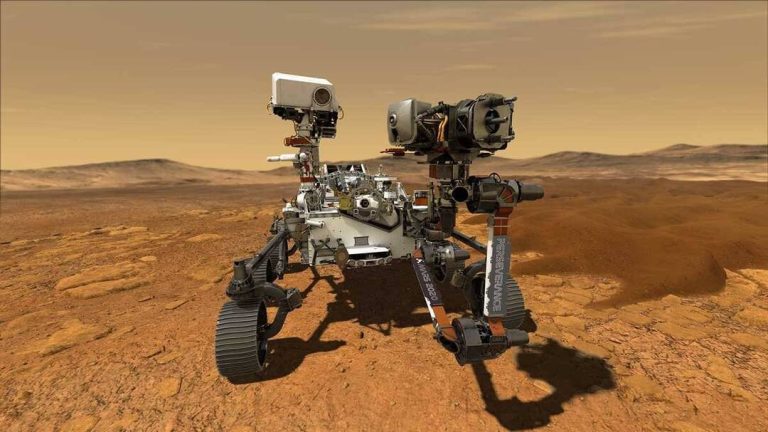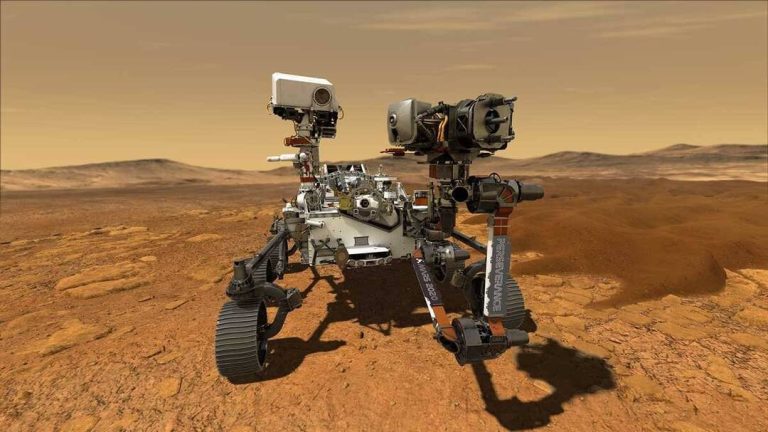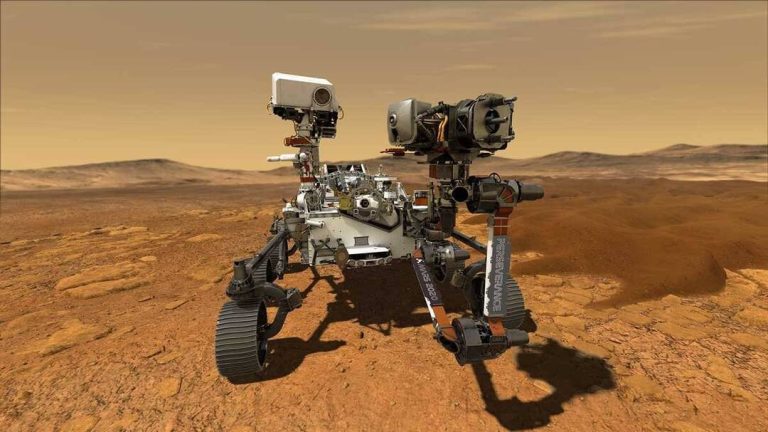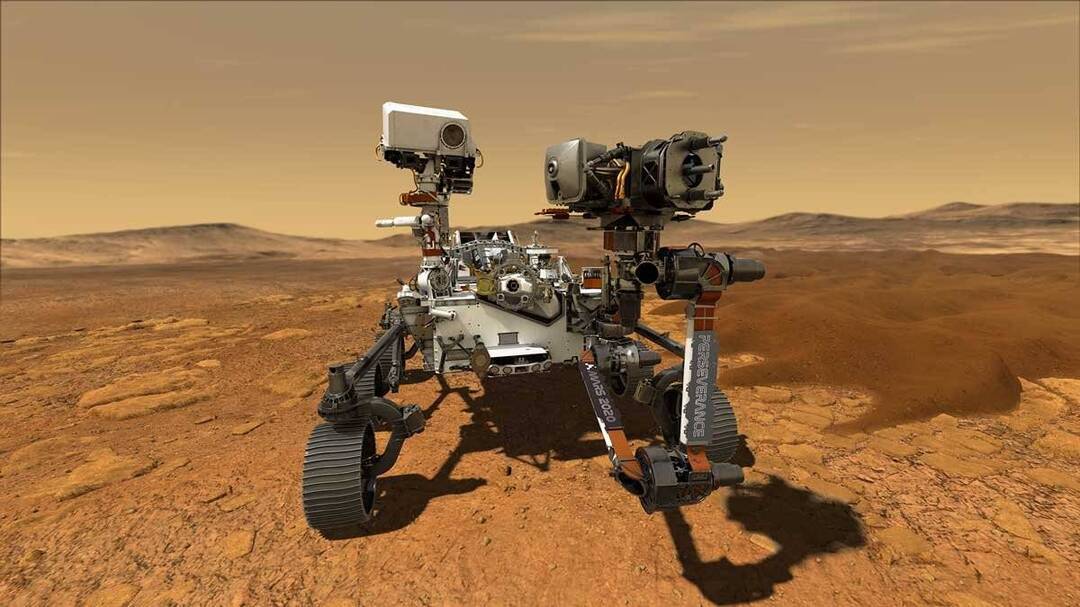
NASA’s Perseverance rover completes 1st AI-planned drive on Mars
In a groundbreaking achievement, NASA’s Perseverance rover has successfully completed its first drive on Mars that was planned by artificial intelligence. This milestone marks a significant step forward in the exploration of the Red Planet and demonstrates the advancing capabilities of AI in space exploration. The demonstration took place on December 8 and 10, and was led by NASA’s Jet Propulsion Laboratory in Southern California.
According to NASA, the AI-planned drive was a major success, with the Perseverance rover navigating through the Martian terrain with ease and precision. The demonstration showed how AI can be used to plan and execute complex tasks on other planets, broadening the scope of space exploration. “This demonstration shows how far our capabilities have advanced and broadens how we will explore other worlds,” NASA Administrator Jared Isaacman said.
The Perseverance rover, which landed on Mars in February 2021, is equipped with a range of advanced instruments and technologies, including AI-powered systems. The rover’s primary mission is to search for signs of past or present life on Mars, as well as to study the planet’s geology and climate. The AI-planned drive is a key part of this mission, as it allows the rover to navigate through the Martian terrain with greater autonomy and flexibility.
The AI system used to plan the drive is a sophisticated software program that uses machine learning algorithms to analyze data from the rover’s instruments and sensors. The system can identify potential hazards and obstacles, such as rocks and sand dunes, and plan a safe and efficient route for the rover to follow. The AI system can also adapt to changing conditions on the Martian surface, such as shifts in the weather or unexpected terrain features.
The success of the AI-planned drive is a major milestone for NASA’s Mars Exploration Program, which aims to explore the Red Planet and search for signs of life beyond Earth. The program has already achieved a number of significant successes, including the landing of the Curiosity rover in 2012 and the discovery of water on Mars in 2015.
The use of AI in space exploration is a rapidly evolving field, with a range of potential applications and benefits. AI can be used to analyze large datasets, identify patterns and trends, and make predictions about future events. AI can also be used to control and navigate spacecraft, as well as to communicate with Earth-based teams.
In the case of the Perseverance rover, the AI system is being used to plan and execute complex tasks, such as navigating through the Martian terrain and searching for signs of life. The AI system can analyze data from the rover’s instruments and sensors, and use this data to identify potential targets for further study.
The success of the AI-planned drive on Mars is a significant step forward for NASA’s Mars Exploration Program, and demonstrates the potential of AI to enhance and expand our understanding of the Red Planet. As NASA continues to explore Mars and other destinations in the solar system, the use of AI is likely to play an increasingly important role.
In the future, NASA plans to use AI to control and navigate a range of spacecraft and robots, including the Artemis program, which aims to return humans to the Moon by 2024. The use of AI in space exploration has the potential to revolutionize our understanding of the universe, and to open up new opportunities for scientific discovery and exploration.
In conclusion, the completion of the first AI-planned drive on Mars by NASA’s Perseverance rover is a significant milestone in the exploration of the Red Planet. The demonstration shows how far our capabilities have advanced and broadens how we will explore other worlds. The use of AI in space exploration has the potential to revolutionize our understanding of the universe, and to open up new opportunities for scientific discovery and exploration.
About the Author