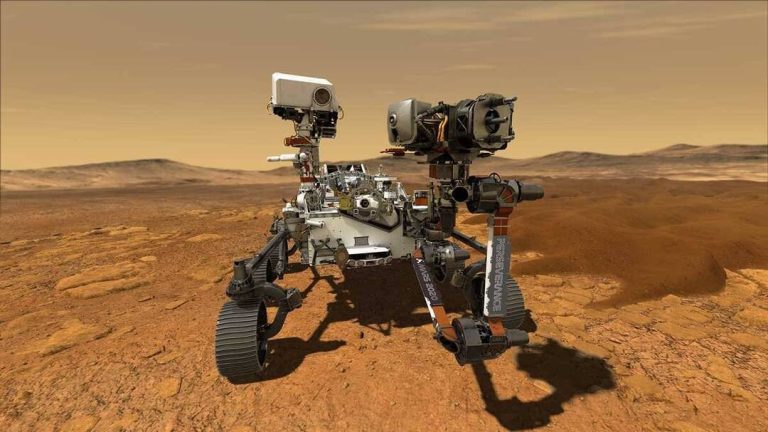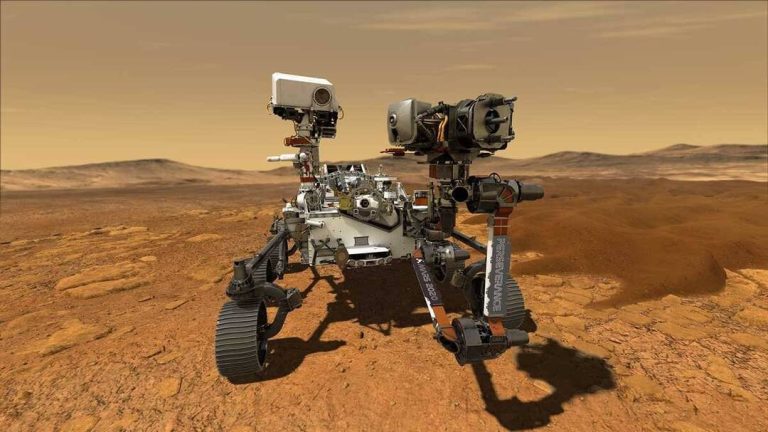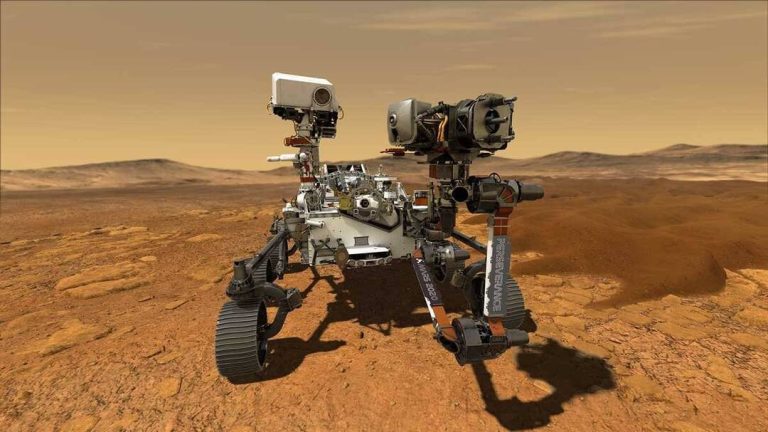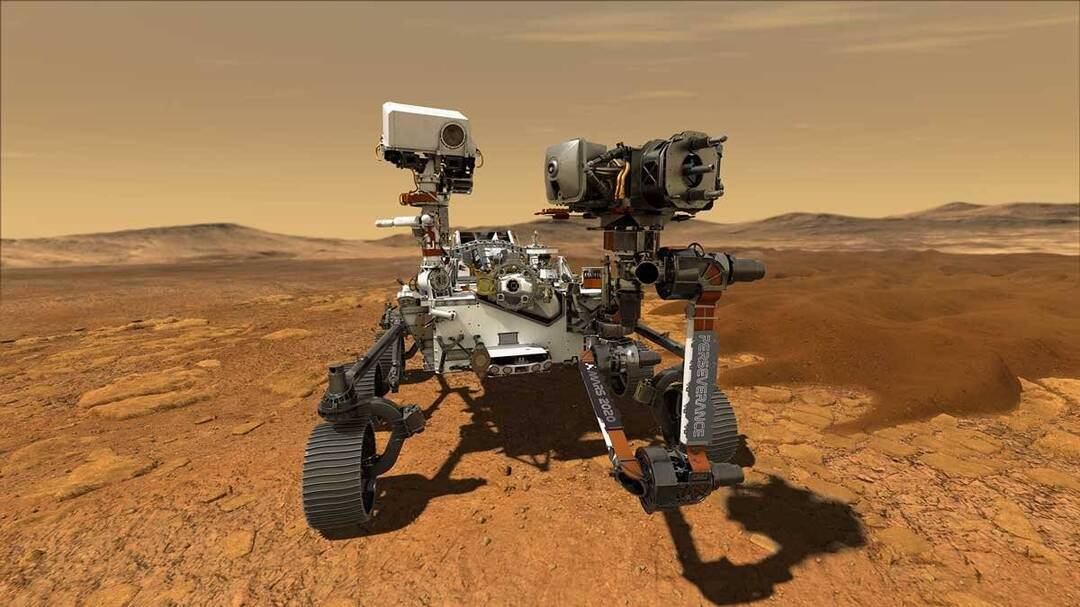
NASA’s Perseverance rover completes 1st AI-planned drive on Mars
In a groundbreaking achievement, NASA’s Perseverance rover has successfully completed its first drive on Mars that was planned by artificial intelligence. This milestone marks a significant step forward in the exploration of the Red Planet and demonstrates the advancing capabilities of AI in space exploration. The demonstration, which took place on December 8 and 10, was led by NASA’s Jet Propulsion Laboratory in Southern California.
According to NASA, the AI-planned drive was a complex operation that involved navigating the rover through a challenging terrain. The rover had to avoid obstacles, climb steep slopes, and traverse rough terrain, all while being controlled by an AI system. The success of this demonstration shows that AI can be trusted to make decisions and plan routes for the rover, freeing up human operators to focus on more complex tasks.
“This demonstration shows how far our capabilities have advanced and broadens how we will explore other worlds,” NASA Administrator Jared Isaacman said. “The use of AI in space exploration is a game-changer, and we are excited to see the possibilities that it holds for future missions.”
The Perseverance rover is equipped with a suite of advanced instruments and technologies, including a sophisticated AI system that enables it to navigate and explore the Martian terrain. The rover’s AI system uses a combination of sensors, cameras, and mapping technologies to build a detailed picture of its surroundings and plan its route accordingly.
The AI-planned drive was a complex operation that involved several stages. First, the rover’s AI system created a detailed map of the terrain, using data from its cameras and sensors to identify obstacles and hazards. Then, the AI system planned a route that avoided these obstacles and ensured the rover’s safety. Finally, the rover executed the planned route, using its wheels and navigation system to traverse the terrain.
The success of the AI-planned drive is a significant achievement for NASA’s Perseverance rover team. The team has been working tirelessly to develop and test the rover’s AI system, and the demonstration shows that their hard work has paid off. The use of AI in space exploration has the potential to revolutionize the way we explore other worlds, enabling rovers and spacecraft to operate more autonomously and make decisions in real-time.
The Perseverance rover is part of NASA’s Mars 2020 mission, which aims to explore the Martian surface and search for signs of past or present life on the Red Planet. The rover is equipped with a suite of scientific instruments, including a rock analyzer, a radar system, and a sample collection system. The rover’s findings will help scientists to better understand the Martian geology and search for evidence of life on the planet.
The use of AI in space exploration is not limited to the Perseverance rover. NASA is also using AI in other areas, such as spacecraft navigation, communication systems, and data analysis. AI has the potential to revolutionize the way we explore space, enabling spacecraft and rovers to operate more autonomously and make decisions in real-time.
In conclusion, the completion of the first AI-planned drive on Mars is a significant achievement for NASA’s Perseverance rover team. The demonstration shows that AI can be trusted to make decisions and plan routes for the rover, freeing up human operators to focus on more complex tasks. The use of AI in space exploration has the potential to revolutionize the way we explore other worlds, and we can expect to see more exciting developments in this area in the future.
As NASA continues to push the boundaries of space exploration, the use of AI will play an increasingly important role. With its ability to process vast amounts of data, make decisions in real-time, and navigate complex terrain, AI is an essential tool for any space mission. The success of the Perseverance rover’s AI-planned drive is just the beginning, and we can expect to see more exciting developments in this area in the years to come.
About the Author