NASA’s Perseverance rover completes 1st AI-planned drive on Mars
In a groundbreaking achievement, NASA’s Perseverance rover has successfully completed its first drive on Mars that was planned by artificial intelligence. This milestone marks a significant advancement in the use of AI in space exploration and paves the way for more efficient and autonomous operations on the Red Planet.
The demonstration, which took place on December 8 and 10, was led by NASA’s Jet Propulsion Laboratory in Southern California. The Perseverance rover, which has been exploring Mars since its landing in February 2021, was equipped with an AI system that was tasked with planning and executing a drive on the Martian surface.
According to NASA, the AI system used a combination of terrain mapping, route planning, and hazard avoidance algorithms to plan the drive. The system analyzed the Martian terrain, identified potential hazards, and determined the safest and most efficient route for the rover to take.
“This demonstration shows how far our capabilities have advanced and broadens how we will explore other worlds,” NASA Administrator Jared Isaacman said. “The use of AI in space exploration has the potential to revolutionize the way we explore and conduct science on other planets.”
The AI-planned drive was a complex operation that required the rover to navigate through a challenging terrain, avoiding rocks, sand dunes, and other obstacles. The rover’s AI system used real-time data from its instruments and sensors to adjust its route and ensure a safe and successful drive.
The success of the AI-planned drive demonstrates the potential for autonomous systems to play a key role in future Mars missions. By using AI to plan and execute drives, NASA can reduce the amount of time and resources required to explore the Martian surface, and increase the efficiency and productivity of its rovers.
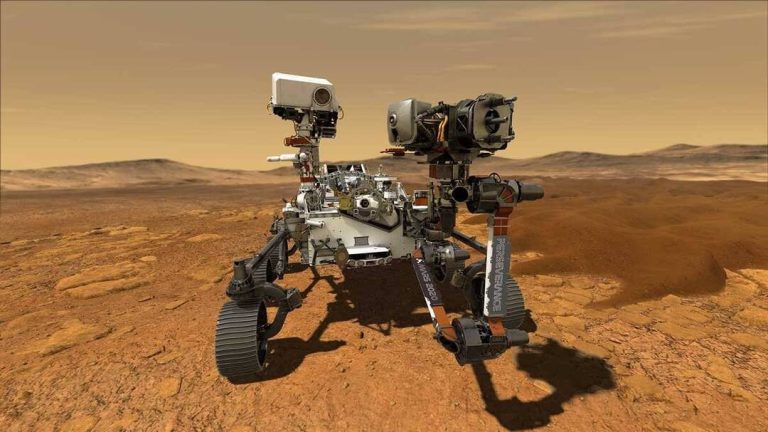
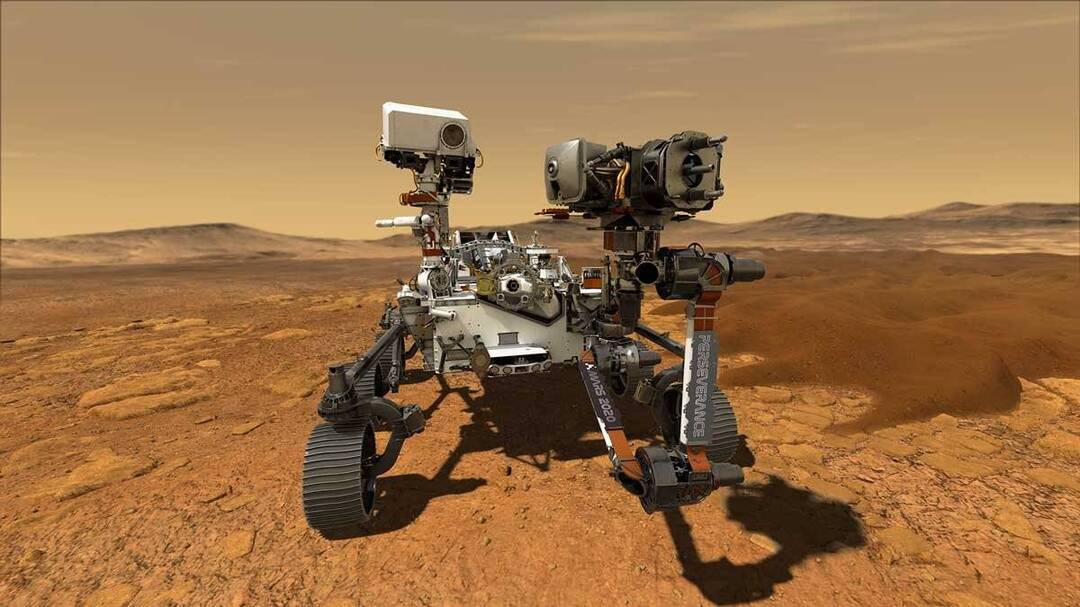
The Perseverance rover is equipped with a range of instruments and sensors that allow it to conduct scientific experiments and gather data on the Martian environment. The rover’s primary mission is to search for signs of past or present life on Mars, and to study the planet’s geology and climate.
The use of AI in space exploration is not new, but the Perseverance rover’s AI-planned drive marks a significant milestone in the development of autonomous systems for Mars exploration. NASA has been using AI and machine learning algorithms to analyze data from its Mars rovers and orbiters, and to plan and execute scientific experiments.
However, the use of AI to plan and execute drives on the Martian surface is a more complex and challenging task. The Martian terrain is harsh and unforgiving, with steep slopes, deep craters, and rocky outcrops that can pose a significant hazard to rovers.
The success of the Perseverance rover’s AI-planned drive demonstrates the potential for autonomous systems to navigate and explore the Martian surface with greater ease and efficiency. The use of AI in Mars exploration can also help to reduce the risk of accidents and improve the safety of NASA’s rovers and orbiters.
As NASA continues to explore Mars and other planets in our solar system, the use of AI and autonomous systems will play an increasingly important role. The Perseverance rover’s AI-planned drive is just the beginning of a new era in space exploration, one that will be marked by greater autonomy, efficiency, and productivity.
The future of Mars exploration is exciting and full of possibilities, and the use of AI is just one of the many technologies that will help to shape the next generation of space missions. With its advanced instruments, sophisticated sensors, and autonomous systems, the Perseverance rover is paving the way for a new era of Mars exploration, one that will take us closer to the Red Planet and reveal its secrets in greater detail than ever before.
About the Author