Indian gig economy strikes back, exposing a broken model
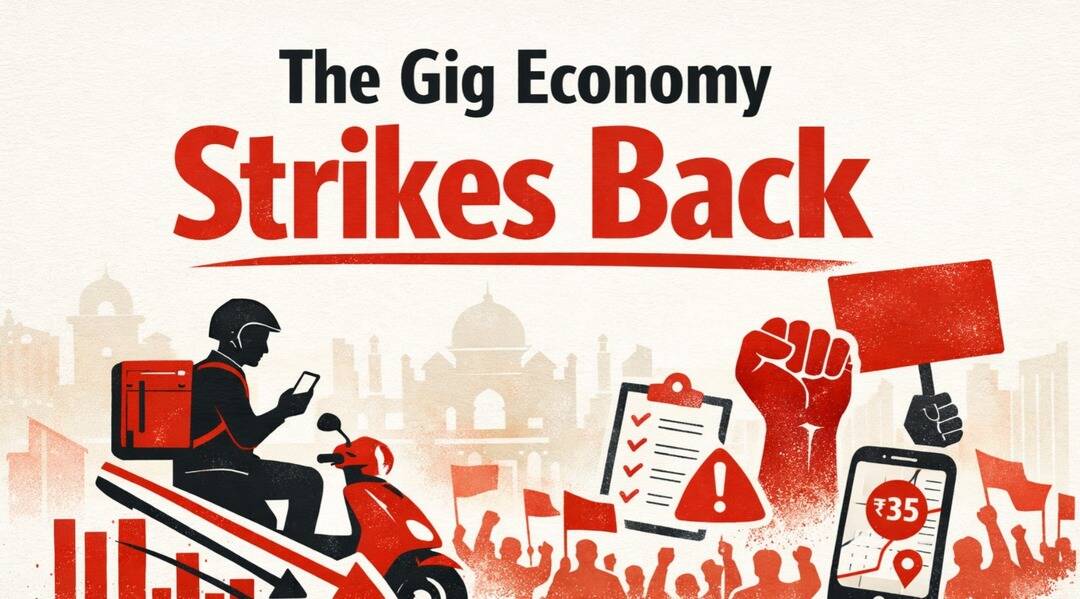
The Indian gig economy, once hailed as a game-changer for the country’s workforce, is now facing a major crisis. In December, around 40,000 delivery workers from various food delivery and e-commerce platforms joined nationwide strikes, disrupting 50-60% of orders in several cities. The workers, who are the backbone of the gig economy, cited low and unstable pay, strict app control, and weak protections as the reasons for their protest. As companies defend their growth and politicians intervene, the protests highlight a widening gap between convenience and fairness in India’s digital jobs.
The gig economy, which has grown exponentially in India over the past few years, has been touted as a solution to the country’s unemployment problem. With the rise of food delivery and e-commerce platforms, millions of Indians have found work as delivery workers, cab drivers, and freelancers. However, the reality on the ground is far from rosy. Workers are often paid minimal wages, have no job security, and are subjected to strict app control, which dictates their every move.
The recent strikes, which were organized by various worker unions and associations, brought attention to the plight of these workers. The protesters demanded better pay, more flexibility in their work schedules, and protection from unfair termination. They also demanded that the companies recognize their union and engage in collective bargaining. The strikes were successful in disrupting the operations of several platforms, including Zomato, Swiggy, and UberEats, and forced the companies to take notice of the workers’ demands.
The companies, however, have been defensive about their treatment of workers. They claim that they provide flexible work opportunities and fair pay to their workers. However, the reality is that most workers are paid on a per-delivery basis, which can be as low as Rs 10-20 per delivery. With the cost of fuel, maintenance, and other expenses, workers often end up earning less than the minimum wage. Moreover, the companies have strict control over the workers, dictating their every move through the app. Workers are often penalized for not accepting deliveries or for being late, which can affect their ratings and lead to termination.
The government, too, has been criticized for its handling of the gig economy. While the government has been keen to promote the gig economy as a solution to unemployment, it has failed to provide adequate protections to workers. The Labour Code, which was introduced in 2019, does not provide adequate protections to gig workers, who are classified as “independent contractors” rather than employees. This means that they are not entitled to benefits such as minimum wage, social security, and workers’ compensation.
The strikes have also highlighted the need for better regulation of the gig economy. The companies, which are largely unregulated, have been able to exploit workers with impunity. The government needs to step in and provide a framework for the gig economy, which includes protections for workers, fair pay, and better working conditions. The government also needs to recognize the union and engage in collective bargaining with the workers.
The protests have also raised questions about the sustainability of the gig economy model. While the model has been successful in providing convenience to consumers, it has come at a cost to workers. The model is based on exploiting workers, who are paid minimal wages and have no job security. This is unsustainable in the long term, as workers will eventually demand better pay and working conditions.
In conclusion, the Indian gig economy is at a crossroads. The recent strikes have highlighted the need for better pay, protections, and working conditions for workers. The companies need to recognize the union and engage in collective bargaining with the workers. The government needs to step in and provide a framework for the gig economy, which includes protections for workers, fair pay, and better working conditions. The sustainability of the gig economy model is also in question, as it is based on exploiting workers. As the gig economy continues to grow, it is essential that we prioritize fairness and sustainability over convenience and profit.
The Indian gig economy’s strike is a wake-up call for the companies, government, and consumers. It highlights the need for a more sustainable and equitable model, which prioritizes the well-being of workers. As the country continues to grow and develop, it is essential that we create an economy that is fair and just for all.
News Source: https://ascendants.in/industry_events/indian-gig-economy-strikes-platforms-policy/
About the Author