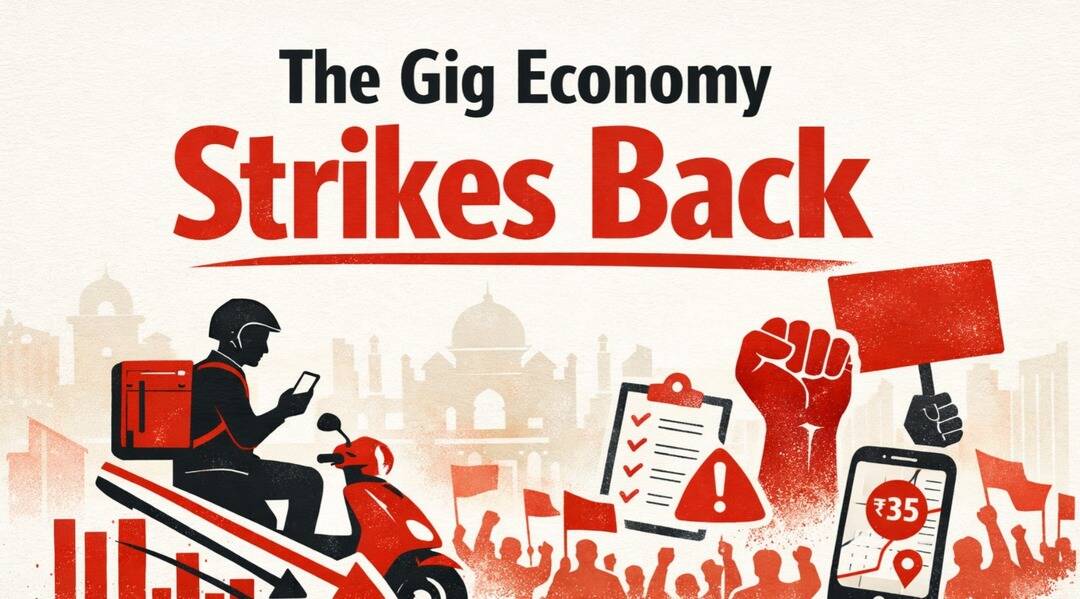
Indian gig economy strikes back, exposing a broken model
The Indian gig economy has been thriving in recent years, with millions of workers signing up to work as delivery personnel, ride-hailing drivers, and other freelance jobs. However, beneath the surface of this convenience-driven economy, a different story has been unfolding. In December, around 40,000 delivery workers joined nationwide strikes, disrupting 50–60% of orders in several cities. The workers cited low and unstable pay, strict app control, and weak protections as the reasons behind their protests. As companies defend their growth and politicians intervene, the strikes have highlighted a widening gap between convenience and fairness in India’s digital jobs.
The gig economy, which has been touted as a revolutionary force in the job market, has been criticized for its treatment of workers. The workers, who are classified as independent contractors rather than employees, are often denied basic benefits such as minimum wage, paid time off, and job security. The platforms, on the other hand, have been accused of exploiting their workers, using algorithms to control their earnings and dictating their working conditions.
The recent strikes, which were organized by various worker unions and associations, have brought attention to the plight of gig workers in India. The workers, who are mostly migrants from rural areas, have been struggling to make ends meet due to the low pay and unstable working conditions. Many of them have reported earning less than the minimum wage, despite working long hours and meeting the targets set by the platforms.
One of the main issues that the workers have been facing is the strict app control, which dictates their working conditions and earnings. The algorithms used by the platforms determine how many orders a worker can receive, how much they can earn, and even how they are rated by customers. The workers have reported feeling like they are being treated like machines, with no control over their work or their lives.
Another issue that the workers have been facing is the lack of protections and benefits. As independent contractors, they are not entitled to basic benefits such as health insurance, paid time off, or job security. This has left many of them vulnerable to exploitation and abuse, with no recourse to seek justice.
The strikes have also highlighted the widening gap between convenience and fairness in India’s digital jobs. The gig economy has been touted as a convenient and flexible way to work, but the reality is that it has created a class of workers who are exploited and marginalized. The platforms, which have been accused of prioritizing growth over fairness, have been defending their models, claiming that they provide opportunities for workers to earn a living.
However, the workers have been arguing that the convenience and flexibility come at a cost. They have been pointing out that the platforms are making huge profits, while they are struggling to make ends meet. The workers have also been demanding better pay, benefits, and working conditions, which they claim are essential for their dignity and well-being.
The government has also been intervening in the issue, with some politicians calling for greater regulation of the gig economy. The government has been under pressure to address the concerns of the workers, who have been arguing that they need better protections and benefits. However, the platforms have been resisting any attempts to regulate their models, claiming that it will stifle innovation and growth.
The strikes have also raised questions about the future of work in India. As the gig economy continues to grow, it is likely that more and more workers will be classified as independent contractors, rather than employees. This has raised concerns about the impact on the labor market, with some arguing that it will lead to a decline in job security and benefits.
In conclusion, the Indian gig economy strikes have exposed a broken model that prioritizes growth over fairness. The workers, who are the backbone of the economy, have been struggling to make ends meet due to low pay, strict app control, and weak protections. As companies defend their models and politicians intervene, it is clear that there is a need for greater regulation and protection of workers’ rights. The strikes have highlighted the widening gap between convenience and fairness in India’s digital jobs, and it is time for the government and the platforms to take action to address the concerns of the workers.
The Indian gig economy is at a crossroads, and it is time for a change. The workers, who have been fighting for their rights, deserve better pay, benefits, and working conditions. The government and the platforms must work together to create a more equitable and sustainable model, one that prioritizes fairness and dignity over convenience and growth.
As the debate around the gig economy continues, it is essential to remember that the workers are not just statistics or algorithms, but human beings who deserve to be treated with dignity and respect. The Indian gig economy strikes have sent a clear message that the current model is broken, and it is time for a change. The question is, will the government and the platforms listen to the workers and create a more equitable and sustainable model, or will they continue to prioritize growth over fairness?
News Source: https://ascendants.in/industry_events/indian-gig-economy-strikes-platforms-policy/
About the Author