Indian gig economy strikes back, exposing a broken model
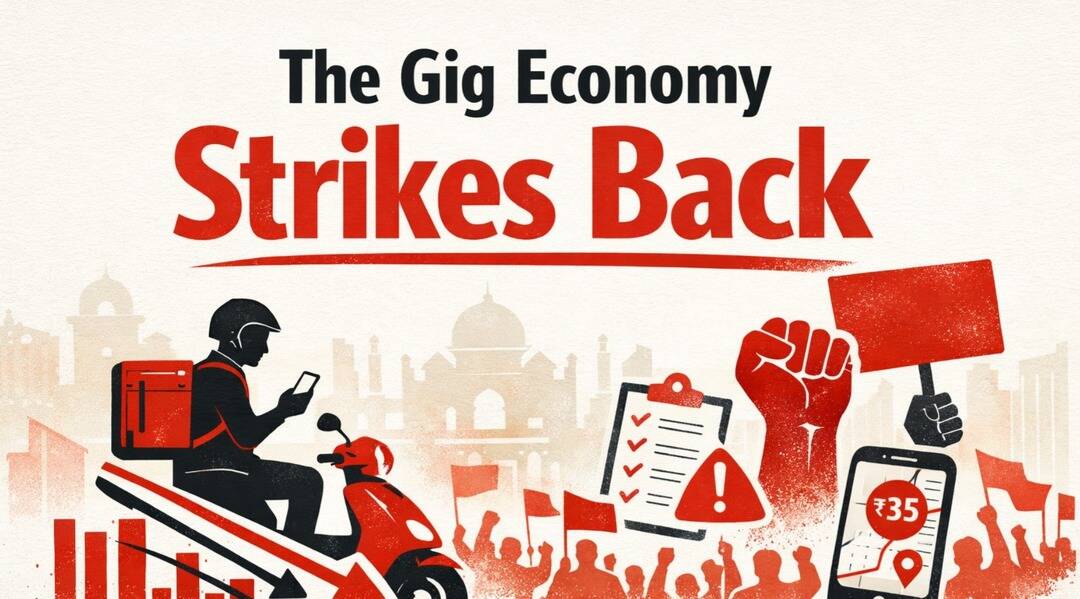
The Indian gig economy has been growing at an unprecedented rate, with millions of workers joining the sector in recent years. However, beneath the surface of this rapid growth lies a more complex and concerning reality. In December, around 40,000 delivery workers joined nationwide strikes, disrupting 50–60% of orders in several cities. The workers, who are the backbone of the gig economy, cited low and unstable pay, strict app control, and weak protections as the reasons for their protest.
The strike, which was one of the largest of its kind, highlighted the widening gap between convenience and fairness in India’s digital jobs. The gig economy, which promises flexibility and autonomy, has been criticized for exploiting workers and denying them basic rights. The strike was a clear indication that the workers are no longer willing to accept the status quo and are demanding better working conditions, fair pay, and greater protections.
The Indian gig economy is dominated by a few large players, including Zomato, Swiggy, and Ola. These companies have built their business models around the concept of convenience, offering customers a wide range of services at the click of a button. However, the convenience comes at a cost, with workers often bearing the brunt of the pressure to deliver quickly and efficiently.
The workers who participated in the strike complained of low pay, with many earning as little as ₹15,000-20,000 per month. This is despite the fact that the companies they work for are valued in the billions of dollars. The workers also complained of strict app control, with algorithms dictating every aspect of their work, from the routes they take to the time they have to deliver orders. This has led to a situation where workers are treated as nothing more than machines, with little autonomy or control over their work.
The strike has also highlighted the lack of protections for gig workers in India. Unlike traditional employees, gig workers are not entitled to benefits such as health insurance, paid leave, or pension. They are also not protected by labor laws, which makes them vulnerable to exploitation. The workers who participated in the strike demanded greater protections, including the right to form unions and negotiate with companies.
The response of the companies to the strike has been mixed. While some have acknowledged the concerns of the workers and promised to address them, others have defended their business models and claimed that they are providing opportunities for workers to earn a living. The politicians have also intervened, with some calling for greater regulation of the gig economy and others defending the companies and their business models.
The strike has sparked a wider debate about the future of work in India and the role of the gig economy in it. While the gig economy has created new opportunities for workers, it has also raised concerns about exploitation, inequality, and the lack of protections. As the Indian economy continues to grow and evolve, it is essential that policymakers and companies prioritize the welfare of workers and ensure that they are treated fairly and with dignity.
The Indian gig economy is not unique in its problems. Gig economies around the world are facing similar challenges, from low pay and lack of protections to strict app control and exploitation. However, the Indian gig economy is distinct in its scale and scope, with millions of workers participating in the sector. The strike has highlighted the need for a more nuanced and balanced approach to the gig economy, one that prioritizes the welfare of workers while also promoting innovation and growth.
In conclusion, the Indian gig economy strike has exposed a broken model that prioritizes convenience over fairness. The strike has highlighted the need for greater protections, fair pay, and autonomy for workers. As the Indian economy continues to grow and evolve, it is essential that policymakers and companies prioritize the welfare of workers and ensure that they are treated fairly and with dignity. The strike is a wake-up call for the Indian gig economy, and it is essential that companies and policymakers take heed and work towards creating a more equitable and sustainable model.
The future of the Indian gig economy will depend on the ability of companies and policymakers to balance convenience and fairness. While the gig economy has created new opportunities for workers, it has also raised concerns about exploitation and inequality. As the sector continues to grow and evolve, it is essential that companies and policymakers prioritize the welfare of workers and ensure that they are treated fairly and with dignity.
The Indian gig economy strike has sparked a wider debate about the future of work in India and the role of the gig economy in it. The strike has highlighted the need for a more nuanced and balanced approach to the gig economy, one that prioritizes the welfare of workers while also promoting innovation and growth. As the Indian economy continues to grow and evolve, it is essential that policymakers and companies prioritize the welfare of workers and ensure that they are treated fairly and with dignity.
News Source: https://ascendants.in/industry_events/indian-gig-economy-strikes-platforms-policy/
About the Author