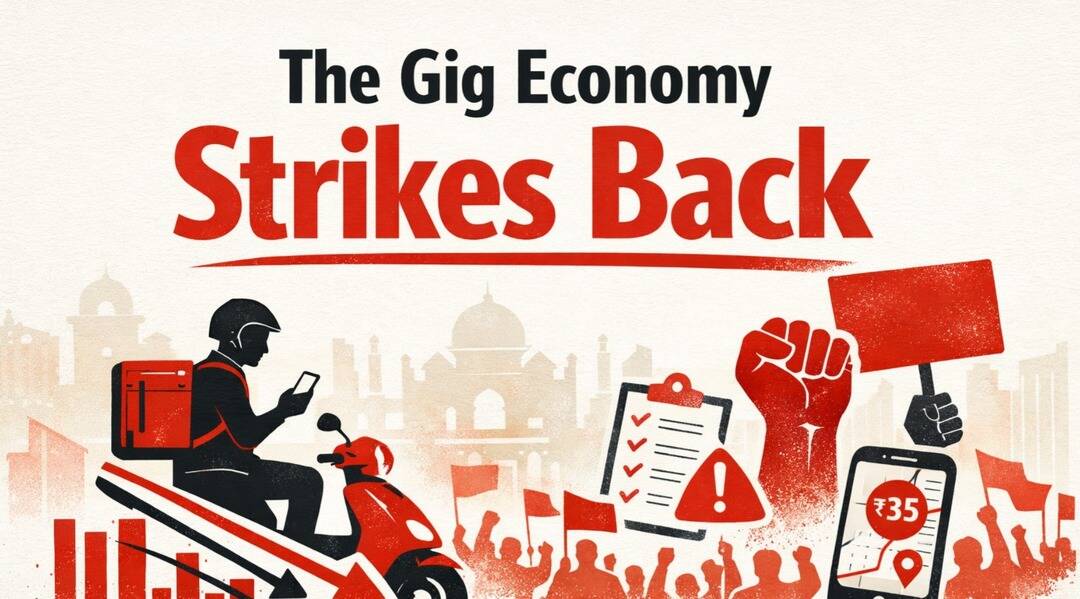
Indian gig economy strikes back, exposing a broken model
The Indian gig economy has been booming in recent years, with millions of workers signing up to work as delivery personnel, cab drivers, and other freelance jobs. However, beneath the surface of convenience and flexibility, a different story has been unfolding. In December, around 40,000 delivery workers joined nationwide strikes, disrupting 50-60% of orders in several cities. The workers, who are the backbone of the gig economy, are speaking out against low and unstable pay, strict app control, and weak protections.
The strike, which was one of the largest of its kind, highlighted the deep-seated issues that have been plaguing the gig economy in India. Workers complained of being paid meager amounts, often less than the minimum wage, and being forced to work long hours without any benefits or job security. They also spoke out against the strict control exerted by the apps, which dictate everything from the routes they take to the time they have to deliver packages.
The strike was not just about pay and working conditions, but also about the lack of protections and benefits that come with being a gig worker. Unlike traditional employees, gig workers are not entitled to benefits like health insurance, paid leave, or pension plans. They are also not protected by labor laws, which makes them vulnerable to exploitation.
As the strike gained momentum, companies like Zomato, Swiggy, and Uber, which rely heavily on gig workers, were forced to take notice. They defended their growth and business models, arguing that they provide opportunities for workers to earn a living and be their own bosses. However, the workers were not convinced, and the strike continued to gain support.
The Indian government also intervened, with politicians calling for better working conditions and protections for gig workers. The strike has highlighted the need for policy changes and regulations that can protect the rights of gig workers. The government has been under pressure to introduce laws that can regulate the gig economy and provide better working conditions for workers.
The strike has also sparked a wider debate about the nature of work in the digital age. As more and more people turn to gig work, there is a growing concern about the impact on traditional employment and the economy as a whole. The gig economy has been touted as a way to create new opportunities and increase flexibility, but it has also been criticized for perpetuating inequality and exploitation.
In India, the gig economy has grown rapidly in recent years, with millions of workers signing up to work as freelancers. The sector has been driven by the growth of e-commerce, food delivery, and ride-hailing apps, which have created new opportunities for workers to earn a living. However, the sector has also been plagued by issues like low pay, lack of benefits, and weak protections.
The strike has highlighted the need for a more nuanced approach to the gig economy, one that balances the needs of workers with the needs of companies. It has also highlighted the need for policy changes and regulations that can protect the rights of gig workers. As the Indian economy continues to grow and evolve, it is essential that the government and companies take steps to address the issues facing gig workers.
The strike has also sparked a wider conversation about the future of work in India. As the economy continues to evolve, there is a growing need for policies and regulations that can protect the rights of workers. The gig economy has the potential to create new opportunities and increase flexibility, but it also has the potential to perpetuate inequality and exploitation.
In conclusion, the Indian gig economy strike has highlighted the need for a more nuanced approach to the gig economy, one that balances the needs of workers with the needs of companies. It has also highlighted the need for policy changes and regulations that can protect the rights of gig workers. As the Indian economy continues to grow and evolve, it is essential that the government and companies take steps to address the issues facing gig workers.
The strike has shown that the gig economy is not just about convenience and flexibility, but also about fairness and justice. As the sector continues to grow, it is essential that we prioritize the needs of workers and create a more equitable and sustainable model. The Indian gig economy strike is a wake-up call for companies, policymakers, and workers, and it is essential that we take heed and work towards creating a better future for all.
Source:
https://ascendants.in/industry_events/indian-gig-economy-strikes-platforms-policy/
About the Author