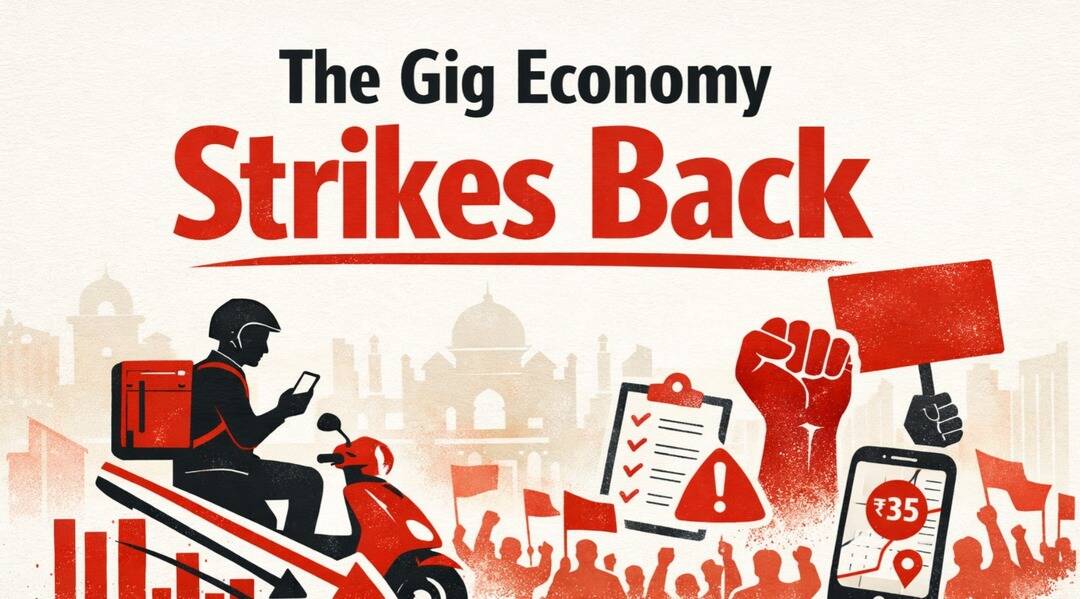
Indian gig economy strikes back, exposing a broken model
The Indian gig economy, which has been thriving in recent years, has hit a roadblock. In December, around 40,000 delivery workers joined nationwide strikes, disrupting 50–60% of orders in several cities. The workers, who are the backbone of the gig economy, cited low and unstable pay, strict app control, and weak protections as the reasons for their protests. As companies defend their growth and politicians intervene, the strikes have highlighted a widening gap between convenience and fairness in India’s digital jobs.
The gig economy, which includes companies such as Zomato, Swiggy, and Uber, has been growing rapidly in India. These companies have made it possible for people to order food, hire cabs, and perform other tasks with just a few clicks on their smartphones. However, the workers who make this convenience possible have been struggling to make ends meet. They are often classified as independent contractors, which means they are not entitled to the same benefits and protections as regular employees.
The strikes, which were organized by various worker unions and associations, brought attention to the plight of these workers. They complained about the low pay, which is often less than the minimum wage, and the lack of job security. They also complained about the strict control exerted by the companies, which can terminate their contracts at any time without notice. The workers also demanded better working conditions, including access to toilets and clean drinking water.
The companies, on the other hand, have defended their business model, saying that it provides flexibility and opportunities for workers to earn a living. They argue that the workers are not employees, but rather independent contractors who are free to choose when and how much they want to work. However, this argument has been disputed by the workers, who say that they are treated like employees, but without the benefits and protections that come with employment.
The government has also intervened in the issue, with some politicians calling for greater regulation of the gig economy. The Minister of Labor and Employment, for example, has said that the government is considering introducing new laws to protect the rights of gig workers. However, the companies have resisted any attempts to regulate their business model, saying that it would stifle innovation and growth.
The strikes have highlighted the need for a more nuanced approach to the gig economy. While it is true that the gig economy provides opportunities for people to earn a living, it is also true that it can be exploitative and unfair. The workers who make the gig economy possible deserve to be treated with dignity and respect, and to be paid a fair wage for their work. They also deserve to have access to benefits and protections, such as health insurance and job security.
One possible solution is to introduce a new category of worker, one that is neither an employee nor an independent contractor. This category, which has been proposed by some experts, would provide workers with some of the benefits and protections of employment, while also allowing them to maintain their independence and flexibility. Another solution is to introduce regulations that would require companies to pay their workers a minimum wage, and to provide them with access to benefits and protections.
The Indian gig economy is not alone in facing these challenges. The gig economy is a global phenomenon, and workers in other countries are also facing similar issues. However, the Indian gig economy is unique in its scale and scope, and it presents a unique opportunity for innovation and experimentation. By working together, companies, governments, and workers can create a more sustainable and equitable gig economy, one that provides opportunities for all.
In conclusion, the Indian gig economy strikes have highlighted a broken model that prioritizes convenience over fairness. The workers who make the gig economy possible deserve to be treated with dignity and respect, and to be paid a fair wage for their work. The companies, governments, and workers must work together to create a more sustainable and equitable gig economy, one that provides opportunities for all. As we move forward, it is essential to prioritize the well-being of the workers and to create a system that is fair, transparent, and accountable.
Read more about the Indian gig economy and its challenges at https://ascendants.in/industry_events/indian-gig-economy-strikes-platforms-policy/
About the Author