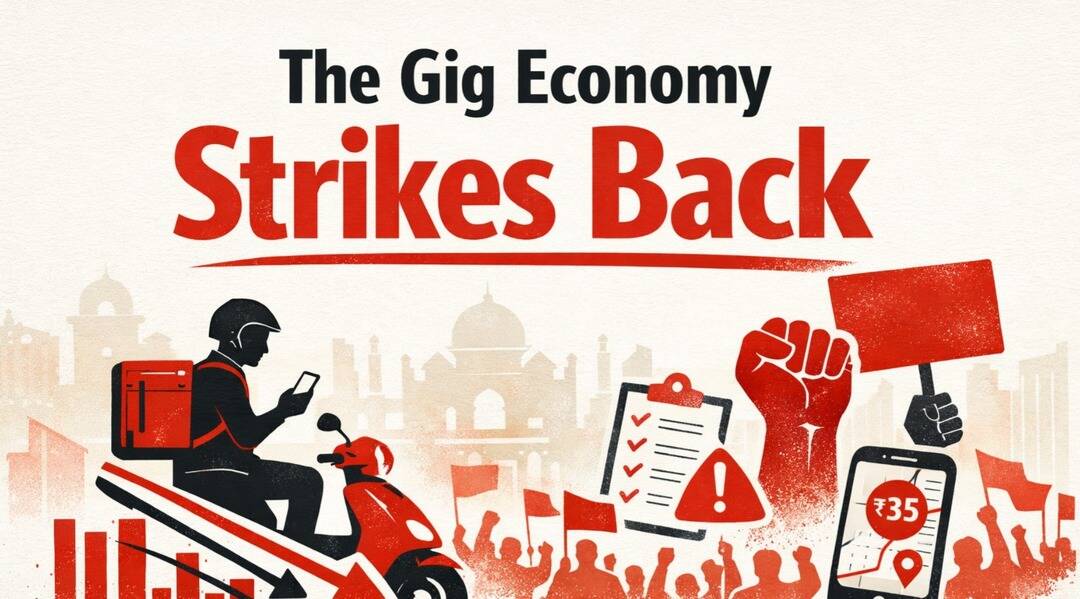
Indian gig economy strikes back, exposing a broken model
The Indian gig economy, which has been booming in recent years, has hit a roadblock. In December, around 40,000 delivery workers joined nationwide strikes, disrupting 50–60% of orders in several cities. The workers, who are the backbone of the gig economy, cited low and unstable pay, strict app control, and weak protections as the reasons for their strike. This development has brought to the forefront the widening gap between convenience and fairness in India’s digital jobs.
The gig economy, which includes companies like Zomato, Swiggy, and Uber, has been growing rapidly in India. These companies have made it convenient for people to order food, book cabs, and avail other services at the click of a button. However, behind the scenes, the workers who make this convenience possible are struggling to make ends meet. They are paid meager amounts, have to work long hours, and are subjected to strict control by the companies they work for.
The strikes, which were organized by the workers themselves, were a cry for help. The workers are demanding better pay, more flexible working hours, and greater protection from the companies they work for. They are also demanding that the government intervene and regulate the gig economy to ensure that workers are treated fairly.
The companies, on the other hand, are defending their growth and profitability. They claim that they are providing opportunities for workers to earn a living and that they are paying them fairly. However, the workers disagree. They say that the pay is low and unstable, and that they are not treated with dignity and respect.
The government has also intervened in the matter. The Ministry of Labour and Employment has called a meeting with the companies and the workers to discuss the issues and find a solution. The government has also announced that it will soon come out with a policy to regulate the gig economy.
The strikes have highlighted the broken model of the gig economy. The model, which is based on convenience and affordability, has failed to take into account the welfare of the workers. The companies have prioritized growth and profitability over fairness and justice. The workers, who are the most vulnerable stakeholders, have been left to fend for themselves.
The gig economy is not just a Indian phenomenon. It is a global trend that has been growing in recent years. However, the Indian gig economy is unique in that it is one of the largest and fastest-growing in the world. The Indian government has been keen to promote the gig economy as a way to create jobs and stimulate economic growth.
However, the strikes have raised questions about the sustainability of the gig economy. Can a model that is based on exploitation and unfairness be sustainable in the long term? The answer is no. The gig economy needs to be regulated to ensure that workers are treated fairly and with dignity. The companies need to prioritize the welfare of their workers and ensure that they are paid fairly and have access to social security benefits.
The strikes have also highlighted the need for a new model of employment. The traditional model of employment, which is based on a fixed salary and benefits, is no longer relevant in the gig economy. The gig economy requires a new model of employment that takes into account the flexibility and autonomy of workers. The model needs to be based on fairness, justice, and dignity.
In conclusion, the Indian gig economy strikes have exposed a broken model. The model, which is based on convenience and affordability, has failed to take into account the welfare of the workers. The companies need to prioritize the welfare of their workers and ensure that they are treated fairly and with dignity. The government needs to regulate the gig economy to ensure that workers are protected and that the model is sustainable in the long term.
The Indian gig economy has the potential to create millions of jobs and stimulate economic growth. However, it needs to be based on a model that is fair, just, and sustainable. The strikes have raised important questions about the future of the gig economy and the need for a new model of employment. It is time for the companies, the government, and the workers to come together and create a model that is based on fairness, dignity, and sustainability.
News Source: https://ascendants.in/industry_events/indian-gig-economy-strikes-platforms-policy/
About the Author