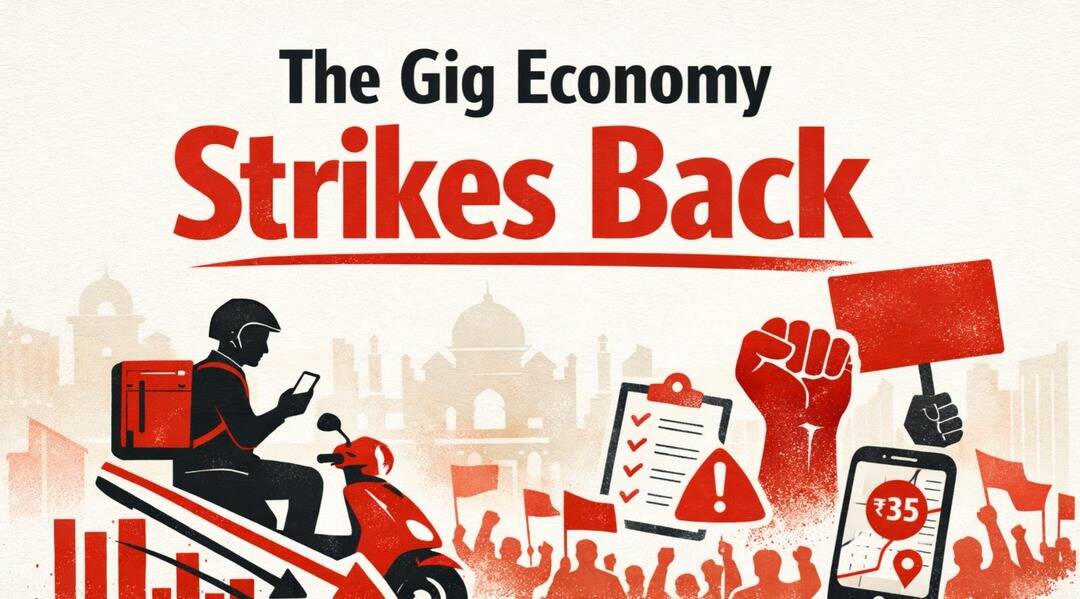
Indian gig economy strikes back, exposing a broken model
The Indian gig economy, once hailed as a revolutionary force in the job market, is facing a severe backlash from its very own workforce. In a series of nationwide strikes, around 40,000 delivery workers brought the country’s digital commerce to a grinding halt, disrupting 50-60% of orders in several cities. The protests, which took place in December, were a stark reminder of the deep-seated issues plaguing the gig economy, including low and unstable pay, strict app control, and weak protections for workers.
At the heart of the strikes were the delivery workers, who are the backbone of the gig economy. These workers, often referred to as “partners” or “independent contractors,” are the ones who toil behind the scenes, ensuring that food, groceries, and other essentials reach the doorstep of consumers. However, despite their crucial role, they are often subjected to exploitative working conditions, with meager pay and little to no job security.
The strikes were sparked by a range of grievances, including the introduction of new policies by food delivery platforms that reduced worker earnings. The policies, which included a decrease in delivery fees and an increase in the number of orders required to meet targets, were seen as a blatant attempt to squeeze more work out of workers without providing adequate compensation. The workers, who were already struggling to make ends meet, were left with no choice but to take to the streets to protest against the unfair treatment.
As the strikes gained momentum, they began to attract attention from politicians and policymakers. The government, which has been keen to promote the gig economy as a key driver of job growth, was forced to intervene to prevent the situation from spiraling out of control. However, the response from the government was lukewarm at best, with some politicians calling for greater regulation of the gig economy while others defended the status quo.
The companies at the center of the storm, including food delivery platforms such as Zomato and Swiggy, were quick to defend their business models. They argued that the strikes were orchestrated by a small group of disgruntled workers and that the majority of their partners were happy with the existing arrangements. However, this claim was disputed by the workers, who pointed out that the companies were trying to silence them and avoid addressing the underlying issues.
The strikes have highlighted a widening gap between convenience and fairness in India’s digital jobs. On the one hand, the gig economy has made it possible for consumers to access a wide range of services at the click of a button. However, this convenience comes at a cost, with workers often bearing the brunt of the exploitation. As the gig economy continues to grow, it is essential to address the concerns of workers and ensure that they are treated fairly and with dignity.
One of the key issues that needs to be addressed is the classification of workers in the gig economy. Currently, most gig workers are classified as independent contractors, which means they are not entitled to the same benefits and protections as traditional employees. This lack of protection leaves them vulnerable to exploitation, with no access to minimum wage, paid leave, or social security benefits.
Another issue that needs to be tackled is the lack of transparency in the gig economy. The algorithms used by companies to manage their workforce are often opaque, making it difficult for workers to understand how their pay is calculated and how they can improve their earnings. This lack of transparency creates an environment of mistrust, with workers feeling that they are being taken advantage of.
To address these issues, there is a need for greater regulation of the gig economy. This could include introducing laws that protect the rights of gig workers, such as minimum wage laws and anti-discrimination laws. It could also involve creating greater transparency around the algorithms used by companies to manage their workforce, allowing workers to make informed decisions about their work.
In conclusion, the Indian gig economy strikes are a wake-up call for companies, policymakers, and consumers. They highlight the need for a more nuanced approach to the gig economy, one that balances convenience with fairness and dignity for workers. As the gig economy continues to grow, it is essential to address the concerns of workers and ensure that they are treated with the respect and dignity they deserve.
The strikes have also sparked a wider debate about the future of work in India. As the country continues to urbanize and the job market evolves, there is a need to rethink the traditional notions of employment and job security. This could involve creating new forms of social protection, such as portable benefits and training programs, that can help workers navigate the changing job market.
Ultimately, the Indian gig economy strikes are a reminder that the pursuit of growth and profit cannot come at the expense of fairness and dignity. As we move forward, it is essential to prioritize the well-being of workers and create a more equitable and sustainable gig economy.
News Source: https://ascendants.in/industry_events/indian-gig-economy-strikes-platforms-policy/
About the Author