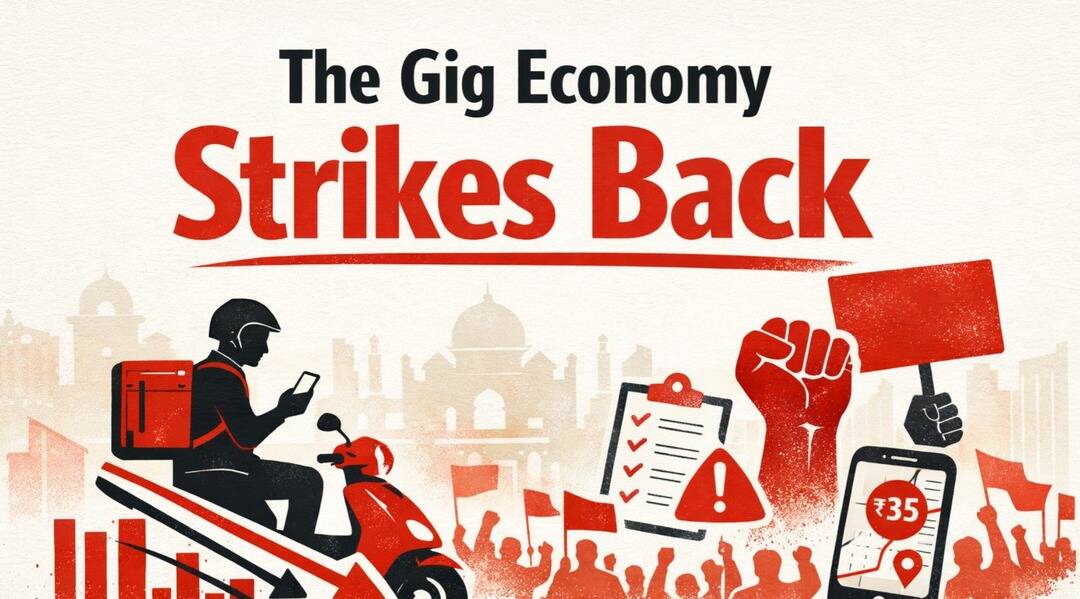
Indian gig economy strikes back, exposing a broken model
The Indian gig economy, which has been touted as a symbol of innovation and progress, is facing a major crisis. In December, around 40,000 delivery workers joined nationwide strikes, disrupting 50-60% of orders in several cities. The workers, who are the backbone of the gig economy, cited low and unstable pay, strict app control, and weak protections as the reasons for their strike. This massive protest has brought attention to the widening gap between convenience and fairness in India’s digital jobs.
The gig economy, which includes companies like Zomato, Swiggy, and Uber, has grown exponentially in India over the past few years. These companies have created a vast network of delivery workers, who are hired on a freelance basis and are responsible for delivering food, groceries, and other essentials to customers. However, the workers have been complaining about the poor working conditions, low pay, and lack of job security.
The strike, which was organized by the workers themselves, was a spontaneous reaction to the exploitation they have been facing at the hands of the companies. The workers claimed that they were not being paid fairly, and that the companies were dictating their working hours, routes, and even the type of vehicles they could use. They also complained about the lack of social security benefits, such as health insurance, pension, and paid leave.
The companies, on the other hand, have been defending their growth and profitability. They claim that they are providing employment opportunities to thousands of workers, and that they are paying them fairly. However, the workers dispute this claim, saying that they are not being paid enough to make a living wage. They also claim that the companies are using algorithms to manipulate their pay, and that they are being penalized for not meeting certain targets.
The strike has also brought attention to the role of politicians in regulating the gig economy. The government has been criticized for not doing enough to protect the rights of the workers. The politicians have been accused of being too close to the companies, and of not taking adequate measures to regulate the industry. However, in response to the strike, some politicians have intervened, promising to look into the grievances of the workers and to take action to protect their rights.
The protests have highlighted the need for a more sustainable and equitable model for the gig economy. The current model, which is based on exploitation and precarity, is not only unfair to the workers but also unsustainable in the long term. The companies need to recognize the value of their workers and to treat them with dignity and respect. They need to provide them with fair pay, job security, and social security benefits.
The strike has also sparked a debate about the future of work in India. The gig economy has been touted as a symbol of innovation and progress, but it has also created a new class of precarious workers who are vulnerable to exploitation. The strike has highlighted the need for a more nuanced understanding of the gig economy, and for a more comprehensive approach to regulating the industry.
In conclusion, the Indian gig economy strike has exposed a broken model that is based on exploitation and precarity. The workers have shown that they will no longer tolerate the poor working conditions, low pay, and lack of job security. The companies need to recognize the value of their workers and to treat them with dignity and respect. The government also needs to intervene and regulate the industry to protect the rights of the workers. Only then can we create a more sustainable and equitable model for the gig economy.
The strike has also raised questions about the role of technology in the gig economy. The companies have been using algorithms to manipulate the pay of the workers, and to dictate their working hours and routes. However, the workers have been fighting back, using social media and other digital tools to organize and mobilize. This has shown that technology can be a powerful tool for workers to fight for their rights, and to challenge the power of the companies.
As the gig economy continues to grow and evolve, it is essential that we prioritize the rights and dignity of the workers. We need to create a more sustainable and equitable model that recognizes the value of the workers and provides them with fair pay, job security, and social security benefits. Only then can we ensure that the gig economy is a force for good, and not a source of exploitation and precarity.
For more information on this topic, please visit: https://ascendants.in/industry_events/indian-gig-economy-strikes-platforms-policy/
News Source: https://ascendants.in/industry_events/indian-gig-economy-strikes-platforms-policy/
About the Author