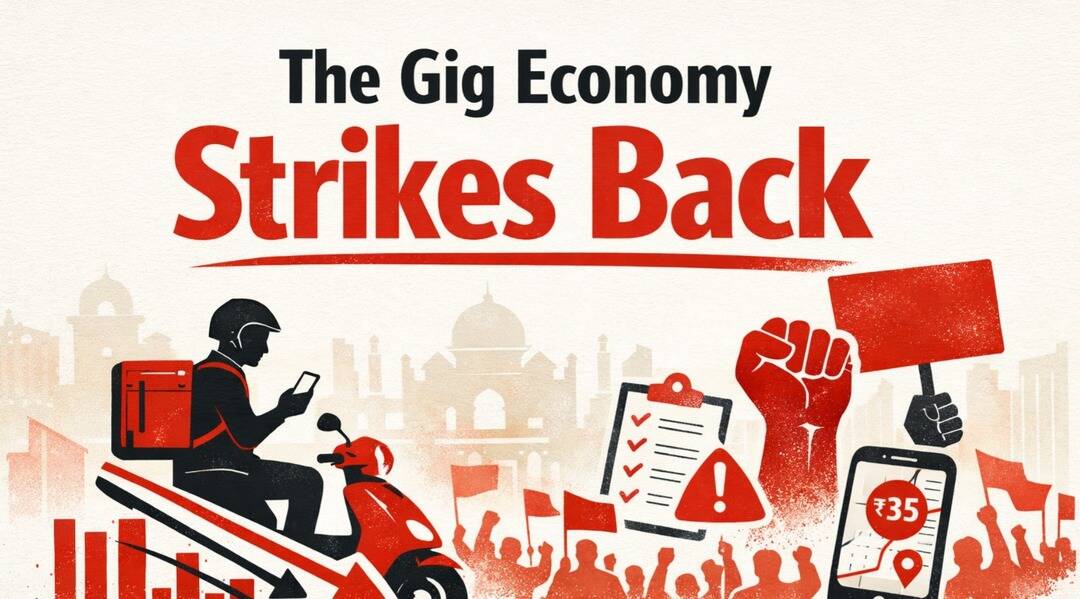
Indian gig economy strikes back, exposing a broken model
The Indian gig economy, which has grown exponentially over the past decade, has been hit by a wave of strikes by delivery workers. In December, around 40,000 delivery workers joined nationwide strikes, disrupting 50–60% of orders in several cities. The workers, who are the backbone of the gig economy, cited low and unstable pay, strict app control, and weak protections as the reasons for their protests. As companies defend their growth and politicians intervene, the protests highlight a widening gap between convenience and fairness in India’s digital jobs.
The gig economy, which includes companies such as Zomato, Swiggy, and Uber, has been touted as a game-changer for the Indian economy. It has created millions of jobs and has made it possible for people to earn a living without being tied to a traditional 9-to-5 job. However, the reality on the ground is far from rosy. Delivery workers, who are the most visible face of the gig economy, are struggling to make ends meet. They are paid on a per-delivery basis, and their earnings can fluctuate wildly depending on the number of deliveries they make.
One of the main reasons for the strikes is the low pay. Delivery workers are paid as little as ₹10-15 per delivery, which is barely enough to cover the cost of fuel and maintenance of their vehicles. They also have to bear the cost of wear and tear on their vehicles, which can be significant. Moreover, the companies take a significant commission on each delivery, which can range from 10-20% of the order value. This leaves the workers with very little to take home.
Another reason for the strikes is the strict app control. The companies use algorithms to control the number of deliveries that a worker can make, and they can also deactivate a worker’s account if they do not meet certain performance metrics. This means that workers are under constant pressure to perform, and they have very little control over their work. They are also required to work long hours, often in excess of 12 hours a day, without any breaks or overtime pay.
The lack of protections is also a major concern for the workers. They are not covered by any labor laws, and they do not have access to benefits such as health insurance, pension, or paid leave. They are also not protected from harassment or abuse by customers, which can be a significant problem. The companies have also been accused of exploiting the workers, by paying them low wages and denying them benefits.
The strikes have had a significant impact on the gig economy. In several cities, the strikes disrupted 50-60% of orders, causing inconvenience to customers. However, the strikes also highlighted the importance of the delivery workers, who are the backbone of the gig economy. Without them, the companies would not be able to function, and the customers would not be able to get their food and other essentials delivered to their doorstep.
The companies have defended their growth and their treatment of workers. They argue that they provide a platform for workers to earn a living, and that they pay them fairly for their work. However, the workers dispute this, saying that they are paid very little and that they have very little control over their work. The companies have also accused the workers of being “unreasonable” and of trying to “blackmail” them into paying higher wages.
The government has also intervened in the dispute, with some politicians calling for greater regulation of the gig economy. The government has said that it is committed to protecting the rights of workers, and that it will take steps to ensure that they are treated fairly. However, the government has also been criticized for not doing enough to protect the workers, and for allowing the companies to exploit them.
The strikes have highlighted the need for greater regulation of the gig economy. The companies have been allowed to operate with very little oversight, and they have taken advantage of this to exploit the workers. The government needs to step in and ensure that the workers are treated fairly, and that they are paid a living wage. The government also needs to ensure that the workers have access to benefits such as health insurance, pension, and paid leave.
In conclusion, the Indian gig economy is striking back, exposing a broken model that prioritizes convenience over fairness. The strikes have highlighted the need for greater regulation of the gig economy, and for greater protections for the workers. The companies need to recognize the value of the workers, and they need to treat them with dignity and respect. The government also needs to step in and ensure that the workers are treated fairly, and that they are paid a living wage. Only then can the gig economy be a force for good, and can it provide a better life for the millions of workers who are part of it.
News source: https://ascendants.in/industry_events/indian-gig-economy-strikes-platforms-policy/
About the Author