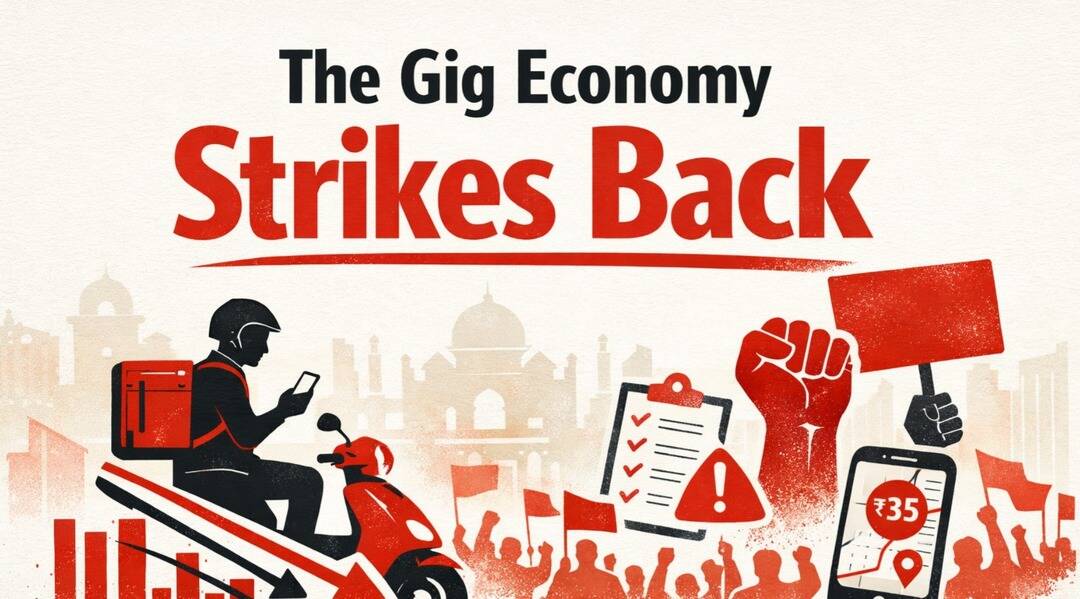
Indian gig economy strikes back, exposing a broken model
The Indian gig economy has been booming in recent years, with millions of workers joining various platforms to earn a living. However, beneath the surface of this seemingly convenient and efficient system lies a complex web of issues that have been simmering for a while. In December, around 40,000 delivery workers joined nationwide strikes, disrupting 50–60% of orders in several cities. The strikes, which were largely organized through social media and word of mouth, brought attention to the plight of gig workers who have been facing low and unstable pay, strict app control, and weak protections.
The gig economy, which includes companies such as Zomato, Swiggy, and Ola, has grown exponentially in India, with millions of workers signing up to work as delivery partners, drivers, and other freelance jobs. These platforms have made it convenient for consumers to order food, book cabs, and avail other services with just a few taps on their smartphones. However, the growth of the gig economy has come at a cost, with workers facing numerous challenges that have been ignored for too long.
One of the primary concerns of gig workers is the low and unstable pay. Despite working long hours, many workers earn barely enough to make ends meet. The pay structure of most gig economy companies is based on a per-delivery or per-ride model, which means that workers are only paid for the work they do. This can lead to uncertainty and instability, as workers may go without pay for hours or even days if there are no orders or rides available. Furthermore, the companies often deduct a significant percentage of the earnings as commission, leaving workers with very little take-home pay.
Another issue that gig workers face is the strict control exerted by the apps. The algorithms used by these platforms determine which workers get assigned which orders or rides, and workers have little to no control over their schedules or workload. This can lead to burnout and exhaustion, as workers are forced to work long hours without any respite. Moreover, the apps often impose penalties on workers who fail to meet certain targets or standards, which can further reduce their earnings.
The lack of protections for gig workers is also a major concern. Unlike traditional employees, gig workers are not entitled to benefits such as health insurance, paid leave, or pension. They are also not protected by labor laws, which means that they can be terminated or penalized without any recourse. This leaves workers vulnerable to exploitation and abuse, with little to no support or protection from the companies or the government.
The recent strikes by delivery workers have brought these issues to the forefront, highlighting the widening gap between convenience and fairness in India’s digital jobs. The companies have responded to the strikes by defending their growth and claiming that they provide opportunities for workers to earn a living. However, this response ignores the underlying issues that have led to the strikes in the first place. The companies need to take a closer look at their business models and make changes to ensure that workers are paid fairly and treated with dignity.
The government has also intervened in the issue, with some politicians calling for greater regulation of the gig economy. While regulation is certainly needed, it is not a simple solution. The gig economy is a complex and multifaceted system, and any attempts to regulate it will need to balance the needs of workers, companies, and consumers. Moreover, regulation alone may not be enough to address the underlying issues, and companies will need to take proactive steps to improve the working conditions and benefits for gig workers.
In conclusion, the Indian gig economy strikes back, exposing a broken model that prioritizes convenience and growth over fairness and worker welfare. The recent strikes by delivery workers have highlighted the need for change, and companies, politicians, and regulators must work together to address the issues faced by gig workers. This includes ensuring fair pay, providing protections and benefits, and giving workers more control over their schedules and workload. Only then can the gig economy truly fulfill its promise of providing opportunities and improving lives.
As the gig economy continues to grow and evolve, it is essential that we prioritize the needs and rights of workers. This requires a fundamental shift in the way that companies operate and the way that governments regulate the industry. By working together, we can create a more equitable and sustainable gig economy that benefits everyone involved.
For more information on this topic, please visit: https://ascendants.in/industry_events/indian-gig-economy-strikes-platforms-policy/
News Source: https://ascendants.in/industry_events/indian-gig-economy-strikes-platforms-policy/
About the Author