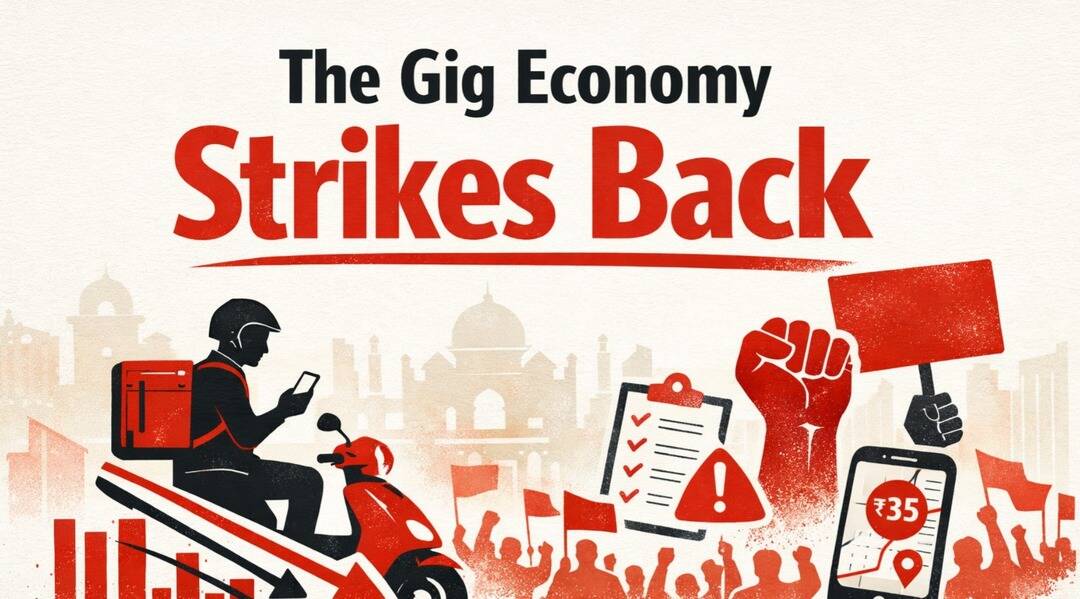
Indian gig economy strikes back, exposing a broken model
The Indian gig economy has been on a remarkable growth trajectory in recent years, with millions of workers joining platforms such as food delivery and ride-hailing services. However, beneath the surface of this growth lies a more complex and concerning reality. In December, around 40,000 delivery workers joined nationwide strikes, disrupting 50–60% of orders in several cities. The workers cited low and unstable pay, strict app control, and weak protections as the primary reasons for their protests. As companies defend their growth and politicians intervene, the strikes have highlighted a widening gap between convenience and fairness in India’s digital jobs.
The gig economy, which refers to the increasing trend of short-term, flexible work arrangements, has been touted as a game-changer for India’s workforce. With the rise of platforms such as Zomato, Swiggy, and Ola, millions of Indians have found new opportunities for employment and entrepreneurship. However, the reality on the ground is far more nuanced. Workers in the gig economy often face precarious working conditions, with minimal job security, low pay, and limited access to benefits.
The recent strikes by delivery workers are a testament to the growing discontent among gig economy workers. The protests, which were organized across several cities, including Delhi, Mumbai, and Bengaluru, brought attention to the plight of workers who are the backbone of the gig economy. The workers demanded better pay, more flexible working hours, and greater protection from the platforms that employ them. They also called for an end to the strict app control that governs their work, which often leaves them with little autonomy or control over their schedules and earnings.
One of the primary concerns of gig economy workers is the issue of pay. Many workers report earning barely enough to cover their expenses, let alone save for the future. The platforms, which take a significant commission on each order, often leave workers with minimal earnings. For example, a delivery worker for a food delivery platform may earn as little as ₹100-150 per day, which is barely enough to cover their fuel and maintenance costs. The lack of transparency in the payment structure, combined with the platforms’ ability to unilaterally change the terms of employment, has left many workers feeling exploited and undervalued.
Another major concern of gig economy workers is the issue of job security. With no formal contracts or employment agreements, workers are often left vulnerable to arbitrary termination or deactivation. The platforms, which use algorithms to manage their workforce, can deactivate workers at will, often without providing any explanation or warning. This lack of job security has created a culture of fear among gig economy workers, who are often reluctant to speak out against the platforms for fear of being deactivated.
The recent strikes have also highlighted the issue of app control, which has become a major point of contention between workers and platforms. The platforms use sophisticated algorithms to manage their workforce, often dictating the terms of employment and controlling every aspect of a worker’s schedule. Workers are often required to work long hours, often without breaks, and are penalized for any deviations from the schedule. The lack of autonomy and control over their work has left many workers feeling frustrated and demotivated.
The Indian government has been slow to respond to the concerns of gig economy workers. While there have been some attempts to regulate the gig economy, the laws and policies are often inadequate and ineffective. The government has introduced the Social Security Code, which provides some protections for gig economy workers, but the implementation of the code has been patchy and inconsistent. The lack of effective regulation has left workers vulnerable to exploitation, with many platforms taking advantage of the loopholes in the law to minimize their liabilities.
The recent strikes have sparked a renewed debate about the future of the gig economy in India. As the sector continues to grow and expand, it is essential that policymakers and companies prioritize the welfare and well-being of workers. This includes providing better pay, greater job security, and more effective protections against exploitation. The government must also take a more proactive role in regulating the gig economy, ensuring that platforms are held accountable for their actions and that workers are protected from unfair labor practices.
In conclusion, the Indian gig economy is at a crossroads. While the sector has created new opportunities for employment and entrepreneurship, it has also highlighted the need for greater fairness and equity in the digital jobs market. The recent strikes by delivery workers are a wake-up call for policymakers and companies, highlighting the need for more effective regulation and better protections for workers. As the gig economy continues to grow and evolve, it is essential that we prioritize the welfare and well-being of workers, ensuring that the benefits of growth are shared by all.
News Source: https://ascendants.in/industry_events/indian-gig-economy-strikes-platforms-policy/
About the Author