Indian gig economy strikes back, exposing a broken model
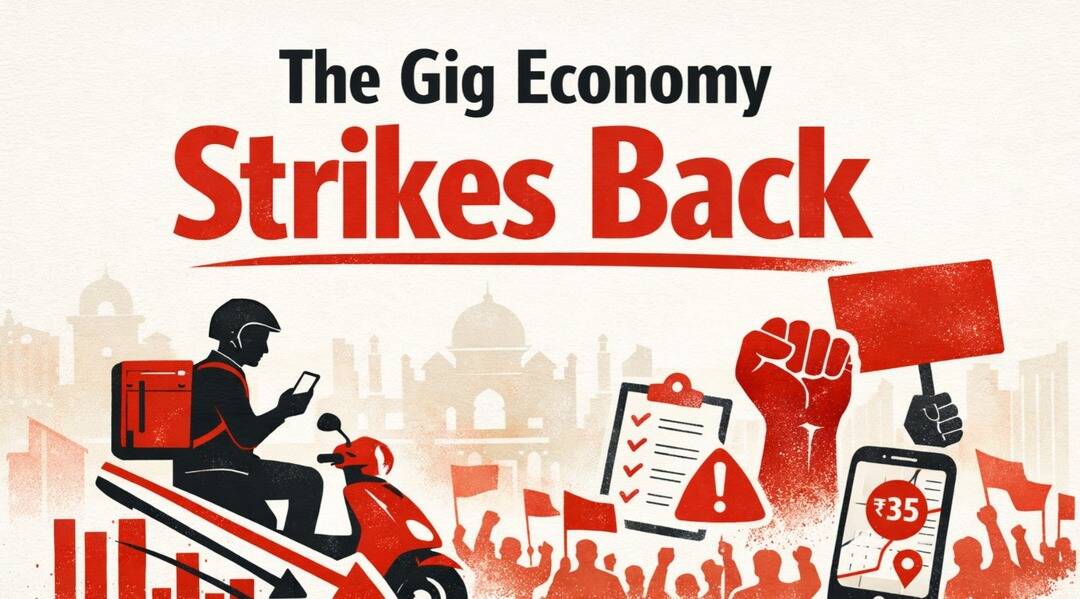
The Indian gig economy, which has been hailed as a revolutionary force in the country’s job market, is facing a major crisis. In December, around 40,000 delivery workers from various food delivery and e-commerce platforms joined nationwide strikes, disrupting 50-60% of orders in several cities. The strike, which was one of the largest of its kind, highlighted the growing discontent among gig workers who are demanding better pay, working conditions, and social protections.
The strike was called by various workers’ unions and associations, who cited low and unstable pay, strict app control, and weak protections as the main reasons for their discontent. The workers, who are the backbone of the gig economy, are struggling to make ends meet due to the exploitative practices of the companies they work for. Despite the convenience and flexibility that the gig economy offers, the reality is that many workers are struggling to survive on meager earnings and without any social safety net.
The Indian gig economy has grown exponentially in recent years, with companies like Zomato, Swiggy, and Uber dominating the market. These companies have created millions of jobs, but most of them are informal and lack the benefits and protections that come with formal employment. The workers are classified as “independent contractors” or “partners,” which means they are not entitled to minimum wage, paid leave, or social security benefits.
The strike has exposed the dark underbelly of the gig economy, which is built on the principles of exploitation and profit maximization. The companies, which have raised billions of dollars in funding, are more concerned with growth and expansion than with the welfare of their workers. The workers, on the other hand, are fighting for their rights and dignity, and are demanding that the companies take responsibility for their actions.
The government has also been criticized for its role in perpetuating the exploitation of gig workers. The labor laws in India are weak and inadequate, and the government has failed to regulate the gig economy effectively. The companies have taken advantage of the loopholes in the law to exploit the workers, and the government has turned a blind eye to the problem.
The strike has sparked a national debate about the future of the gig economy and the need for better regulations and protections for workers. The companies have defended their model, saying that it provides flexibility and opportunity for workers, but the workers are not buying it. They argue that the model is broken and needs to be fixed, and that the companies need to take responsibility for their actions.
The strike has also highlighted the widening gap between convenience and fairness in India’s digital jobs. The gig economy has made it possible for people to order food, groceries, and other essentials with just a few clicks, but it has also created a class of workers who are struggling to survive. The companies are making huge profits, but the workers are not getting a fair share of the pie.
The Indian gig economy is not alone in facing these challenges. The gig economy is a global phenomenon, and workers in other countries are also fighting for their rights. In the United States, for example, Uber and Lyft drivers have been protesting against the companies’ policies, demanding better pay and benefits. In the UK, delivery workers have been fighting for better working conditions and social protections.
The strike in India is a wake-up call for the companies, the government, and the society at large. It highlights the need for a more equitable and sustainable model of the gig economy, one that prioritizes the welfare of workers and provides them with fair compensation and social protections. The companies need to take responsibility for their actions and work towards creating a more just and equitable system.
The government also needs to play a more active role in regulating the gig economy and protecting the rights of workers. The labor laws need to be strengthened, and the government needs to ensure that the companies comply with them. The government also needs to provide social protections and benefits to gig workers, such as healthcare, pension, and education.
In conclusion, the Indian gig economy is at a crossroads. The strike has exposed the broken model of the gig economy, and it is up to the companies, the government, and the society to fix it. The workers are fighting for their rights and dignity, and it is time for the companies and the government to listen. The gig economy has the potential to create millions of jobs and stimulate economic growth, but it needs to be done in a way that is fair and equitable for all.
News Source: https://ascendants.in/industry_events/indian-gig-economy-strikes-platforms-policy/
About the Author