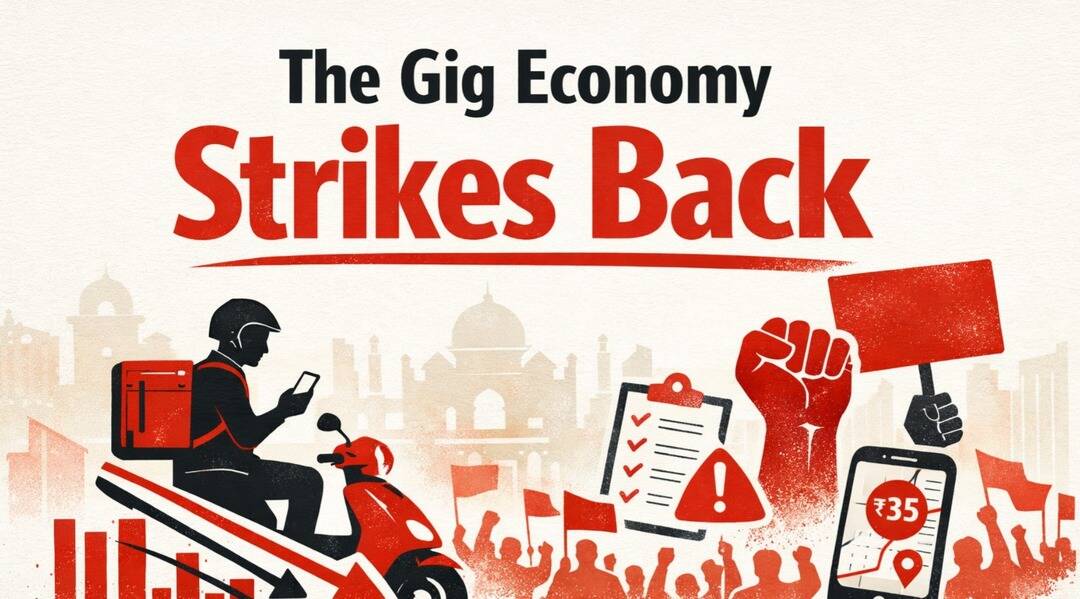
Indian gig economy strikes back, exposing a broken model
The Indian gig economy, which has been touted as a beacon of innovation and progress, has hit a roadblock. In December, a massive strike by delivery workers brought the country’s digital job market to a standstill. Around 40,000 workers participated in the nationwide strike, disrupting 50-60% of orders in several cities. The strike was a clarion call, highlighting the deep-seated issues that have been plaguing the gig economy in India.
At the heart of the strike were the workers’ demands for better pay, more stability, and greater protection. The workers, who are the backbone of the gig economy, have been facing low and unstable pay, strict control by the apps they work for, and weak protections. The strike was a testament to the growing discontent among workers, who feel that they are being exploited by the very companies that they work for.
The gig economy in India has grown exponentially over the past few years, with companies like Zomato, Swiggy, and Ola dominating the market. These companies have created a vast network of workers, who work as independent contractors, delivering food, providing transportation, and offering other services. However, the workers have been facing a range of issues, from low pay to lack of benefits, and poor working conditions.
One of the main issues that the workers are facing is low and unstable pay. The workers are paid on a per-delivery basis, and the amount they earn can vary greatly depending on the number of deliveries they make. This can lead to a situation where workers are forced to work long hours for minimal pay. Moreover, the companies have been known to change their payment structures frequently, leaving workers in a state of uncertainty.
Another issue that the workers are facing is strict control by the apps they work for. The companies have been known to use algorithms to manage their workforce, which can lead to a situation where workers are penalized for not meeting certain targets. This can lead to a situation where workers are forced to work under immense pressure, with little room for error.
The workers are also facing weak protections, which can leave them vulnerable to exploitation. The companies have been known to terminate contracts without notice, leaving workers without a safety net. Moreover, the workers are not entitled to benefits like health insurance, retirement plans, or paid leave, which can leave them in a precarious situation.
The strike by the delivery workers has brought the issue of fairness and convenience in the gig economy to the forefront. The companies have been defending their growth and profitability, while politicians have been intervening to resolve the issue. However, the strike has highlighted a widening gap between convenience and fairness in India’s digital jobs.
The gig economy has been touted as a convenient and flexible way of working, allowing people to work on their own terms. However, the reality is that the workers are facing immense pressure to meet targets, with little room for error. The companies have been using technology to manage their workforce, which can lead to a situation where workers are treated like machines, rather than human beings.
The strike has also highlighted the need for greater regulation of the gig economy. The companies have been operating in a regulatory grey area, which has allowed them to exploit workers. The government needs to step in and create laws that protect the rights of workers, and ensure that they are treated fairly.
In conclusion, the strike by the delivery workers has exposed the broken model of the gig economy in India. The workers are facing low and unstable pay, strict control by the apps they work for, and weak protections. The strike has highlighted a widening gap between convenience and fairness in India’s digital jobs, and has brought the issue of fairness and convenience to the forefront. The companies and politicians need to take note of the workers’ demands and work towards creating a more equitable and just system.
As the gig economy continues to grow and evolve, it is essential that we prioritize the rights and dignity of workers. The strike by the delivery workers is a wake-up call, and it is time for us to take action. We need to create a system that is fair, just, and equitable, and ensures that workers are treated with the respect and dignity they deserve.
For more information on this topic, please visit: https://ascendants.in/industry_events/indian-gig-economy-strikes-platforms-policy/
News Source: https://ascendants.in/industry_events/indian-gig-economy-strikes-platforms-policy/
About the Author