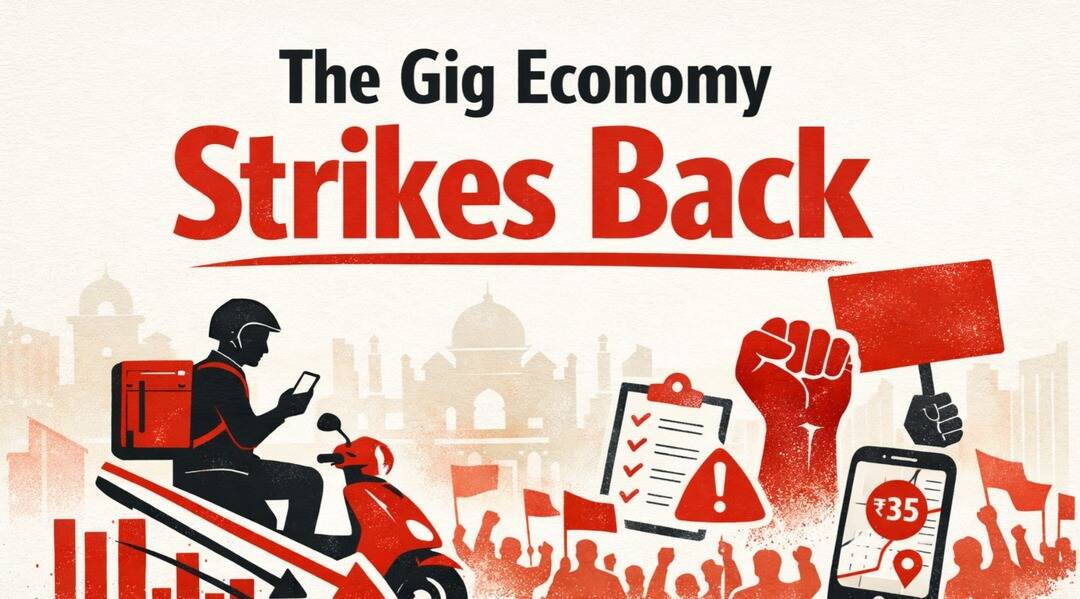
Indian gig economy strikes back, exposing a broken model
The Indian gig economy, which has been hailed as a revolutionary force in the country’s job market, is facing a major crisis. In December, around 40,000 delivery workers joined nationwide strikes, disrupting 50–60% of orders in several cities. The workers, who are the backbone of the gig economy, are protesting against low and unstable pay, strict app control, and weak protections. This strike is a clear indication that the gig economy model, which has been touted as a flexible and convenient way of working, is broken and needs to be revised.
The gig economy, which includes companies such as Zomato, Swiggy, and Uber, has grown exponentially in India over the past few years. These companies have created millions of jobs for delivery workers, drivers, and other professionals, providing them with the flexibility to work on their own terms. However, the reality is that these workers are not treated as employees, but rather as independent contractors, who are not entitled to any benefits or protections.
The main issue that the delivery workers are facing is low pay. They are paid on a per-delivery basis, which can range from Rs 10 to Rs 50 per delivery, depending on the company and the location. This means that they have to make multiple deliveries to earn a decent amount of money, which can be exhausting and stressful. Moreover, the pay is not stable, and the workers have to deal with fluctuations in demand, which can affect their earnings.
Another issue that the workers are facing is strict app control. The companies use algorithms to manage the workflow, which can be unfair and biased. The workers are penalized for not accepting deliveries, or for not completing deliveries on time, which can affect their ratings and their ability to get more work. This creates a culture of fear and anxiety, where workers are forced to work long hours without any breaks, just to avoid being penalized.
The workers are also protesting against weak protections. They do not have any job security, and can be terminated at any time without any notice. They also do not have access to any benefits, such as health insurance, provident fund, or gratuity. This means that they have to bear all the costs of their work, including fuel, maintenance, and repairs, without any support from the companies.
The strike has highlighted the widening gap between convenience and fairness in India’s digital jobs. The gig economy has been touted as a convenient way of working, where workers can choose their own hours and work at their own pace. However, the reality is that this convenience comes at a cost, where workers are exploited and mistreated. The companies are more focused on growth and profits, rather than the well-being of their workers.
The government has also intervened in the matter, with the labor ministry issuing a statement saying that it is monitoring the situation and will take necessary action to protect the rights of the workers. However, the companies are defending their model, saying that it provides flexibility and opportunities to millions of workers. They also claim that they are providing benefits and protections to their workers, such as insurance and training programs.
However, the reality is that these benefits are not enough, and the workers are still struggling to make ends meet. The companies need to take a more holistic approach to the gig economy, where they prioritize the well-being and dignity of their workers. This includes providing stable pay, job security, and benefits, as well as creating a fair and transparent work environment.
In conclusion, the Indian gig economy strike is a wake-up call for the companies and the government to take a closer look at the model and make necessary changes. The gig economy has the potential to provide millions of jobs and opportunities to workers, but it needs to be done in a fair and sustainable way. The companies need to prioritize the well-being and dignity of their workers, and provide them with stable pay, job security, and benefits. The government also needs to play a more active role in regulating the gig economy, and ensuring that the rights of the workers are protected.
As the gig economy continues to grow and evolve, it is essential that we prioritize fairness and sustainability over convenience and profits. The strike is a clear indication that the current model is broken, and it needs to be revised to ensure that the workers are treated with dignity and respect. We need to create a gig economy that is fair, sustainable, and equitable, where workers are valued and protected.
The Indian gig economy strike is not just a labor issue, but a societal issue that affects us all. It highlights the need for a more nuanced and balanced approach to the gig economy, where we prioritize the well-being of workers, as well as the growth and profits of companies. As we move forward, it is essential that we learn from this experience and work towards creating a gig economy that is fair, sustainable, and equitable for all.
News Source: https://ascendants.in/industry_events/indian-gig-economy-strikes-platforms-policy/
About the Author