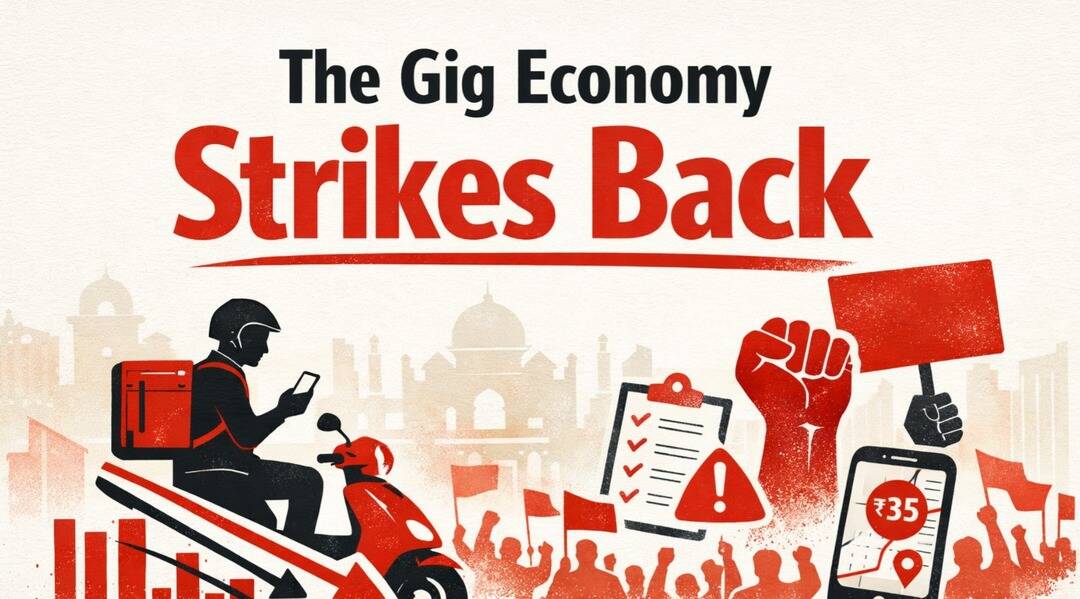
Indian gig economy strikes back, exposing a broken model
The Indian gig economy has been thriving in recent years, with millions of workers signing up to work as delivery personnel, drivers, and other freelance jobs. However, beneath the surface of this seemingly booming industry lies a complex web of issues that have been simmering for a while. In December, these issues came to a head when around 40,000 delivery workers joined nationwide strikes, disrupting 50-60% of orders in several cities. The strikes, which were organized by various worker unions and associations, highlighted the deep-seated problems faced by gig workers in India, including low and unstable pay, strict app control, and weak protections.
The gig economy, which is characterized by short-term, flexible work arrangements, has been touted as a revolution in the way people work. It promises flexibility, autonomy, and the ability to work on one’s own terms. However, the reality on the ground is far removed from this rosy picture. Gig workers in India, who are mostly migrants from rural areas or small towns, are often forced to work long hours for meager pay. They have no job security, no benefits, and no protections against exploitation by the companies they work for.
The strikes, which were reported in several cities across India, including Delhi, Mumbai, and Bengaluru, were a culmination of months of simmering discontent among gig workers. Workers cited a range of grievances, including low pay, lack of transparency in payment structures, and strict control exerted by the companies through their apps. Many workers reported that they were forced to work for 12 hours a day, 7 days a week, without any breaks or time off. They were also forced to meet unrealistic targets, with penalties for failing to do so.
One of the main issues faced by gig workers is the lack of transparency in payment structures. Companies often use complex algorithms to determine pay, which can be difficult for workers to understand. This lack of transparency can lead to workers being underpaid or overworked, without any recourse. Workers also reported that they were not given any benefits, such as health insurance or pension, despite working for the companies for years.
The strict control exerted by companies through their apps is another major issue faced by gig workers. Companies use their apps to monitor workers’ every move, tracking their location, speed, and efficiency. Workers are often penalized for not meeting targets or for taking breaks, which can lead to a culture of fear and exploitation. This level of control can also lead to workers being treated as machines, rather than human beings, which can have serious consequences for their mental and physical health.
The strikes have highlighted the widening gap between convenience and fairness in India’s digital jobs. While the gig economy has created new opportunities for millions of Indians, it has also created a class of workers who are exploited and marginalized. The strikes have forced companies and politicians to take notice of these issues and to think about the consequences of their actions.
Companies have defended their growth and business models, saying that they provide opportunities for millions of Indians to earn a living. However, this argument ignores the fact that many gig workers are struggling to make ends meet, despite working long hours. It also ignores the fact that companies are making huge profits from the labor of these workers, without providing them with any benefits or protections.
Politicians have also intervened in the issue, with some calling for greater regulation of the gig economy. The Indian government has announced plans to regulate the gig economy, including setting minimum wages and providing benefits to workers. However, these plans are still in the development stage, and it remains to be seen how effective they will be in addressing the issues faced by gig workers.
In conclusion, the Indian gig economy strikes have exposed a broken model that prioritizes convenience and profit over fairness and justice. The strikes have highlighted the need for greater regulation and protection of gig workers, who are the backbone of the digital economy. Companies and politicians must take notice of these issues and work towards creating a more equitable and just system for all workers. As the gig economy continues to grow and evolve, it is essential that we prioritize the rights and dignity of workers, rather than just their convenience and flexibility.
News Source: https://ascendants.in/industry_events/indian-gig-economy-strikes-platforms-policy/
About the Author