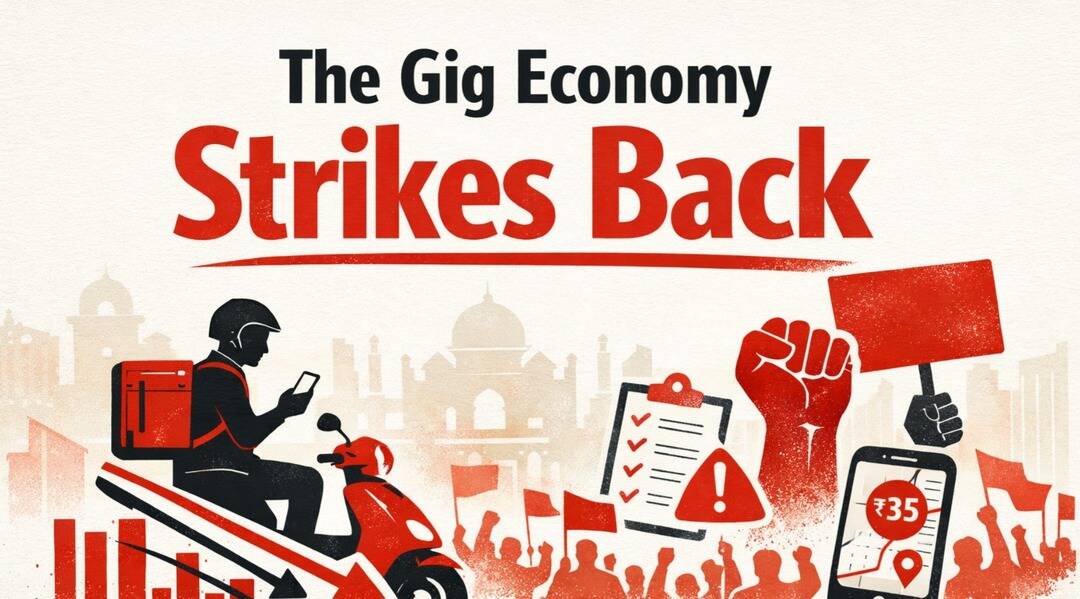
Indian gig economy strikes back, exposing a broken model
The Indian gig economy, which has been booming in recent years, has hit a roadblock. In December, around 40,000 delivery workers joined nationwide strikes, disrupting 50–60% of orders in several cities. The workers, who are the backbone of the gig economy, cited low and unstable pay, strict app control, and weak protections as the reasons for their strike. This massive protest has brought to the forefront the widening gap between convenience and fairness in India’s digital jobs.
The gig economy, which includes companies like Zomato, Swiggy, and Uber, has been growing rapidly in India. These companies have made it convenient for people to order food, book cabs, and avail other services with just a few taps on their smartphones. However, behind the scenes, the workers who make this convenience possible are struggling to make ends meet.
The strike, which was called by the Indian Federation of App-Based Transport Workers (IFAT), highlighted the plight of these workers. They complained that their pay has been reduced over time, and they are not given any benefits or job security. The workers also alleged that the companies are using algorithms to control their work, making it difficult for them to earn a decent income.
One of the main grievances of the workers is the strict control exerted by the companies through their apps. The apps dictate the workers’ schedules, the number of hours they can work, and even the routes they can take. The workers have no say in these matters and are forced to follow the app’s instructions, even if it means working long hours without adequate compensation.
Another issue that the workers face is the lack of protections. They are not considered employees of the companies and are therefore not entitled to any benefits or job security. This means that they can be fired at any time without any notice or compensation. The workers also do not have access to basic amenities like health insurance, paid leave, or pension.
The strike has sparked a debate about the gig economy and its impact on workers. While the companies argue that they provide flexible work opportunities to people who would otherwise be unemployed, the workers argue that they are being exploited. The companies are making huge profits from the gig economy, but the workers are not getting a fair share of the revenue.
The government has also been criticized for its handling of the gig economy. The labor laws in India are outdated and do not provide adequate protections to gig workers. The government has been slow to respond to the needs of these workers, and the companies have been allowed to operate with impunity.
In response to the strike, the companies have defended their business model, arguing that it provides opportunities for people to work flexibly and earn a decent income. However, the workers argue that the model is broken and needs to be changed. They are demanding better pay, more benefits, and greater job security.
The strike has also sparked a wider debate about the future of work in India. As the gig economy continues to grow, there are concerns about the impact it will have on traditional employment. The gig economy is creating new opportunities for people to work, but it is also creating new challenges. The workers are not protected by labor laws, and they do not have access to the same benefits as traditional employees.
The Indian government has announced plans to regulate the gig economy, but the details are still unclear. The government has said that it will introduce new laws to protect gig workers, but it is not clear what these laws will entail. The companies have also announced plans to improve the working conditions of their workers, but it remains to be seen whether these plans will be implemented.
In conclusion, the strike by Indian gig workers has highlighted the broken model of the gig economy. The workers are demanding better pay, more benefits, and greater job security, but the companies are resisting these demands. The government needs to intervene and regulate the gig economy to ensure that the workers are protected. The gig economy has the potential to create new opportunities for people to work, but it needs to be done in a way that is fair and sustainable.
As the debate about the gig economy continues, it is clear that something needs to be done to address the concerns of the workers. The companies cannot continue to exploit the workers and expect them to be grateful for the opportunities they provide. The workers deserve better, and it is up to the government and the companies to ensure that they get it.
The future of the gig economy in India is uncertain, but one thing is clear: the workers will not be silenced. They will continue to fight for their rights, and they will not back down until they get the justice they deserve. The companies and the government need to take notice of the workers’ demands and work towards creating a more equitable and sustainable gig economy.
For more information on this topic, please visit: https://ascendants.in/industry_events/indian-gig-economy-strikes-platforms-policy/
News Source: https://ascendants.in/industry_events/indian-gig-economy-strikes-platforms-policy/
About the Author