Indian gig economy strikes back, exposing a broken model
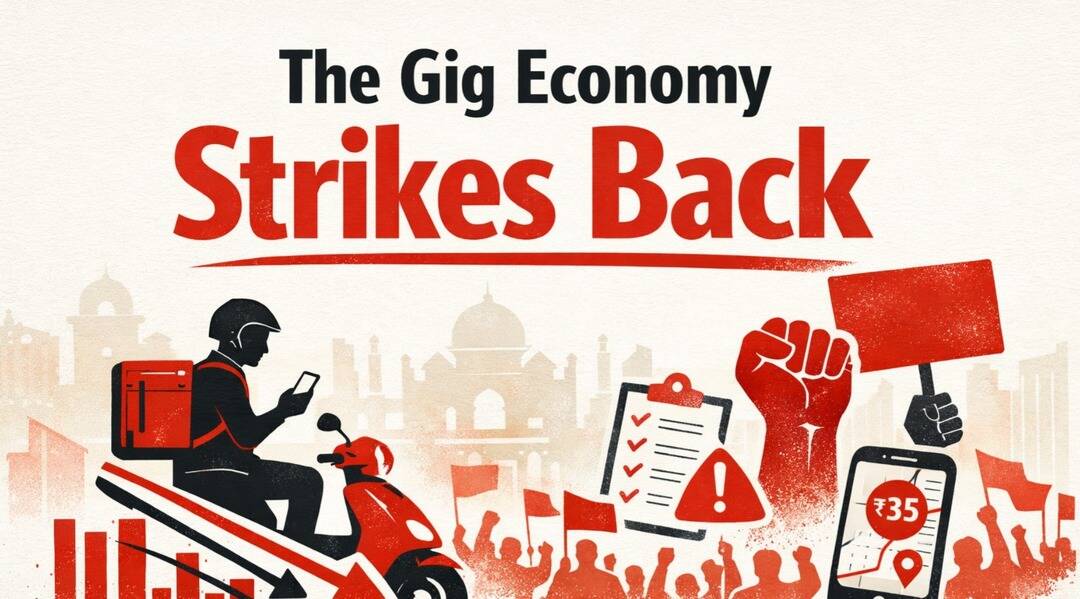
The Indian gig economy, which has been touted as a revolutionary force in the country’s job market, is facing a crisis. In December, around 40,000 delivery workers joined nationwide strikes, disrupting 50–60% of orders in several cities. The strike, which was one of the largest of its kind, highlighted the deep-seated problems that have been plaguing the gig economy for years. Workers cited low and unstable pay, strict app control, and weak protections as the main reasons for their discontent.
The gig economy, which includes companies such as Zomato, Swiggy, and Uber, has been growing rapidly in India over the past few years. These companies have created millions of jobs for delivery workers, drivers, and other freelancers, promising them flexibility and autonomy. However, the reality on the ground is far from rosy. Workers are often forced to work long hours for low pay, with little to no benefits or job security.
The strike, which was organized by various worker unions and associations, was a culmination of years of frustration and anger among gig workers. “We are not against the companies, but we want fair treatment and better working conditions,” said one of the striking workers. “We are the backbone of the gig economy, but we are treated like slaves. We are forced to work long hours, and our pay is deducted arbitrarily.”
The strike had a significant impact on the operations of the companies, with many customers taking to social media to complain about delayed or cancelled orders. However, the companies were quick to defend their business model, saying that they were providing opportunities for millions of workers to earn a living. “We are committed to providing a fair and safe working environment for our delivery partners,” said a spokesperson for Zomato. “We are constantly working to improve our systems and processes to ensure that our partners are able to earn a decent income.”
However, the workers are not buying it. They argue that the companies are more interested in growth and profits than in the welfare of their workers. “The companies are making millions of rupees in profits, but they are not willing to share it with us,” said another striking worker. “We are the ones who are doing the hard work, but we are not getting a fair share of the pie.”
The strike has also drawn attention from politicians, with many leaders calling for greater regulation of the gig economy. “The gig economy is a new and emerging sector, and we need to ensure that workers are protected,” said a spokesperson for the opposition party. “We will work with the government to introduce laws and regulations that protect the rights of gig workers.”
The strike has highlighted the widening gap between convenience and fairness in India’s digital jobs. While the gig economy has created millions of jobs and provided convenience to millions of customers, it has also created a new class of workers who are exploited and marginalized. The strike is a wake-up call for the companies, the government, and the society at large to recognize the problems in the gig economy and work towards creating a more equitable and just system.
In recent years, the gig economy has grown exponentially, with millions of workers joining the sector. However, the growth has been accompanied by a lack of regulation and oversight, leaving workers vulnerable to exploitation. The strike is a call to action for the government to introduce laws and regulations that protect the rights of gig workers, including minimum wage, job security, and social benefits.
The strike has also raised questions about the future of work in India. As the gig economy continues to grow, it is likely that more and more workers will be forced to join the sector. However, if the problems in the sector are not addressed, it could lead to a crisis of epic proportions. The strike is a warning sign that the gig economy is broken, and it needs to be fixed.
In conclusion, the Indian gig economy is striking back, and it is a wake-up call for all stakeholders. The strike has highlighted the deep-seated problems in the sector, including low pay, strict app control, and weak protections. The companies, the government, and the society at large need to recognize the problems in the gig economy and work towards creating a more equitable and just system. The future of work in India depends on it.
News Source: https://ascendants.in/industry_events/indian-gig-economy-strikes-platforms-policy/
About the Author