Indian gig economy strikes back, exposing a broken model
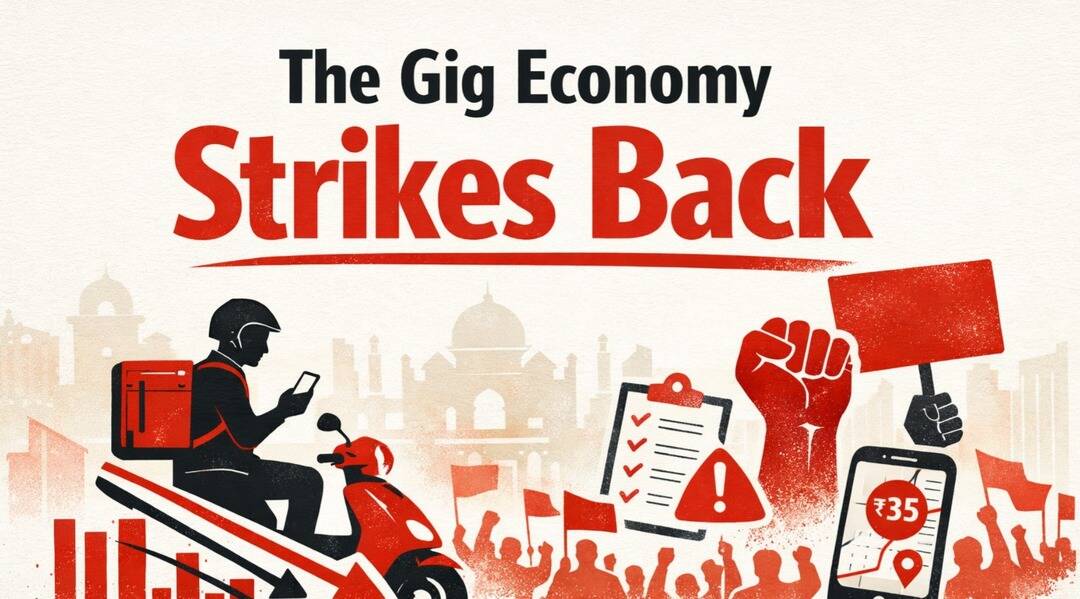
The Indian gig economy has been making headlines recently, but not for the reasons you might expect. In December, around 40,000 delivery workers joined nationwide strikes, disrupting 50–60% of orders in several cities. The workers, who are the backbone of the gig economy, cited low and unstable pay, strict app control, and weak protections as the reasons for their strike. This massive protest has brought to light the widening gap between convenience and fairness in India’s digital jobs.
The gig economy, which has grown exponentially in recent years, has been touted as a revolutionary way of working. It offers flexibility, autonomy, and the ability to work on one’s own terms. However, the reality on the ground is far from rosy. Workers in the gig economy, including delivery personnel, cab drivers, and freelancers, often face uncertain working conditions, low pay, and lack of benefits.
The strike, which was called by several worker unions, highlighted the plight of delivery workers who are employed by food delivery and e-commerce companies. These workers, who are classified as “partners” or “independent contractors,” are not entitled to traditional employee benefits such as minimum wage, paid leave, and social security. They are also subject to strict app control, which dictates their working hours, delivery routes, and payment structures.
One of the main grievances of the striking workers is the low and unstable pay. Many workers reported earning as little as ₹15,000-20,000 per month, which is barely enough to cover their living expenses. The payment structures, which are often based on a per-delivery model, can be unpredictable and may not reflect the actual time and effort put in by the workers. For instance, a worker may be paid ₹30-40 per delivery, but may have to cover the cost of fuel, maintenance, and other expenses out of their own pocket.
Another issue that the striking workers raised is the lack of protections and benefits. As independent contractors, they are not entitled to benefits such as health insurance, accident insurance, or retirement plans. They are also not protected by labor laws, which makes them vulnerable to exploitation by companies. Many workers reported being forced to work long hours, often in excess of 12 hours a day, without any overtime pay or compensation.
The strike has also highlighted the issue of strict app control, which dictates the working conditions of the delivery workers. The apps, which are designed to optimize delivery routes and times, can be unforgiving and may not take into account the actual conditions on the ground. For instance, a worker may be penalized for not completing a delivery within a certain time frame, even if the delay is due to unforeseen circumstances such as traffic or bad weather.
The companies, which have been defending their growth and business models, have been accused of exploiting the workers. Many of these companies, including food delivery and e-commerce giants, have been valued at billions of dollars and have raised significant amounts of funding from investors. However, the wealth generated by these companies has not trickled down to the workers, who are the backbone of their operations.
The strike has also drawn the attention of politicians, who have been intervening in the matter. Some politicians have accused the companies of exploiting the workers and have called for greater regulation of the gig economy. Others have argued that the gig economy is a necessary evil and that the workers should be grateful for the opportunities provided by these companies.
As the debate rages on, it is clear that the Indian gig economy is at a crossroads. On the one hand, the convenience and flexibility offered by the gig economy have revolutionized the way we work and live. On the other hand, the exploitation and lack of protections faced by the workers have raised serious concerns about the fairness and sustainability of this model.
To address these concerns, the government and companies need to work together to create a more equitable and sustainable gig economy. This could involve introducing regulations that protect the rights of workers, providing benefits and protections, and ensuring that the wealth generated by these companies is shared fairly with the workers.
In conclusion, the Indian gig economy strike has exposed a broken model that prioritizes convenience and growth over fairness and sustainability. As the country continues to grapple with the challenges of the gig economy, it is clear that a new approach is needed. One that balances the needs of companies, workers, and consumers, and creates a more equitable and sustainable future for all.
For more information on this topic, please visit: https://ascendants.in/industry_events/indian-gig-economy-strikes-platforms-policy/
News Source: https://ascendants.in/industry_events/indian-gig-economy-strikes-platforms-policy/
About the Author