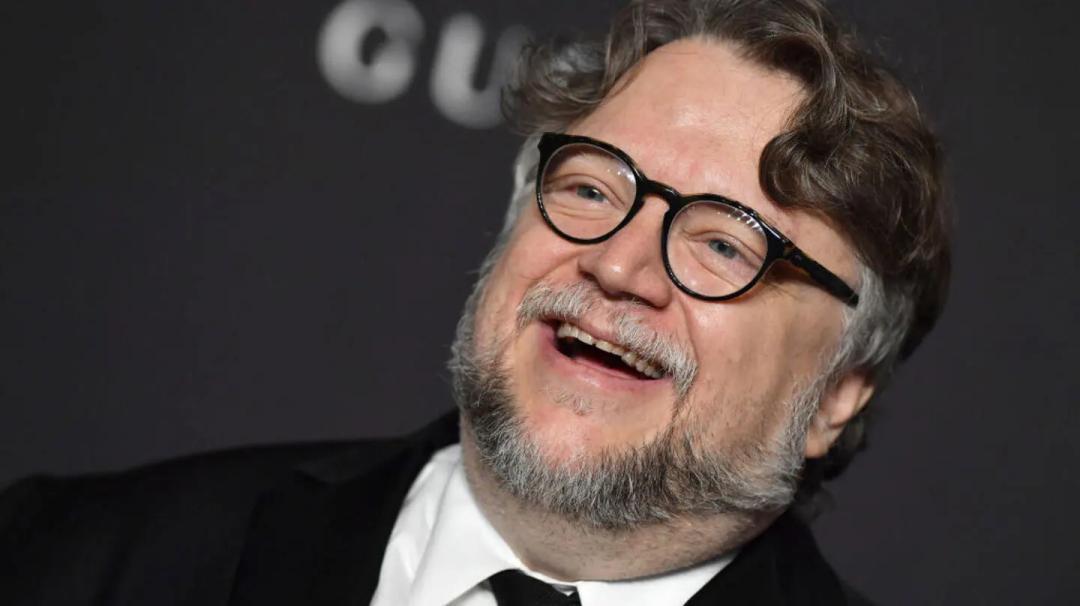
Fk AI: Frankenstein Director Guillermo del Toro at Gotham awards
The Gotham Film Awards 2025 was a night to remember, with numerous talented individuals being honored for their outstanding contributions to the film industry. One of the most notable moments of the evening came when Guillermo del Toro, the acclaimed director of the upcoming film “Frankenstein,” took the stage to receive the Vanguard Tribute. Del Toro was accompanied by the lead actors of his film, Jacob Elordi and Oscar Isaac, as he accepted the prestigious award. However, it was his speech that stole the show, as he openly criticized artificial intelligence (AI) and its growing influence in the film industry.
As del Toro began his speech, he expressed his gratitude to the Gotham Film Awards for recognizing his work. He then shifted his focus to the team that worked tirelessly to bring “Frankenstein” to life, emphasizing the human element that went into creating the film. “Every single frame of this film, every single decision, was wilfully made by humans, for humans,” he said, highlighting the importance of human creativity and emotion in filmmaking.
The audience was already captivated by del Toro’s words, but it was what came next that sparked a mixture of applause and shock. “I would like to extend our gratitude and say: F**k AI,” the director added, leaving no room for misinterpretation. His bold statement was a clear indication of his stance on the role of AI in filmmaking, and it resonated with many in the audience.
Del Toro’s criticism of AI is not entirely unexpected, given the growing concerns about the impact of technology on the film industry. With AI-generated content becoming increasingly prevalent, many filmmakers and artists are worried about the potential loss of jobs and the homogenization of creative output. Del Toro’s statement can be seen as a rallying cry for those who value human creativity and the unique touch that it brings to filmmaking.
The use of AI in filmmaking is a complex issue, with both proponents and detractors presenting valid arguments. On one hand, AI can be a powerful tool for filmmakers, enabling them to automate repetitive tasks, generate special effects, and even create entire scenes. However, as del Toro’s statement suggests, there is a risk that over-reliance on AI could lead to a loss of human touch and creativity in filmmaking.
Del Toro’s film “Frankenstein” is a prime example of the importance of human creativity in filmmaking. The film is a classic tale of horror and tragedy, with a rich emotional depth that is characteristic of del Toro’s work. The fact that every frame of the film was “wilfully made by humans, for humans” is a testament to the power of human imagination and creativity.
The reaction to del Toro’s statement was mixed, with some people praising his boldness and others criticizing his stance on AI. However, regardless of one’s opinion on the matter, it is clear that del Toro’s statement has sparked an important conversation about the role of AI in filmmaking.
As the film industry continues to evolve, it is essential to consider the implications of AI on the creative process. While AI can be a powerful tool, it is crucial to ensure that it is used in a way that complements human creativity, rather than replacing it. Del Toro’s statement serves as a reminder of the importance of human imagination and emotion in filmmaking, and it is a call to action for filmmakers to prioritize these values in their work.
In conclusion, Guillermo del Toro’s speech at the Gotham Film Awards 2025 was a powerful statement about the importance of human creativity in filmmaking. His criticism of AI and his emphasis on the human element that went into creating “Frankenstein” are a testament to his commitment to the art of filmmaking. As the film industry continues to navigate the complexities of AI, del Toro’s statement serves as a reminder of the importance of preserving human imagination and emotion in the creative process.
About the Author