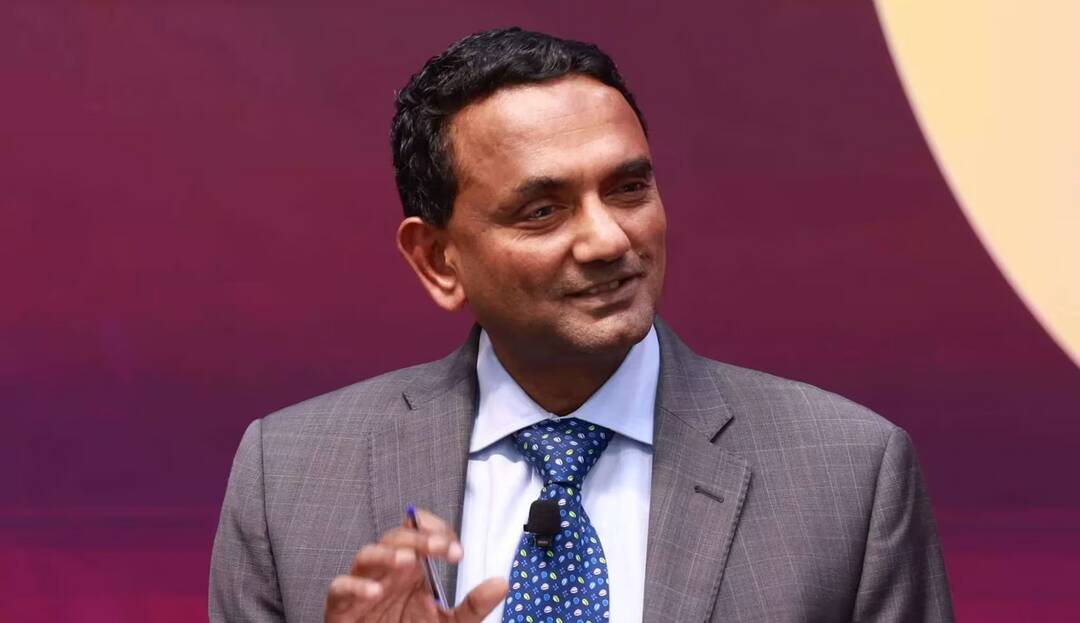
95% of AI pilots fail to deliver meaningful efficiency: TCS CEO
The world of artificial intelligence (AI) has been abuzz with excitement and promise, with many organizations investing heavily in AI pilots in the hopes of revolutionizing their operations and achieving greater efficiency. However, according to K Krithivasan, CEO of Tata Consultancy Services (TCS), a staggering 95% of these AI pilots have failed to deliver meaningful value. This striking claim was made by Krithivasan, citing research, and highlights the significant gap between the potential of AI and its actual impact on businesses.
Krithivasan’s statement is a sobering reminder that the implementation of AI is not a guarantee of success. Many organizations have rushed to adopt AI, hoping to stay ahead of the curve and reap the benefits of this emerging technology. However, the reality is that AI is not a magic bullet that can solve all problems. It requires careful planning, execution, and integration with existing systems and processes to deliver meaningful results.
The TCS CEO’s comments come at a time when the world is looking ahead to 2026, and the impact of AI is becoming increasingly clear. As Krithivasan noted, “As we look ahead to 2026, a clearer picture of AI’s impact is emerging.” This picture is one of both promise and challenge, as organizations struggle to harness the power of AI to drive real change and improvement.
Krithivasan also highlighted the emergence of a new form of organizational intelligence, where combinations of humans and machines shape how choices are developed, presented, and discussed. This new form of intelligence has the potential to revolutionize the way organizations operate, enabling them to make better decisions, faster and more accurately. However, it also requires a fundamental shift in the way organizations think about work, and the role of humans and machines in the decision-making process.
So, what can organizations do to ensure that their AI pilots deliver meaningful value? Krithivasan emphasized the importance of a clear understanding of the business problem that AI is intended to solve. This requires a deep understanding of the organization’s operations, as well as the potential benefits and limitations of AI. It also requires a willingness to experiment, learn, and adapt, as the implementation of AI is often a iterative process.
In addition, Krithivasan highlighted the need for organizations to develop a robust framework for evaluating the effectiveness of their AI pilots. This includes setting clear metrics and benchmarks for success, as well as establishing a process for continuous monitoring and evaluation. By doing so, organizations can ensure that their AI pilots are delivering real value, and make adjustments as needed to optimize their impact.
The failure of AI pilots to deliver meaningful efficiency is a wake-up call for organizations to re-examine their approach to AI. It highlights the need for a more nuanced and thoughtful approach to the implementation of AI, one that takes into account the complexities and challenges of integrating AI into existing systems and processes. By doing so, organizations can unlock the full potential of AI, and achieve the efficiency and innovation that they are seeking.
In conclusion, the statement by TCS CEO K Krithivasan that 95% of AI pilots fail to deliver meaningful efficiency is a stark reminder of the challenges of implementing AI. However, it also highlights the potential for AI to drive real change and improvement, when implemented thoughtfully and carefully. As organizations look ahead to 2026, they would do well to heed Krithivasan’s words, and approach AI with a clear understanding of its potential and limitations.
By doing so, they can unlock the full potential of AI, and achieve the efficiency, innovation, and growth that they are seeking. The future of AI is bright, but it requires a thoughtful and nuanced approach to implementation. With the right approach, organizations can harness the power of AI to drive real change and improvement, and achieve the benefits that they are seeking.
About the Author