World-class tech isn’t domain of the West anymore: Ola CEO to Musk
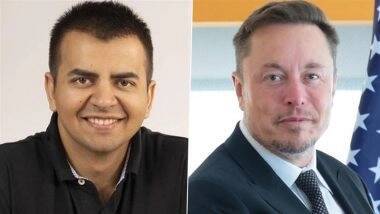
The world of technology is constantly evolving, and the lines between Eastern and Western innovations are becoming increasingly blurred. Recently, Tesla CEO Elon Musk announced a major breakthrough in lithium battery production, claiming that his company had successfully scaled the dry electrode process. However, Ola Electric founder-CEO Bhavish Aggarwal was quick to respond, stating that his company had been using a similar dry coating process since last year, with lakhs of cells already in customer vehicles.
Musk’s announcement was met with excitement and curiosity, as the dry electrode process has the potential to revolutionize the production of lithium batteries. The process involves using a dry coating method to apply the electrodes to the battery cells, rather than the traditional wet coating method. This can lead to improved efficiency, reduced production costs, and increased battery lifespan.
However, Aggarwal’s response was a harsh reality check for Musk and the Western tech community. By stating that Ola Electric had been using a similar process for over a year, Aggarwal was implying that the technology was not as groundbreaking as Musk had claimed. Furthermore, the fact that Ola Electric had already successfully implemented the technology and was using it in customer vehicles suggests that the company is ahead of the curve in terms of innovation.
Aggarwal’s statement, “World-class tech isn’t the domain of the West anymore,” is a bold assertion that highlights the shifting dynamics of the global tech landscape. For decades, the West has been synonymous with technological innovation, with companies like Tesla, Google, and Apple leading the charge. However, in recent years, we have seen a surge in innovation from Eastern countries, particularly in Asia.
Companies like Ola Electric, Huawei, and Xiaomi are pushing the boundaries of what is possible with technology, and their innovations are having a significant impact on the global market. The fact that Ola Electric was able to develop and implement a dry coating process for lithium battery production before Tesla is a testament to the company’s capabilities and the growing expertise of the Indian tech industry.
This shift in the global tech landscape has significant implications for the future of innovation. As Eastern companies continue to invest in research and development, we can expect to see more breakthroughs and innovations coming from this region. The traditional dominance of Western companies is being challenged, and the playing field is becoming increasingly level.
Moreover, the fact that Ola Electric was able to achieve this breakthrough with significantly less resources and funding than Tesla is a testament to the company’s ingenuity and resourcefulness. This is a common trait among many Eastern tech companies, which have learned to innovate and thrive in environments with limited resources.
The exchange between Musk and Aggarwal also highlights the importance of collaboration and knowledge sharing in the tech industry. While Musk’s announcement was seen as a major breakthrough, Aggarwal’s response suggests that the technology is not as new or innovative as claimed. This exchange demonstrates that companies can learn from each other and build upon existing knowledge to create something truly innovative.
In conclusion, the statement by Ola Electric founder-CEO Bhavish Aggarwal, “World-class tech isn’t the domain of the West anymore,” is a wake-up call for the Western tech community. It highlights the growing expertise and capabilities of Eastern companies, particularly in the field of technology. As the global tech landscape continues to evolve, we can expect to see more innovations and breakthroughs coming from this region.
The fact that Ola Electric was able to develop and implement a dry coating process for lithium battery production before Tesla is a testament to the company’s capabilities and the growing expertise of the Indian tech industry. This shift in the global tech landscape has significant implications for the future of innovation, and it will be exciting to see how companies from both East and West collaborate and compete to create the next generation of technologies.
About the Author