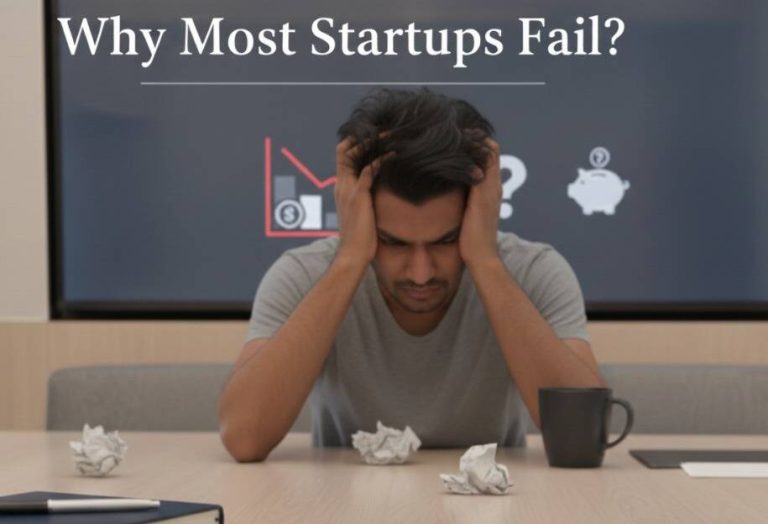
Why most startups fail despite big ideas and funding?
The startup ecosystem is known for its frenetic pace, innovative ideas, and lofty ambitions. Every year, thousands of new startups emerge, each with a unique value proposition and a burning desire to disrupt the status quo. However, despite the enthusiasm and energy, the harsh reality is that most startups fail. According to various estimates, up to 90% of startups do not make it past the first few years, and the reasons for this failure are often more nuanced than a simple lack of funding or a weak idea.
In fact, many startups that fail have received significant funding and have been founded by talented and experienced entrepreneurs. So, what goes wrong? Founders and industry leaders point to several key factors that contribute to the demise of startups, even those with big ideas and ample funding. In this article, we will explore the three main reasons why startups fail, despite having all the ingredients for success.
Lack of real market demand
One of the primary reasons startups fail is that they often create products or services that do not meet a genuine market need. This can happen when founders fall in love with their own ideas and assume that others will share their enthusiasm. However, without proper customer validation, it is impossible to know whether a product or service will resonate with the target audience. Startups that skip this crucial step often end up building something that nobody wants or needs, which can lead to a lack of traction and ultimately, failure.
For instance, a startup may create a cutting-edge technology that solves a problem, but if that problem is not significant enough or does not affect a large enough market, the startup will struggle to gain traction. Similarly, a startup may create a product that is too complex or too expensive for its target market, which can also lead to a lack of adoption. To avoid this pitfall, startups need to engage with their target audience, gather feedback, and iterate on their product or service until they have created something that meets a real market need.
Uncontrolled cash burn
Another reason startups fail is that they often overspend before they have generated sufficient revenue. This can happen when founders are overly optimistic about their growth prospects and burn through their funding too quickly. When a startup has a lot of funding, it can be tempting to hire a large team, invest in expensive marketing campaigns, and build out a elaborate infrastructure. However, if the startup is not generating enough revenue to support these expenses, it can quickly run out of cash and be forced to shut down.
Startups need to be mindful of their burn rate and ensure that they have enough runway to achieve their growth objectives. This means being frugal, prioritizing expenses, and focusing on generating revenue as quickly as possible. It also means being willing to pivot or adjust the business model if things are not working out as planned. By being disciplined about cash management, startups can avoid the trap of uncontrolled cash burn and ensure that they have the resources they need to succeed.
Weak execution
Finally, startups often fail due to weak execution. This can happen when founders are not experienced or skilled enough to build and manage a team, or when they are unable to create a culture that is conducive to innovation and growth. Weak execution can also occur when startups are slow to adapt to changing market conditions or customer needs. In today’s fast-paced and competitive startup ecosystem, the ability to execute quickly and effectively is critical.
Startups need to have a clear vision and strategy, and they need to be able to communicate this vision to their team and stakeholders. They also need to be able to build a strong and talented team, and create a culture that is collaborative, innovative, and customer-focused. By prioritizing execution and being adaptable, startups can overcome the inevitable obstacles and challenges that they will face, and achieve their goals.
Conclusion
Starting a successful startup is never easy, and there are many factors that can contribute to failure. However, by understanding the three key mistakes that startups often make, founders and entrepreneurs can take steps to avoid these pitfalls and increase their chances of success. This means prioritizing customer validation, managing cash flow carefully, and focusing on strong execution. By being disciplined, adaptable, and customer-focused, startups can turn their big ideas into successful and sustainable businesses.
For more information on this topic, please visit: https://ascendants.in/industry_events/why-most-startups-fail-3-key-mistakes/
About the Author