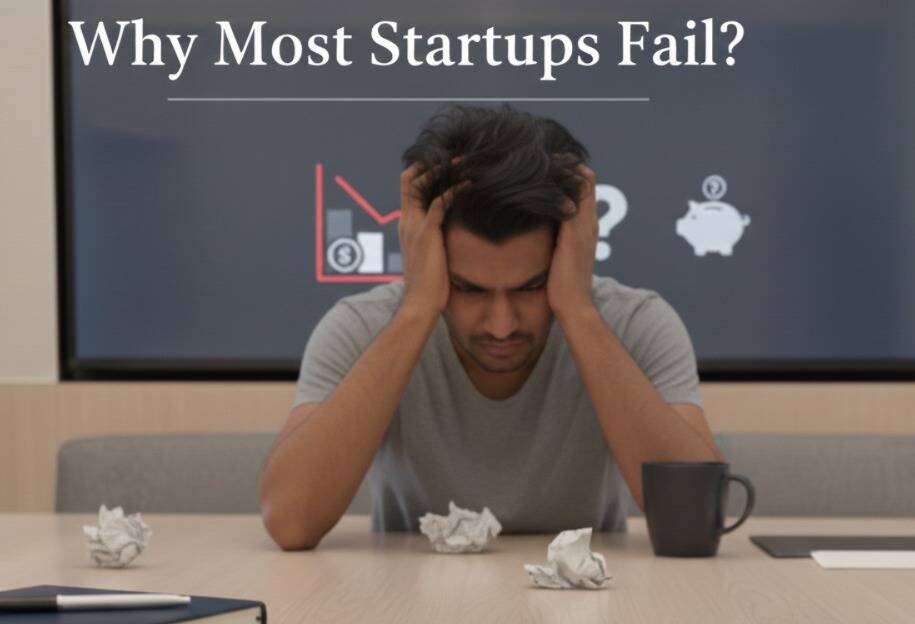
Why most startups fail despite big ideas and funding?
The startup ecosystem has witnessed a significant surge in recent years, with numerous innovative ideas and substantial funding pouring in from investors. However, despite having big ideas and sufficient funding, most startups fail to achieve their desired goals and eventually shut down. This phenomenon has left many wondering what goes wrong, considering the strong foundation of technology, funding interest, and early buzz that these startups often possess.
According to founders and industry leaders, the primary reasons for startup failure are not weak ideas, but rather poor fundamentals. A lack of real market demand, uncontrolled cash burn, and weak execution are the biggest mistakes that startups make, ultimately leading to their demise. In this blog post, we will delve into these three key mistakes that startups make, which can serve as valuable lessons for aspiring entrepreneurs and startup founders.
Lack of Real Market Demand
One of the most significant reasons for startup failure is the lack of real market demand for their product or service. Many startups assume that their idea is innovative and will automatically attract customers, without conducting thorough market research to validate their assumptions. This can lead to a significant mismatch between the product or service offered and the actual needs of the target market.
Startups that skip customer validation often end up creating a solution that nobody wants or needs. This can result in a lack of traction, low sales, and ultimately, the shutdown of the business. On the other hand, startups that take the time to understand their target market, gather feedback, and iterate their product or service to meet the actual needs of customers are more likely to succeed.
For instance, a startup that develops a mobile app for food delivery may assume that there is a high demand for such a service in a particular area, without conducting thorough market research. However, if the target market already has established food delivery services, or if the local population prefers to cook at home, the startup’s app may not gain traction, despite having a strong technology backbone.
Uncontrolled Cash Burn
Another significant reason for startup failure is uncontrolled cash burn. Many startups, especially those with significant funding, tend to overspend on hiring, marketing, and other expenses, without generating sufficient revenue to justify these costs. This can lead to a rapid depletion of funds, leaving the startup with little room to maneuver or adapt to changing market conditions.
Startups that overspend before generating revenue often find themselves in a precarious position, with limited cash reserves to fall back on. This can force them to make drastic cuts, lay off employees, or even shut down the business altogether. On the other hand, startups that maintain a lean and agile approach, with a focus on generating revenue and controlling expenses, are better equipped to navigate the challenges of the startup journey.
For example, a startup that raises $1 million in funding may decide to hire a large team, rent a fancy office, and spend heavily on marketing, without generating sufficient revenue to justify these expenses. However, if the startup’s revenue growth is slower than expected, the company may find itself running out of cash, despite having a strong technology and a promising idea.
Weak Execution
The third key reason for startup failure is weak execution. Many startups have a great idea, a strong technology, and sufficient funding, but they fail to execute their plans effectively. This can be due to a lack of clear goals, poor project management, or inadequate leadership.
Startups that fail to adapt quickly to changing market conditions, customer needs, or competitor activity often find themselves left behind. In today’s fast-paced and rapidly evolving business landscape, startups need to be agile, nimble, and responsive to stay ahead of the curve. This requires strong leadership, a clear vision, and a culture of continuous learning and improvement.
For instance, a startup that develops a new product may have a great idea, but if the company fails to execute its go-to-market strategy effectively, the product may not gain traction. This can be due to a lack of clear goals, poor marketing, or inadequate sales efforts. On the other hand, startups that execute their plans effectively, with a focus on continuous learning and improvement, are more likely to succeed and achieve their desired goals.
Conclusion
In conclusion, most startups fail not because their ideas are weak, but due to poor fundamentals. A lack of real market demand, uncontrolled cash burn, and weak execution are the biggest reasons for startup failure. Startups that skip customer validation, overspend before revenue, or fail to adapt quickly often shut down, despite having strong technology, funding interest, or early buzz.
Aspiring entrepreneurs and startup founders can learn valuable lessons from these mistakes and take steps to avoid them. By conducting thorough market research, maintaining a lean and agile approach, and executing their plans effectively, startups can increase their chances of success and achieve their desired goals. Remember, having a big idea and sufficient funding is just the starting point; it’s the execution and fundamentals that ultimately determine a startup’s success.
News Source: https://ascendants.in/industry_events/why-most-startups-fail-3-key-mistakes/
About the Author