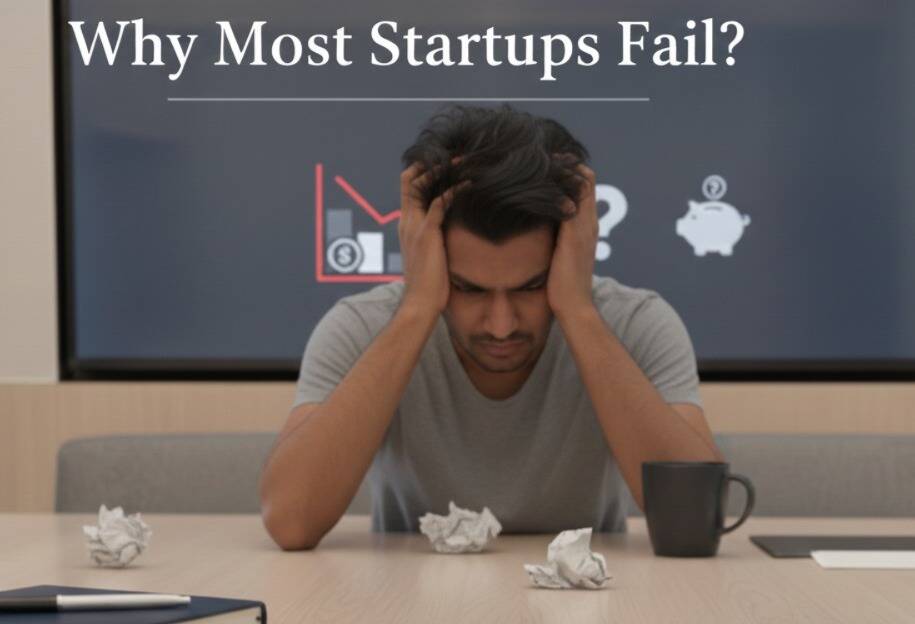
Why most startups fail despite big ideas and funding?
The startup ecosystem is known for its innovative ideas, cutting-edge technology, and enthusiastic founders. However, despite the excitement and promise, most startups fail to achieve their intended goals. In fact, it’s estimated that up to 90% of startups fail, with many shutting down within the first few years of operation. But what’s surprising is that these failures often occur despite the presence of big ideas, significant funding, and initial buzz.
So, what goes wrong? According to founders and industry leaders, the reasons for startup failure are often rooted in poor fundamentals rather than weak ideas. In this article, we’ll explore the three key mistakes that can lead to startup failure, even when the idea is sound and the funding is plentiful.
Lack of Real Market Demand
One of the most significant reasons startups fail is the lack of real market demand for their product or service. Many founders are so enamored with their idea that they assume everyone else will be too. However, this assumption can be fatal. Without a genuine need for the product, the startup will struggle to gain traction, no matter how much funding it receives.
Customer validation is crucial to determining whether there’s a real market demand for the product. Startups that skip this step often find themselves with a solution in search of a problem. They may have a great product, but if nobody wants or needs it, the business will ultimately fail.
For example, a startup might develop an innovative new gadget, but if there’s no real need for it, the product will collect dust on store shelves. On the other hand, a startup that takes the time to validate its idea with potential customers can make adjustments and create a product that meets real needs.
Uncontrolled Cash Burn
Another major reason startups fail is uncontrolled cash burn. Many founders, especially those with significant funding, can fall into the trap of overspending before revenue starts rolling in. This can lead to a quick burn-through of cash, leaving the startup with no financial runway to speak of.
Overspending can take many forms, from hiring too many employees too quickly to investing in unnecessary infrastructure or marketing campaigns. While some spending is necessary to grow the business, uncontrolled cash burn can be disastrous.
Startups that fail to manage their finances effectively often find themselves in a difficult position. They may be forced to lay off employees, cut back on essential services, or even shut down entirely. On the other hand, startups that prioritize financial discipline can conserve cash, extend their runway, and increase their chances of success.
Weak Execution
Finally, weak execution is another key reason startups fail. Even with a great idea and sufficient funding, a startup can still falter if the team fails to execute effectively. This can include everything from poor product development to inadequate marketing and sales strategies.
Startups that fail to adapt quickly to changing market conditions or customer needs can also struggle to survive. The ability to pivot and adjust the business model is critical in today’s fast-paced startup ecosystem.
For example, a startup might develop a great product, but if the marketing and sales teams fail to effectively communicate the value proposition, the product will not sell. Similarly, a startup that fails to iterate and improve its product based on customer feedback will struggle to retain users and attract new ones.
Conclusion
Starting a successful business is never easy, and the statistics on startup failure are sobering. However, by understanding the three key mistakes that can lead to startup failure, founders and entrepreneurs can take steps to avoid these pitfalls.
By prioritizing customer validation, financial discipline, and effective execution, startups can increase their chances of success, even in the face of intense competition and uncertainty. Remember, a great idea and significant funding are not enough to guarantee success. It’s the fundamentals that matter, and startups that focus on these fundamentals will be better equipped to navigate the challenges of the startup ecosystem.
Source:
https://ascendants.in/industry_events/why-most-startups-fail-3-key-mistakes/
About the Author