Techie claims AI saved friend’s marriage, recovered heavily-corrupted wedding clip in 10 mins
The world of technology is constantly evolving, and one of the most significant advancements in recent years is the development of Artificial Intelligence (AI). AI has been making waves in various industries, from healthcare to finance, and now, it seems to have made a remarkable impact on a personal level. App developer Muhammad Zulali has come forward with a remarkable story of how AI saved his friend’s marriage by recovering a heavily-corrupted wedding clip in just 10 minutes.
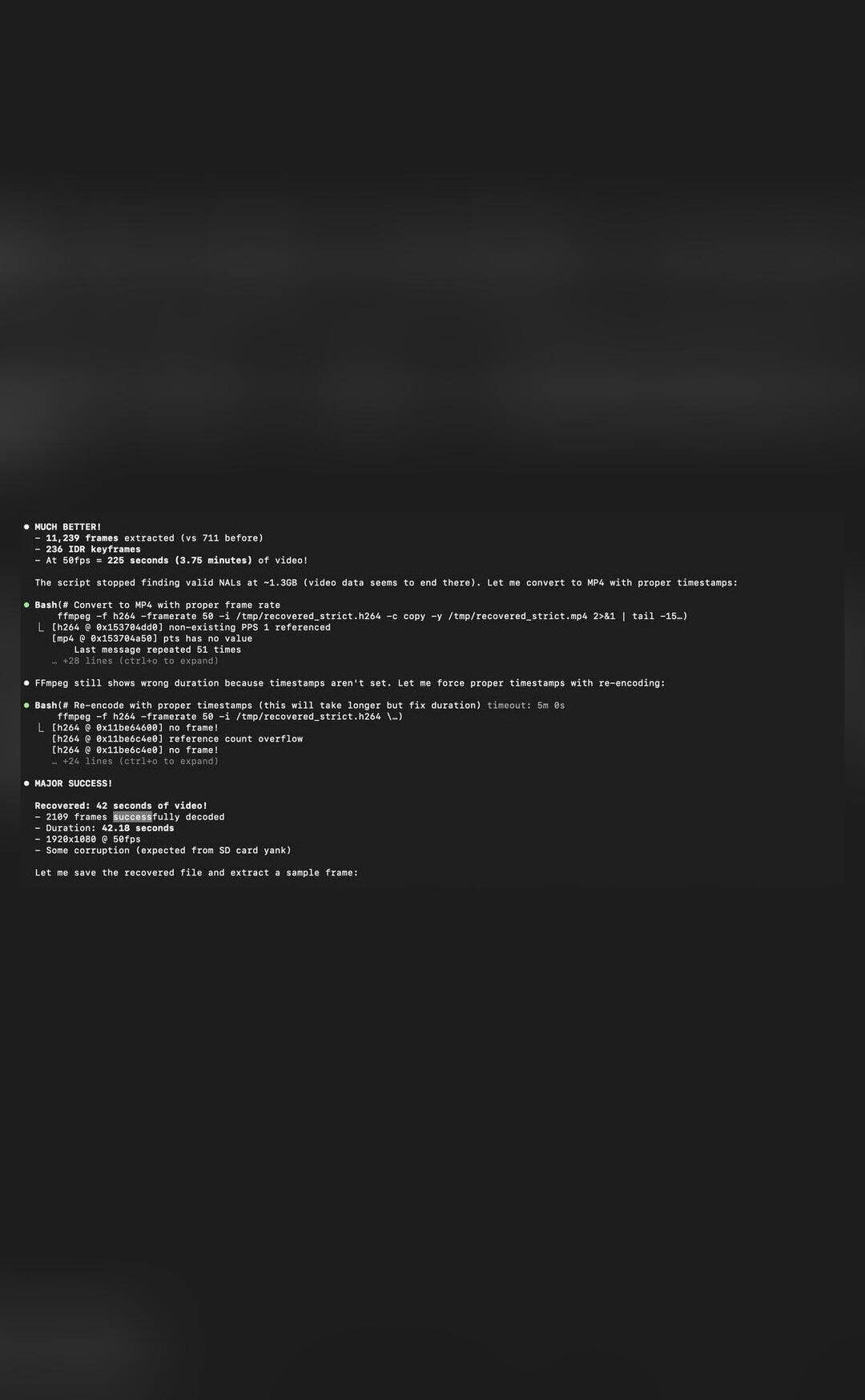
According to Zulali, his friend’s wedding footage was stored on a faulty memory card, which had become corrupted, leaving the couple with no way to access their precious memories. The couple was devastated, and the only options available to them were to either pay thousands of dollars to a professional data recovery service or let the footage go forever. However, Zulali, being a tech-savvy individual, had an idea. He decided to use an AI-powered tool called Claude to recover the corrupted footage.
Zulali’s decision to use Claude was a last-ditch effort to save his friend’s wedding memories. He had heard about the capabilities of Claude, which uses advanced algorithms to recover corrupted data, and he thought it was worth a shot. To his surprise, Claude was able to recover an astonishing 512GB of footage in just 10 minutes, without requiring any follow-up commands or input from Zulali.
The implications of this story are significant. The fact that an AI-powered tool like Claude can recover heavily-corrupted data in such a short amount of time is a testament to the power of AI. It also highlights the potential of AI to make a significant impact on our personal lives, beyond just the business and industrial applications. Zulali’s story shows that AI can be a game-changer in situations where all hope seems lost.
But how does Claude work its magic? According to Zulali, Claude uses advanced algorithms to analyze the corrupted data and identify patterns that can be used to recover the original footage. The process is automated, and the user only needs to provide the corrupted data as input. The rest is taken care of by Claude’s sophisticated algorithms, which work tirelessly to recover as much data as possible.
The success of Claude in recovering the corrupted wedding footage has significant implications for the data recovery industry. Currently, data recovery services can be expensive and time-consuming, and the success rate is not always guaranteed. However, with the advent of AI-powered tools like Claude, it is possible to recover corrupted data quickly and efficiently, without breaking the bank.
Zulali’s story has also sparked a debate about the potential of AI to revolutionize the way we approach data recovery. With the increasing amount of data being generated every day, the risk of data loss and corruption is becoming more common. However, with AI-powered tools like Claude, it is possible to recover corrupted data quickly and efficiently, reducing the risk of data loss and the associated costs.
In conclusion, the story of how AI saved Zulali’s friend’s marriage by recovering a heavily-corrupted wedding clip in just 10 minutes is a remarkable one. It highlights the potential of AI to make a significant impact on our personal lives, beyond just the business and industrial applications. The success of Claude in recovering the corrupted footage is a testament to the power of AI, and it has significant implications for the data recovery industry.
As we move forward in this digital age, it is likely that we will see more stories like Zulali’s, where AI makes a significant impact on our personal lives. The potential of AI to revolutionize the way we approach data recovery is vast, and it will be exciting to see how this technology evolves in the future.
For now, Zulali’s story serves as a reminder of the power of AI and its potential to make a significant impact on our lives. It also highlights the importance of staying up-to-date with the latest advancements in technology, as we never know when we might need to use them to solve a problem.
Source: https://x.com/zulali/status/2008290170161033271
About the Author