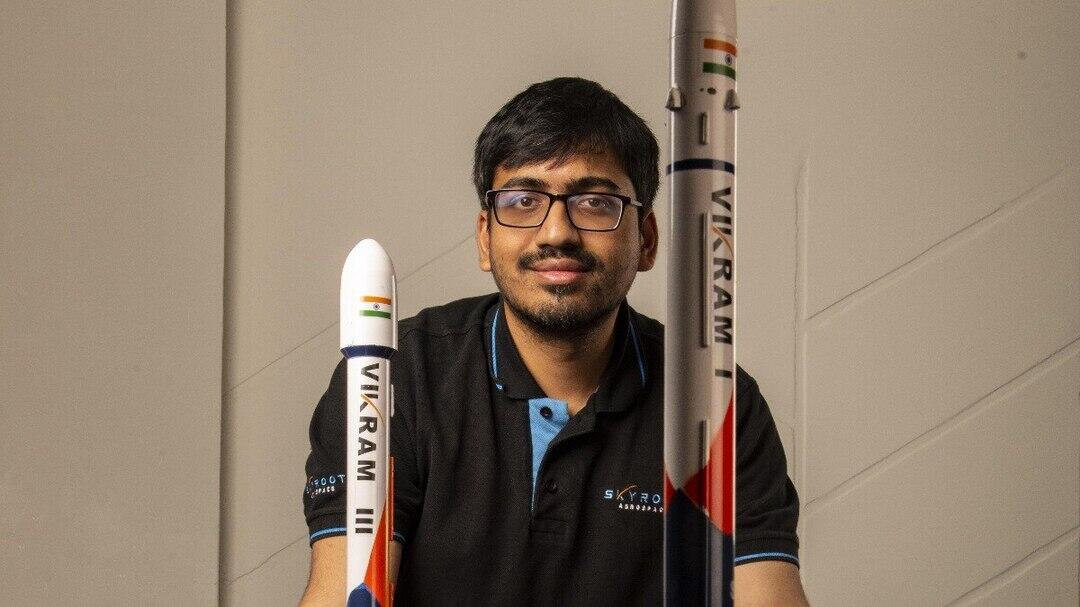
PK Chandana, who launched India’s 1st private rocket, scored 51 in maths; later cleared JEE
The Indian space industry has witnessed a significant milestone with the launch of the country’s first private rocket, Vikram-S, by Skyroot Aerospace. The brain behind this innovative achievement is Pawan Kumar Chandana, the Co-founder of Skyroot Aerospace. What’s fascinating about Chandana’s story is that he wasn’t always a high-achieving student. In fact, he scored a modest 51 marks in mathematics, a subject that would later become the foundation of his remarkable career.
According to Deedy Das, Chandana’s academic journey was not without its challenges. His father, however, refused to give up on his son’s potential. Recognizing the importance of proper guidance, Chandana’s father enrolled him in IIT-JEE coaching, which proved to be a turning point in his life. Under the tutelage of experienced mentors, Chandana began to develop a passion for science and mathematics. His hard work and dedication eventually paid off, as he cleared the Joint Entrance Examination (JEE) and secured a spot at the prestigious Indian Institute of Technology (IIT), Kharagpur, in 2007.
Chandana’s transformation from an average student to a trailblazer in the Indian space industry is a testament to the power of perseverance and the right guidance. His journey serves as an inspiration to countless students who may be struggling with their academics, reminding them that success is not solely determined by one’s early performances.
After completing his education at IIT-Kharagpur, Chandana went on to work with several renowned organizations, including the Indian Space Research Organisation (ISRO) and NASA. These experiences not only broadened his knowledge but also deepened his understanding of the space industry. In 2018, Chandana, along with his friend and colleague, Naga Bharath Daka, founded Skyroot Aerospace, with the ambitious goal of developing and launching India’s first private rocket.
The launch of Vikram-S, named after the father of India’s space program, Dr. Vikram Sarabhai, marked a historic moment for the Indian space industry. This achievement demonstrates the potential of private players in the space sector and paves the way for further innovation and collaboration. Skyroot Aerospace’s success has also sparked interest among investors, with the company securing significant funding to support its future endeavors.
Chandana’s story is a powerful reminder that success is not solely dependent on one’s early achievements. His journey, from scoring 51 marks in mathematics to launching India’s first private rocket, is a testament to the importance of perseverance, hard work, and the right guidance. As the Indian space industry continues to evolve, Chandana’s achievement serves as a beacon of inspiration for aspiring students, entrepreneurs, and innovators.
The launch of Vikram-S has also highlighted the potential of the Indian space industry, which is expected to witness significant growth in the coming years. With the government’s support and the emergence of private players like Skyroot Aerospace, India is poised to become a major player in the global space sector.
As we celebrate Chandana’s achievement, it’s essential to recognize the role of his family, particularly his father, in supporting his academic pursuits. The importance of parental guidance and encouragement cannot be overstated, as it can make a significant difference in a child’s life. Chandana’s story serves as a reminder to parents to be patient, supportive, and encouraging, even when their child may not be performing as expected.
In conclusion, PK Chandana’s journey is a remarkable example of how perseverance, hard work, and the right guidance can lead to extraordinary achievements. From scoring 51 marks in mathematics to launching India’s first private rocket, Chandana’s story is a testament to the power of the human spirit. As we look to the future, it’s essential to recognize the potential of the Indian space industry and the role that private players like Skyroot Aerospace will play in shaping its trajectory.
About the Author