Indian startup CEO claims IndiGo deducted ₹8,718 despite promising 100% refund for cancellations
The Indian aviation industry has been facing significant challenges in recent times, with numerous flights being cancelled due to various reasons. In an effort to provide relief to passengers, airlines have been promising 100% refunds for cancelled flights. However, it seems that some airlines may not be living up to their promises. Aman Goel, CEO and Co-founder of Indian AI startup GreyLabs AI, has taken to social media to express his disappointment and frustration with IndiGo, one of India’s largest airlines.
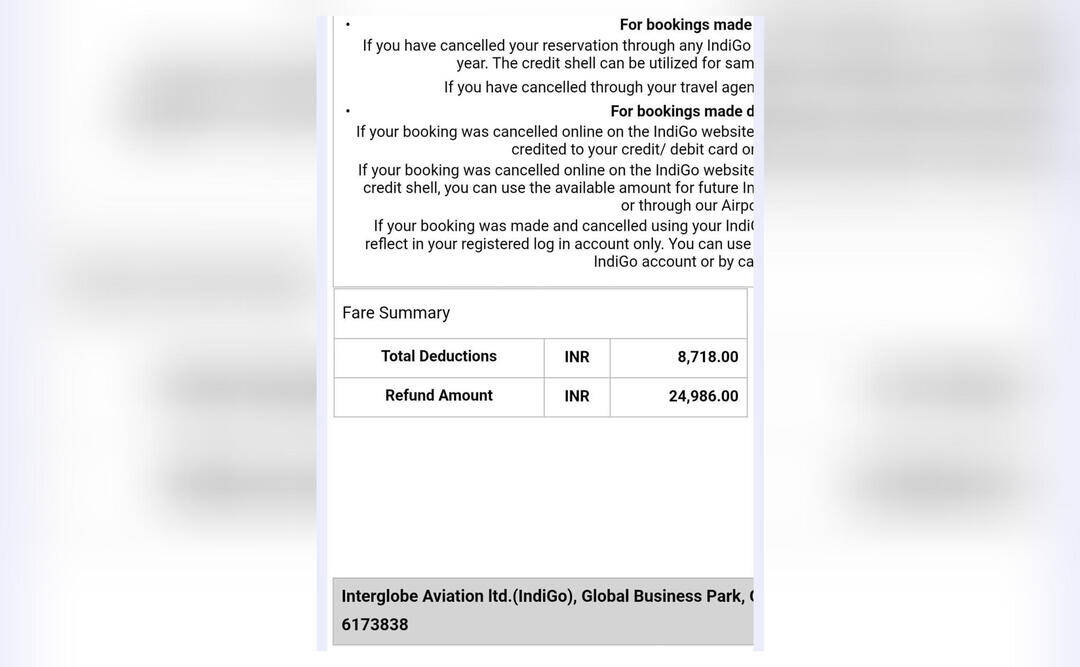
According to Goel, IndiGo deducted ₹8,718 from the refund amount for a flight that the airline had supposedly cancelled. Goel shared the details of the refund on social media, stating that the total deductions amounted to ₹8,718, and the refunded amount was ₹24,986. “Total deductions ₹8,718 and they call it 100% refund. IndiGo, care to explain?” Goel asked, seeking clarification from the airline.
This incident has raised concerns about the transparency and fairness of airlines’ refund policies. While IndiGo has promised 100% refunds for cancelled flights, the deduction of ₹8,718 from the refund amount is a significant amount, and it is unclear what this deduction is for. Goel’s experience has sparked a debate about the need for greater transparency and accountability in the airline industry.
The issue of flight cancellations and refunds is a complex one, and it is not unique to IndiGo. Many airlines have been struggling to cope with the challenges posed by the COVID-19 pandemic, and flight cancellations have become increasingly common. However, airlines have a responsibility to their passengers to provide fair and transparent refund policies.
In recent months, there have been numerous reports of airlines deducting significant amounts from refund amounts, citing various reasons such as taxes, fees, and other charges. While some of these deductions may be legitimate, others may be questionable, and it is up to the airlines to provide clear and transparent explanations for these deductions.
Goel’s experience with IndiGo is a case in point. The deduction of ₹8,718 from the refund amount is a significant amount, and it is unclear what this deduction is for. IndiGo needs to provide a clear and transparent explanation for this deduction, and to ensure that its refund policies are fair and consistent with its promises to passengers.
The incident also highlights the need for greater regulation and oversight of the airline industry. While airlines have a responsibility to their passengers to provide fair and transparent refund policies, regulatory bodies also have a role to play in ensuring that airlines are meeting their obligations.
In India, the Directorate General of Civil Aviation (DGCA) is responsible for regulating the airline industry. The DGCA has guidelines in place for airlines to follow in terms of refund policies, but it is unclear whether these guidelines are being followed consistently.
The incident involving Goel and IndiGo is a reminder that there is still much work to be done to ensure that the airline industry is fair and transparent. Passengers have a right to expect that airlines will meet their obligations, and regulatory bodies have a role to play in ensuring that this happens.
In conclusion, the incident involving Aman Goel and IndiGo is a concerning one, and it highlights the need for greater transparency and accountability in the airline industry. Airlines have a responsibility to their passengers to provide fair and transparent refund policies, and regulatory bodies have a role to play in ensuring that airlines are meeting their obligations. As the airline industry continues to evolve and grow, it is essential that these issues are addressed, and that passengers are protected.
For more information on this incident, you can visit the following link: https://x.com/amangoeliitb/status/1996916064979243076
News Source: https://x.com/amangoeliitb/status/1996916064979243076
About the Author