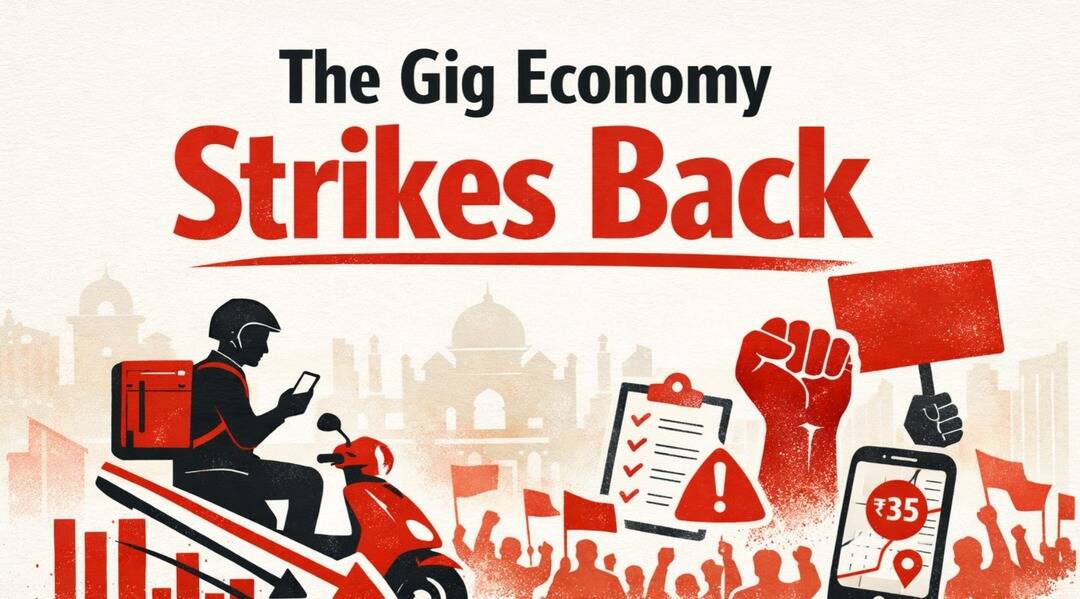
Indian gig economy strikes back, exposing a broken model
The Indian gig economy has been booming in recent years, with millions of workers signing up to work as independent contractors for companies like Zomato, Swiggy, and Ola. These companies have promised flexibility, convenience, and a chance for workers to earn a decent income on their own terms. However, the reality on the ground is far from rosy. In December, around 40,000 delivery workers joined nationwide strikes, disrupting 50–60% of orders in several cities. The workers cited low and unstable pay, strict app control, and weak protections as the reasons behind their protest.
The strike was a significant blow to the gig economy, which has been touted as a revolutionary way of working. The protests highlighted the widening gap between convenience and fairness in India’s digital jobs. On one hand, consumers have grown accustomed to the convenience of having food, groceries, and other essentials delivered to their doorstep at the click of a button. On the other hand, the workers who make this convenience possible are struggling to make ends meet.
The striking workers complained that their pay has been decreasing over time, with some earning as little as Rs 10-15 per delivery. This is a far cry from the promised earnings of Rs 50-60 per delivery that many workers were initially offered. The workers also complained about the strict control exerted by the companies over their work, with algorithms dictating everything from the routes they take to the time they have to complete a delivery. Any deviation from the prescribed route or failure to complete a delivery within the allotted time can result in penalties, including a deduction in pay.
The lack of protections for gig workers is another major concern. Unlike traditional employees, gig workers are not entitled to benefits like health insurance, paid leave, or pension. They are also not protected by labor laws, which makes them vulnerable to exploitation. The workers who participated in the strike demanded better pay, more flexibility, and greater protections from the companies.
The companies, however, have defended their model, citing the flexibility and convenience it offers to workers. They argue that gig workers are free to choose when and how much they want to work, and that they can earn more by working longer hours or taking on more deliveries. However, this argument ignores the reality of the situation, where workers are often forced to work long hours for low pay just to make ends meet.
The government has also intervened in the matter, with some politicians calling for greater regulation of the gig economy. The Ministry of Labor and Employment has announced plans to introduce new laws to protect gig workers, including provisions for minimum wages, social security, and job security. However, the details of these laws are still unclear, and it remains to be seen how effective they will be in addressing the concerns of gig workers.
The strike by Indian gig workers is not an isolated incident. Similar protests have taken place in other countries, including the United States, the United Kingdom, and Australia. These protests highlight the global nature of the problem, where workers are being exploited by companies that prioritize profits over people.
The Indian gig economy strike is a wake-up call for companies, policymakers, and consumers. It highlights the need for a more sustainable and equitable model of work, one that balances convenience with fairness. The companies must take responsibility for the workers who make their business model possible, and provide them with better pay, more flexibility, and greater protections. The government must also play its part, by introducing laws and regulations that protect the rights of gig workers.
Ultimately, the future of the gig economy depends on its ability to provide decent work and a living wage to its workers. If it fails to do so, it risks losing the trust of its workers and its customers. The strike by Indian gig workers is a reminder that the gig economy is not just about convenience and flexibility, but also about fairness and justice.
As the gig economy continues to grow and evolve, it is essential that we prioritize the needs and concerns of its workers. We must recognize the value and dignity of their work, and provide them with the protections and benefits they deserve. Only then can we create a gig economy that is truly sustainable and equitable for all.
Source: https://ascendants.in/industry_events/indian-gig-economy-strikes-platforms-policy/
About the Author