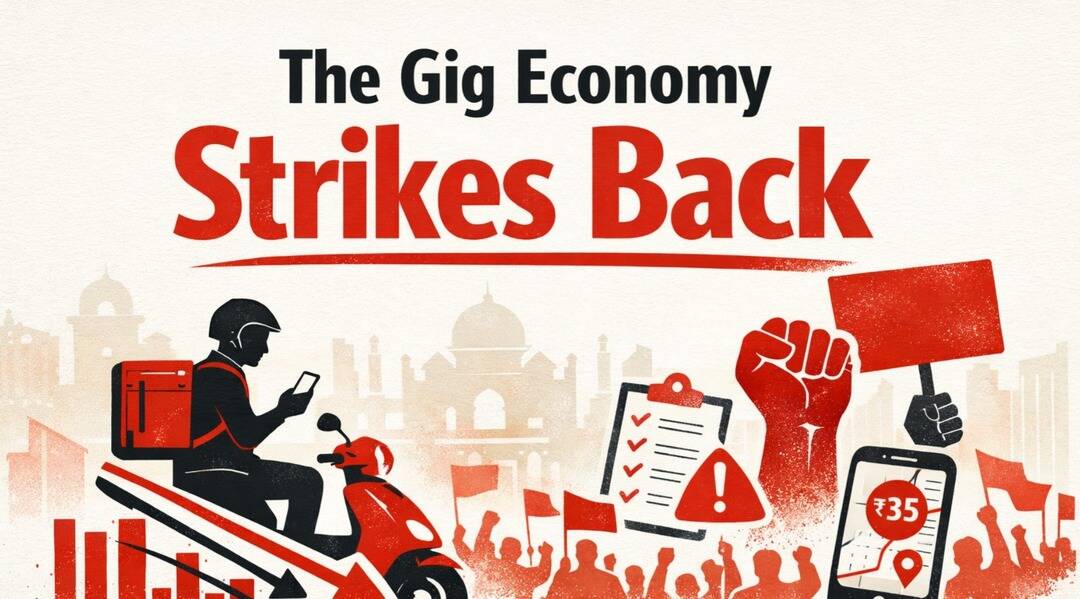
Indian gig economy strikes back, exposing a broken model
The Indian gig economy has been making headlines in recent months, but not for the reasons you might expect. Instead of celebrating the convenience and flexibility that these platforms offer, the conversation has shifted to the struggles of the workers who make it all possible. In December, around 40,000 delivery workers joined nationwide strikes, disrupting 50–60% of orders in several cities. The workers, who are the backbone of the gig economy, are speaking out against low and unstable pay, strict app control, and weak protections.
The strikes, which took place in major cities such as Mumbai, Delhi, and Bengaluru, were a culmination of months of frustration and discontent among the workers. They cited a range of issues, including meager earnings, long working hours, and a lack of benefits. The workers also complained about the strict control exerted by the platforms, which dictate everything from the routes they take to the time they have to deliver orders. With the rise of the gig economy, these workers have become an integral part of the digital landscape, but their struggles have been largely overlooked until now.
The Indian gig economy has grown exponentially in recent years, with millions of workers signing up to work on platforms such as Zomato, Swiggy, and Ola. These platforms have revolutionized the way we live, work, and interact with each other, offering convenience and flexibility that was previously unimaginable. However, the growth of the gig economy has also raised important questions about the rights and protections of the workers who make it all possible.
At the heart of the issue is the classification of the workers as “independent contractors” rather than employees. This classification allows the platforms to avoid providing benefits, such as health insurance, paid time off, and retirement plans, which are typically offered to full-time employees. The workers are also not entitled to minimum wage or overtime pay, which means that they can be paid as little as Rs 10-15 per delivery, regardless of the distance or time taken.
The workers are also subject to strict app control, which dictates every aspect of their work. The platforms use algorithms to assign orders, track deliveries, and monitor the workers’ performance. The workers are penalized for late deliveries, cancellations, or any other deviation from the expected norms. This has created a culture of fear and anxiety among the workers, who are constantly worried about meeting the targets and avoiding penalties.
The strikes have highlighted the widening gap between convenience and fairness in India’s digital jobs. While the platforms have created new opportunities for employment and entrepreneurship, they have also perpetuated a system of exploitation and inequality. The workers are not just fighting for better pay and working conditions; they are also fighting for dignity and respect.
As the strikes continue, the companies have defended their growth and business models, arguing that they are creating opportunities for millions of workers. However, the workers are not buying this narrative. They argue that the platforms are making huge profits at their expense, and that they are being treated as nothing more than machines.
The government has also intervened in the issue, with politicians from various parties weighing in on the matter. Some have called for greater regulation of the gig economy, while others have advocated for better working conditions and protections for the workers. However, the government’s response has been inconsistent and inadequate, and the workers are still waiting for concrete action.
The Indian gig economy strikes are a wake-up call for the country’s policymakers and business leaders. They highlight the need for a more nuanced and equitable approach to the gig economy, one that balances the needs of the workers with the interests of the platforms. The workers are not just asking for better pay and working conditions; they are also demanding a seat at the table and a say in the decisions that affect their lives.
As the debate around the gig economy continues, it is essential to listen to the voices of the workers who are at the forefront of this revolution. They are the ones who are making the gig economy possible, and their struggles and aspirations should be at the center of any discussion about the future of work.
In conclusion, the Indian gig economy strikes are a significant moment in the history of India’s digital jobs. They highlight the need for a more equitable and sustainable approach to the gig economy, one that prioritizes the needs and rights of the workers. As the country continues to grapple with the challenges and opportunities of the gig economy, it is essential to remember that the workers are not just statistics or metrics; they are human beings who deserve dignity, respect, and fairness.
News Source: https://ascendants.in/industry_events/indian-gig-economy-strikes-platforms-policy/
About the Author