Indian gig economy strikes back, exposing a broken model
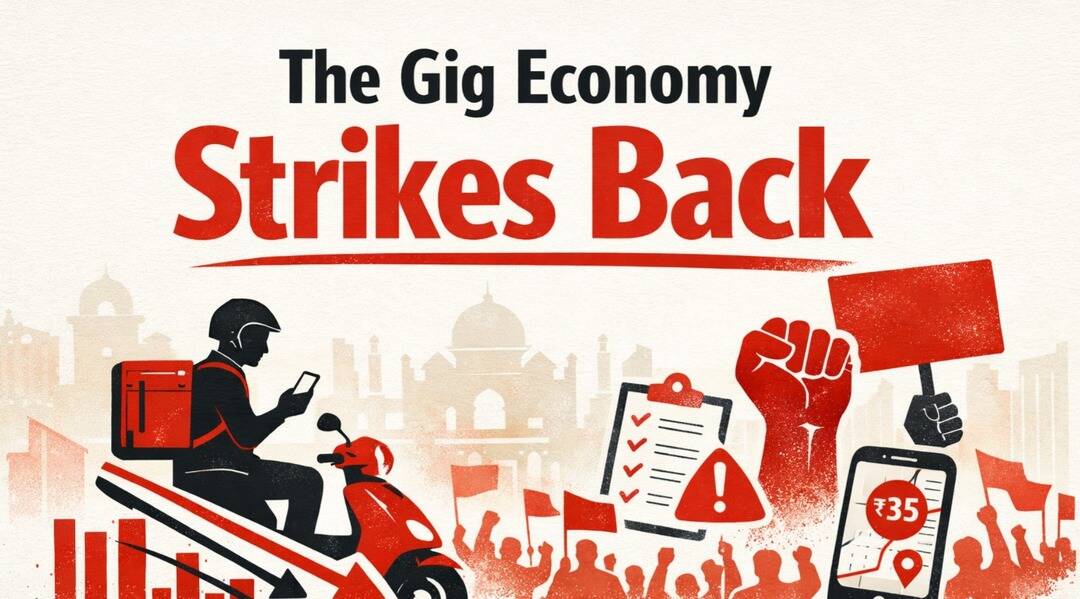
The Indian gig economy, once hailed as a revolutionary force in the job market, is facing a backlash from its very own workforce. In a wave of protests that swept across the country in December, around 40,000 delivery workers joined nationwide strikes, disrupting 50–60% of orders in several cities. The strike, which was one of the largest of its kind, highlighted the deep-seated issues that have been plaguing the gig economy, including low and unstable pay, strict app control, and weak protections for workers.
At the heart of the strike were the delivery workers who form the backbone of the gig economy, working for companies such as Zomato, Swiggy, and UberEats. These workers, who are classified as independent contractors rather than employees, have long been complaining about the poor working conditions and lack of job security. Despite the convenience and flexibility that the gig economy offers, workers have been struggling to make ends meet, with many earning as little as ₹15,000-20,000 per month.
One of the main grievances of the striking workers was the low and unstable pay. With the companies constantly tweaking their algorithms to optimize delivery times and reduce costs, workers have seen their earnings plummet. The introduction of new features such as “peak hours” and “priority delivery” has also led to a situation where workers are forced to work longer hours for less pay. Furthermore, the companies’ emphasis on speed and efficiency has created a culture of burnout, with workers feeling pressured to take on more deliveries than they can handle.
Another issue that the striking workers highlighted was the strict control exerted by the companies over their work. The apps used by the companies to manage their workforce have been designed to maximize efficiency and minimize costs, but they also leave workers with little autonomy or flexibility. Workers are often forced to work long hours without breaks, and are penalized for taking time off or refusing deliveries. The apps also use ratings and reviews to discipline workers, creating a culture of fear and anxiety.
The strike also highlighted the weak protections that exist for gig economy workers. Unlike traditional employees, gig workers are not entitled to benefits such as health insurance, paid time off, or retirement plans. They are also not protected by labor laws, which makes it difficult for them to unionize or negotiate with companies. The lack of protections has created a situation where workers are vulnerable to exploitation, with companies taking advantage of their desperation and lack of bargaining power.
The strike has sparked a debate about the future of the gig economy in India, with companies defending their growth and politicians intervening to resolve the issue. The companies have argued that they provide workers with flexible and convenient work opportunities, and that the strike is a minority view that does not represent the majority of workers. However, the strike has also highlighted the need for greater regulation and oversight of the gig economy, with many calling for stronger labor laws and better protections for workers.
As the gig economy continues to grow and expand, it is clear that the current model is broken. The emphasis on convenience and efficiency has created a system that is unfair and exploitative, with workers bearing the brunt of the costs. The strike has shown that workers will no longer tolerate the poor working conditions and lack of job security, and that they are willing to fight for their rights.
The Indian government has also taken notice of the strike, with several politicians intervening to resolve the issue. The government has promised to look into the grievances of the workers and to work with companies to improve their working conditions. However, the government’s response has been criticized for being too little, too late, with many arguing that more needs to be done to address the systemic issues that are driving the exploitation of gig workers.
In conclusion, the Indian gig economy strike has exposed a broken model that prioritizes convenience and efficiency over fairness and justice. The strike has highlighted the need for greater regulation and oversight of the gig economy, and for stronger labor laws that protect the rights of workers. As the gig economy continues to grow and expand, it is clear that companies, governments, and workers must work together to create a more equitable and sustainable model that benefits everyone, not just the bottom line.
To learn more about the Indian gig economy and its impact on workers, visit: https://ascendants.in/industry_events/indian-gig-economy-strikes-platforms-policy/
News Source: https://ascendants.in/industry_events/indian-gig-economy-strikes-platforms-policy/
About the Author