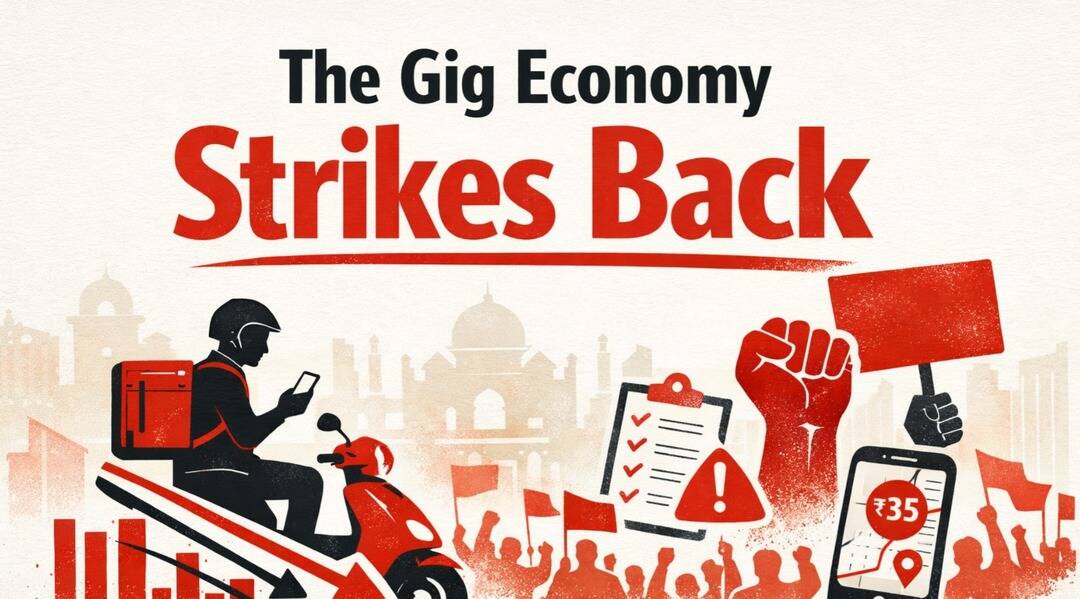
Indian gig economy strikes back, exposing a broken model
The Indian gig economy has been booming in recent years, with millions of workers signing up to work as delivery personnel, cab drivers, and other freelance jobs. However, beneath the surface of this convenient and efficient system, a different story is unfolding. In December, around 40,000 delivery workers joined nationwide strikes, disrupting 50–60% of orders in several cities. The workers, who are the backbone of the gig economy, are fighting for better pay, fair treatment, and stronger protections.
The strikes, which were organized by various worker unions and associations, highlighted the growing discontent among gig workers in India. The workers cited low and unstable pay, strict app control, and weak protections as the main reasons for their grievances. They alleged that the companies they work for, including popular food delivery and ride-hailing platforms, have been exploiting them for years, paying them meager wages and denying them basic benefits.
The Indian gig economy is a significant sector, with millions of workers employed in various roles. According to a report, the gig economy in India is expected to grow to $455 billion by 2025, up from $150 billion in 2020. However, this growth has come at a cost. Many gig workers are struggling to make ends meet, with some earning as little as ₹15,000 (approximately $200) per month. The workers also have to bear the costs of fuel, maintenance, and other expenses, which can eat into their already meager earnings.
The strikes have brought attention to the plight of gig workers in India and have sparked a debate about the fairness and sustainability of the gig economy model. While companies have defended their growth and expansion, politicians have intervened, promising to look into the matter and ensure that gig workers are treated fairly. However, the protests have also highlighted a widening gap between convenience and fairness in India’s digital jobs.
The gig economy is built on the concept of flexibility and convenience. Platforms like Uber, Ola, and Zomato have made it easy for consumers to order food, book cabs, and access other services with just a few taps on their smartphones. However, this convenience comes at a cost. The workers who power these platforms are often denied basic rights and benefits, including minimum wage, social security, and job security.
The Indian government has been trying to regulate the gig economy, but the efforts have been slow and inadequate. The government has introduced laws and regulations to protect gig workers, but these have been poorly implemented and enforced. The workers, therefore, have been left to fend for themselves, with little protection or support.
The strikes have also brought attention to the issue of app control, which has become a major point of contention between gig workers and companies. The companies use algorithms and other digital tools to control the workers, dictating their schedules, routes, and earnings. The workers have alleged that this control is suffocating, leaving them with little autonomy or flexibility.
The issue of app control is complex and multifaceted. On the one hand, the companies argue that they need to control the workers to ensure efficiency and quality. They claim that the algorithms and digital tools help to optimize routes, reduce wait times, and improve customer satisfaction. However, the workers argue that this control is excessive and exploitative, denying them the freedom to work on their own terms.
The strikes have sparked a debate about the future of the gig economy in India. While some argue that the gig economy is a necessary evil, providing jobs and opportunities to millions of workers, others argue that it is a broken model that needs to be fixed. The workers are demanding better pay, fair treatment, and stronger protections, but the companies are resisting, citing the need to keep costs low and maintain competitiveness.
As the debate rages on, it is clear that the Indian gig economy is at a crossroads. The strikes have exposed the deep-seated problems in the sector, including low pay, strict app control, and weak protections. The companies, politicians, and regulators need to come together to address these issues and create a more fair and sustainable model.
The Indian government has announced plans to introduce new laws and regulations to protect gig workers, including the introduction of a minimum wage and social security benefits. However, the implementation of these laws will be crucial, and the government will need to work closely with the companies and workers to ensure that they are effective.
In conclusion, the Indian gig economy is striking back, exposing a broken model that prioritizes convenience over fairness. The strikes have highlighted the growing discontent among gig workers, who are fighting for better pay, fair treatment, and stronger protections. As the debate rages on, it is clear that the Indian gig economy needs to be reformed, with a focus on fairness, sustainability, and social justice. The companies, politicians, and regulators need to come together to create a more equitable model, one that balances convenience with fairness and protects the rights of gig workers.
News Source: https://ascendants.in/industry_events/indian-gig-economy-strikes-platforms-policy/
About the Author