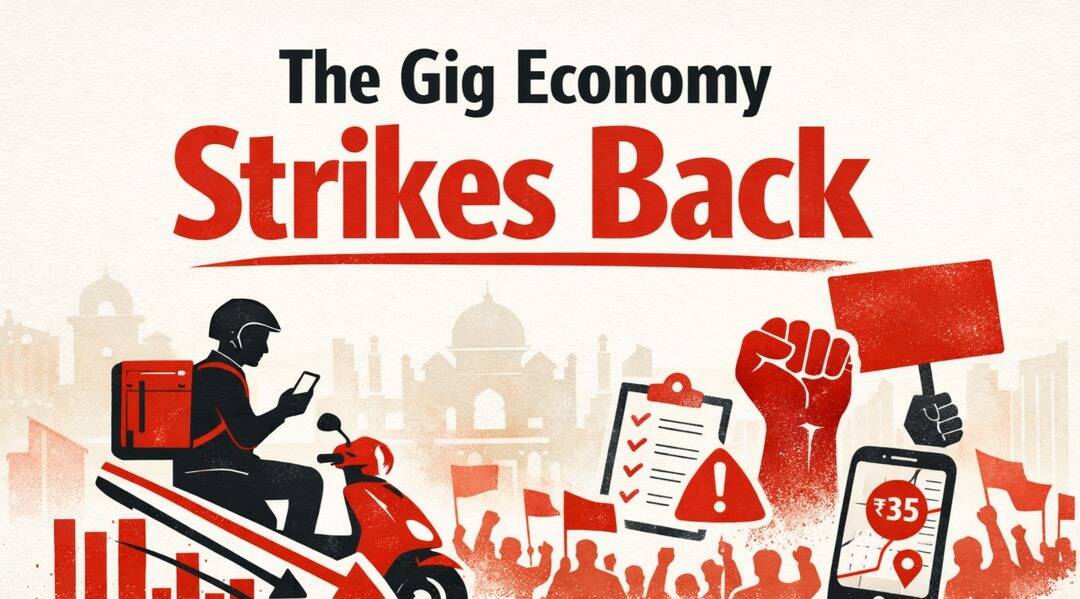
Indian gig economy strikes back, exposing a broken model
The Indian gig economy, which has been on a rapid growth trajectory in recent years, has hit a roadblock. In December, around 40,000 delivery workers joined nationwide strikes, disrupting 50–60% of orders in several cities. The striking workers, who are the backbone of the gig economy, cited low and unstable pay, strict app control, and weak protections as the reasons for their protests. As companies defend their growth and politicians intervene, the protests have highlighted a widening gap between convenience and fairness in India’s digital jobs.
The gig economy, which includes companies such as Zomato, Swiggy, and Uber, has been hailed as a revolutionary force that has transformed the way Indians live, work, and interact with each other. With the tap of a button, Indians can now order food, book a ride, or get their groceries delivered to their doorstep. However, behind the convenience and glamour of the gig economy lies a harsh reality. The workers who power this economy are often exploited, underpaid, and denied basic rights and protections.
The recent strikes by delivery workers are a testament to the growing discontent among gig economy workers. The workers, who are classified as “independent contractors” rather than employees, are not entitled to basic benefits such as minimum wage, social security, and healthcare. They are also subject to strict app control, which dictates their working hours, pay, and performance metrics. Any deviation from the app’s rules can result in penalties, fines, and even termination of their contracts.
The low and unstable pay is another major concern for gig economy workers. Despite the high demand for their services, many workers struggle to make ends meet. They are often paid on a per-delivery basis, which means that their earnings are directly tied to the number of deliveries they make. However, the payment per delivery is often meager, and workers have to bear the costs of fuel, maintenance, and other expenses out of their own pockets.
The strict app control and low pay have created a culture of fear and insecurity among gig economy workers. Many workers are afraid to speak out against the companies or demand better working conditions, fearing that they will be penalized or terminated. The lack of job security and benefits has also made it difficult for workers to plan for their future or provide for their families.
The protests by delivery workers have sparked a wider debate about the future of the gig economy in India. While companies such as Zomato and Swiggy have defended their business models, citing the flexibility and autonomy that they offer to workers, many experts argue that the current model is unsustainable and exploitative. The Indian government has also intervened, with some politicians calling for greater regulation and protection for gig economy workers.
The Indian government’s response to the gig economy strikes has been mixed. On the one hand, the government has acknowledged the need for greater regulation and protection for gig economy workers. However, on the other hand, the government has also been keen to promote the growth of the gig economy, citing its potential to create jobs and stimulate economic growth.
The gig economy strikes have also highlighted the need for greater awareness and education about workers’ rights and protections. Many gig economy workers are unaware of their rights and entitlements, and are often misled by companies about their status and benefits. The strikes have sparked a wider conversation about the need for greater transparency and accountability in the gig economy, and the importance of protecting workers’ rights and interests.
In conclusion, the Indian gig economy strikes have exposed a broken model that prioritizes convenience and growth over fairness and justice. The protests have highlighted the need for greater regulation, protection, and awareness about workers’ rights and entitlements. As the gig economy continues to grow and evolve, it is essential that companies, governments, and workers come together to create a more sustainable and equitable model that benefits all stakeholders.
The Indian gig economy has the potential to create millions of jobs and stimulate economic growth, but it is essential that this growth is inclusive and sustainable. The strikes by delivery workers are a wake-up call for companies, governments, and workers to come together and create a better future for all. By prioritizing fairness, justice, and workers’ rights, we can create a gig economy that is not only convenient and efficient but also equitable and sustainable.
Source:
https://ascendants.in/industry_events/indian-gig-economy-strikes-platforms-policy/
About the Author