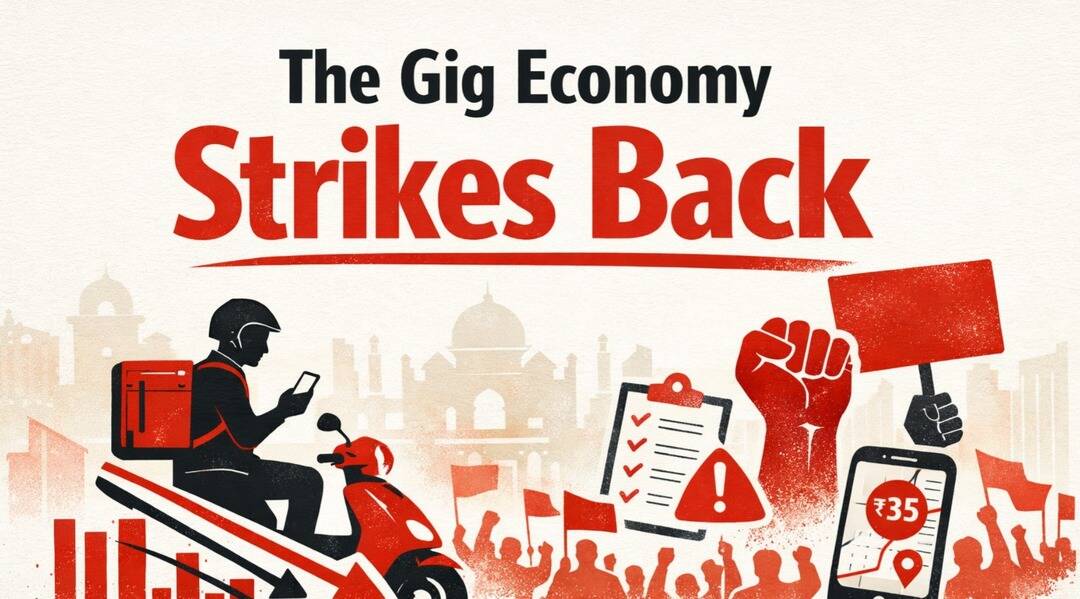
Indian gig economy strikes back, exposing a broken model
The Indian gig economy, which has been touted as a revolutionary force in the country’s job market, is facing a major crisis. In December, around 40,000 delivery workers joined nationwide strikes, disrupting 50–60% of orders in several cities. The strike, which was one of the largest of its kind, highlighted the growing discontent among gig workers who are demanding better pay, more job security, and greater protections.
The strike was called by various worker unions and associations, who cited low and unstable pay, strict app control, and weak protections as the main reasons for the protest. The workers, who are employed by companies such as Zomato, Swiggy, and Uber Eats, among others, claimed that they were being exploited by the platforms, which were prioritizing growth and profits over their welfare.
The protests, which were held in several cities across the country, including Delhi, Mumbai, and Bangalore, brought attention to the plight of gig workers, who are often seen as the backbone of the Indian gig economy. The workers, who are mostly migrants from rural areas, have been drawn to the gig economy by the promise of flexible work hours and decent pay. However, the reality on the ground is far from ideal.
According to the workers, the pay is often low and unpredictable, with many earning less than Rs 15,000 per month. The workers also complained about the strict control exercised by the platforms, which dictate their work hours, pay, and even the routes they take. The lack of job security and benefits, such as health insurance and paid leave, has also been a major concern for the workers.
The strike has brought attention to the widening gap between convenience and fairness in India’s digital jobs. While the gig economy has made it easier for people to order food, hail a taxi, or get groceries delivered to their doorstep, it has also created a class of workers who are exploited and marginalized.
The companies, which have been defending their business models, claim that they are providing opportunities for people to earn a living and gain economic independence. However, the workers argue that the companies are prioritizing growth and profits over their welfare, and that the business model is unsustainable in the long term.
The government, which has been watching the developments closely, has intervened in the matter. The labor ministry has called a meeting with the companies and the worker unions to discuss the issues and find a solution. The government has also announced plans to regulate the gig economy, with the aim of providing better protections and benefits to the workers.
The strike has also highlighted the need for a more nuanced understanding of the gig economy and its impact on workers. While the gig economy has created new opportunities for employment and entrepreneurship, it has also raised concerns about job security, pay, and benefits. The strike has shown that the gig economy is not just about convenience and flexibility, but also about fairness and justice.
As the Indian gig economy continues to grow and evolve, it is essential to address the concerns of the workers and create a more sustainable and equitable business model. The companies, the government, and the worker unions must work together to create a framework that provides better pay, job security, and benefits to the workers.
In the end, the strike has shown that the Indian gig economy is not just a collection of platforms and apps, but a complex ecosystem that involves human beings who deserve to be treated with dignity and respect. As the gig economy continues to shape the future of work in India, it is essential to prioritize fairness, justice, and sustainability over convenience and growth.
The Indian gig economy strikes back, exposing a broken model, is a wake-up call for all stakeholders involved. It is a reminder that the gig economy is not just about technology and innovation, but also about people and their lives. As we move forward, it is essential to create a gig economy that is fair, just, and sustainable for all.
News Source: https://ascendants.in/industry_events/indian-gig-economy-strikes-platforms-policy/
About the Author