Indian gig economy strikes back, exposing a broken model
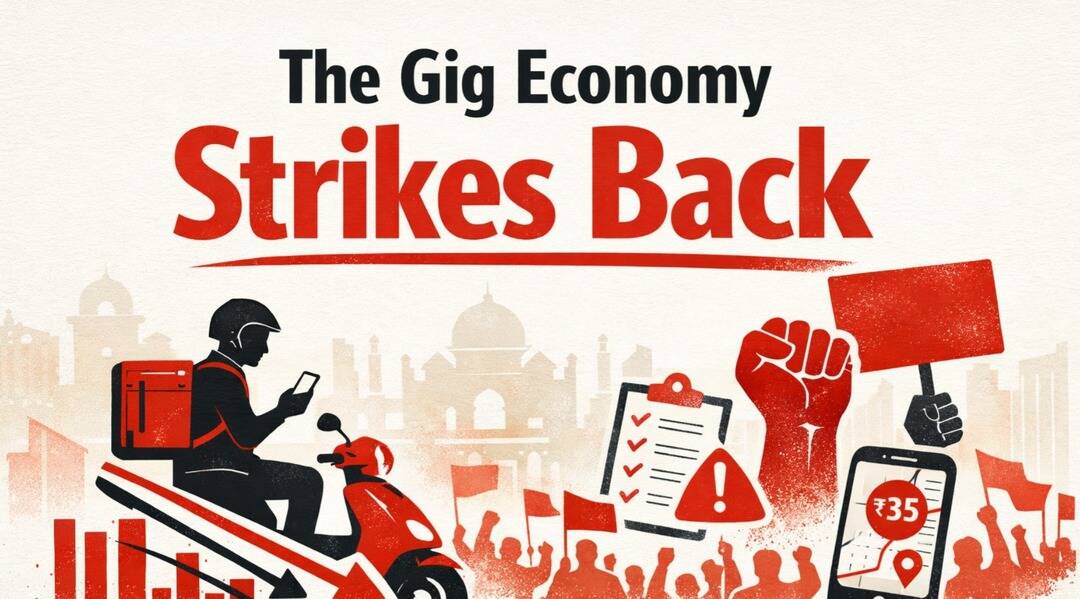
The Indian gig economy has been a poster child for innovation and disruption, with companies like Zomato, Swiggy, and Ola changing the way Indians live, work, and interact with each other. However, beneath the surface of this shiny new world lies a complex web of issues that have been simmering for a while. In December, these issues came to a head when around 40,000 delivery workers joined nationwide strikes, disrupting 50–60% of orders in several cities. The strikes, which were organized by various worker unions and associations, highlighted the deep-seated problems that plague the Indian gig economy.
At the heart of the strikes were issues related to low and unstable pay, strict app control, and weak protections for workers. Delivery workers, who are the backbone of the food delivery and ride-hailing industries, have been complaining about the poor working conditions and lack of job security for a long time. With the rise of the gig economy, these workers have been forced to work long hours for minimal pay, with little to no benefits or protection. The situation has become so dire that many workers have been forced to work for multiple platforms just to make ends meet.
One of the main grievances of the striking workers was the low pay. With the rise of competition in the food delivery and ride-hailing spaces, companies have been forced to cut prices to attract customers. However, this has come at the cost of worker wages, which have been consistently decreasing over the past few years. Many workers have reported earning as little as ₹10-15 per delivery, which is barely enough to cover the cost of fuel and maintenance for their vehicles. The situation is even worse for workers who are employed by third-party vendors, who often have to pay a significant portion of their earnings to the vendor as commission.
Another issue that has been plaguing workers is the strict app control exercised by companies. The algorithms used by food delivery and ride-hailing companies are designed to maximize efficiency and minimize costs, but they often do so at the expense of worker welfare. For example, many workers have reported being penalized for not accepting deliveries or rides, even if they are not in a position to do so. This has led to a culture of fear and anxiety among workers, who are constantly worried about being deactivated or penalized by the platform.
The lack of protections for workers is another major issue that has been highlighted by the strikes. Unlike traditional employees, gig workers are not entitled to benefits like health insurance, paid leave, or pension. They are also not protected by labor laws, which makes it difficult for them to organize and negotiate with companies. The situation is even worse for workers who are injured on the job, who often have to bear the cost of medical treatment themselves.
The strikes have sparked a heated debate about the future of the gig economy in India. While companies have defended their growth and expansion, politicians have intervened to try and resolve the issue. However, the protests have highlighted a widening gap between convenience and fairness in India’s digital jobs. As the gig economy continues to grow and expand, it is essential that companies and policymakers prioritize the welfare and dignity of workers.
One possible solution to the problem is to implement regulations that protect the rights of gig workers. This could include laws that mandate minimum wages, benefits, and protections for workers, as well as measures to prevent companies from exploiting workers through strict app control. Another solution is to promote collective bargaining and unionization among workers, which would give them a stronger voice in negotiations with companies.
Ultimately, the strikes by Indian gig workers are a wake-up call for companies and policymakers to re-examine the model of the gig economy. While the convenience and flexibility offered by platforms like Zomato and Ola are undeniable, they must be balanced against the need for fairness and dignity for workers. As the Indian economy continues to grow and evolve, it is essential that we prioritize the welfare and well-being of all workers, including those in the gig economy.
In conclusion, the Indian gig economy is at a crossroads. The strikes by delivery workers have highlighted the deep-seated problems that plague the industry, from low pay to strict app control. As companies and policymakers respond to the crisis, it is essential that they prioritize the welfare and dignity of workers. The future of the gig economy in India depends on it.
News Source: https://ascendants.in/industry_events/indian-gig-economy-strikes-platforms-policy/
About the Author