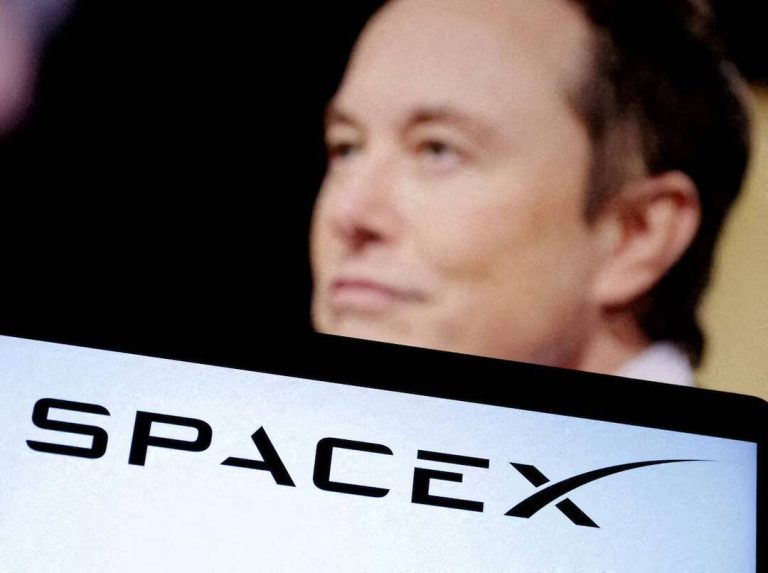
Elon Musk’s SpaceX delays Mars plans for 2027 Moon landing: WSJ
The space industry has been abuzz with excitement over the past few years, with numerous private companies and government agencies working towards establishing a human presence in space. One of the most ambitious players in this field is Elon Musk’s SpaceX, which has been working towards sending humans to Mars for several years. However, in a recent development, the company has announced that it is delaying its plans to launch a trip to Mars in order to focus on its Moon mission.
According to a report by the Wall Street Journal, SpaceX has informed its investors that it is targeting March 2027 for a lunar landing without astronauts on board. This news comes as a surprise to many, as Musk had previously stated that his company was working towards sending humans to Mars by the mid-2020s. However, it appears that the company has decided to prioritize its Moon mission, at least for the time being.
The decision to delay the Mars mission is likely due to the numerous technical and logistical challenges that SpaceX is facing in its efforts to send humans to the Red Planet. Establishing a human presence on Mars is a highly complex and ambitious undertaking, requiring significant advances in areas such as propulsion systems, life support systems, and radiation protection. While SpaceX has made significant progress in these areas, it is likely that the company has determined that it needs more time to develop and test the necessary technologies before embarking on a mission to Mars.
In contrast, the Moon is a much more accessible and familiar destination, with NASA having sent numerous manned missions to the lunar surface in the past. SpaceX’s decision to focus on the Moon mission may be driven by a desire to gain experience and develop the necessary capabilities before attempting a more ambitious mission to Mars.
The news of the delayed Mars mission comes on the heels of another significant development for SpaceX. Earlier this week, Musk announced that he was merging SpaceX with his AI start-up xAI into one entity worth $1.25 trillion. This move is seen as a major consolidation of Musk’s business interests, and may have significant implications for the future of the space industry.
The merger between SpaceX and xAI is likely to have a major impact on the development of artificial intelligence and its applications in space exploration. Musk has long been a proponent of the potential of AI to transform numerous industries, including space exploration. By combining the resources and expertise of SpaceX and xAI, Musk may be able to accelerate the development of AI-powered technologies that can support the company’s space missions.
The delayed Mars mission and the merger between SpaceX and xAI are just the latest developments in what is shaping up to be a highly exciting and dynamic year for the space industry. As private companies and government agencies continue to push the boundaries of space exploration, we can expect to see numerous significant advancements and achievements in the months and years to come.
One of the key implications of SpaceX’s decision to delay its Mars mission is that it may give other companies and agencies an opportunity to take the lead in the pursuit of establishing a human presence on the Red Planet. NASA, for example, has been working towards sending humans to Mars in the 2030s, and may be able to accelerate its plans in light of SpaceX’s delayed timeline.
Another company that may be able to capitalize on SpaceX’s delay is Blue Origin, the private space company founded by Jeff Bezos. Blue Origin has been working towards establishing a human presence in space, and has already made significant progress in developing the necessary technologies and capabilities. With SpaceX’s Mars mission delayed, Blue Origin may be able to seize the initiative and establish itself as a leader in the pursuit of sending humans to Mars.
In conclusion, the news that SpaceX is delaying its plans to launch a trip to Mars is a significant development that is likely to have major implications for the space industry. While the company’s decision to focus on its Moon mission may be seen as a setback by some, it is likely that the experience and capabilities gained from this mission will ultimately support the company’s long-term goals of establishing a human presence on Mars.
As the space industry continues to evolve and mature, we can expect to see numerous significant advancements and achievements in the months and years to come. With private companies and government agencies working together to push the boundaries of space exploration, the possibilities for what can be achieved are endless.
News Source: https://www.reuters.com/science/spacex-delays-mars-plans-focus-moon-wsj-reports-2026-02-06/
About the Author