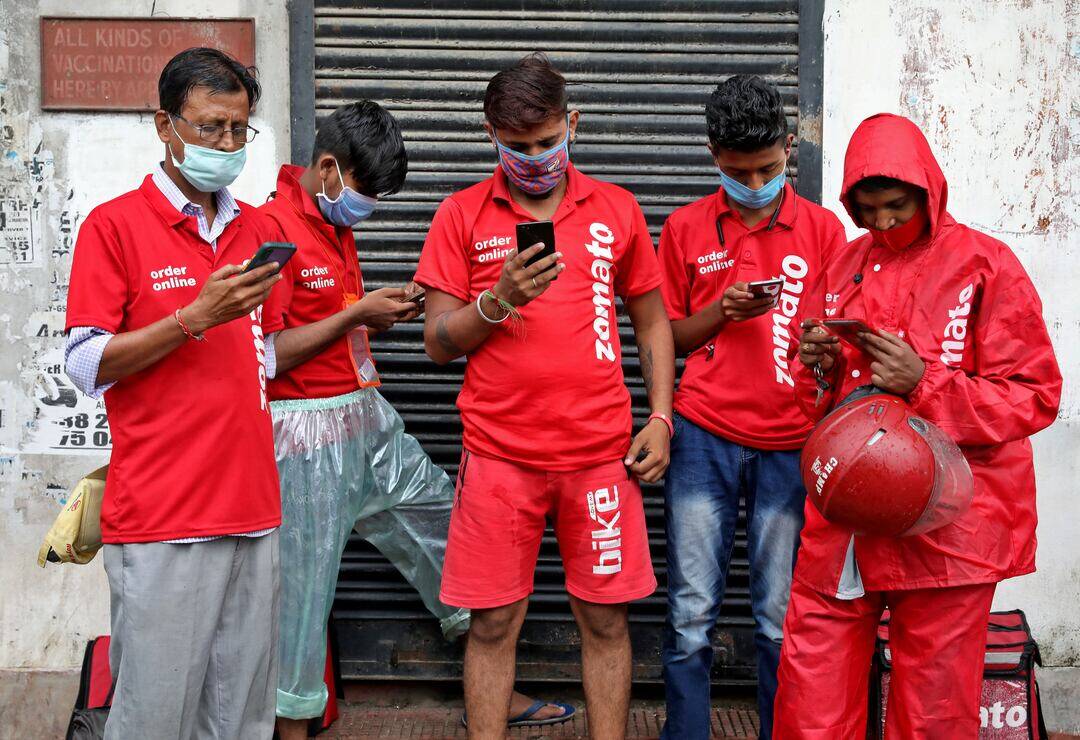
Deepinder claims issue with gig economy is it exposed class divide, says ‘We tip awkwardly’
The gig economy has been a topic of discussion for many years, with proponents arguing that it provides flexibility and opportunities for workers, while critics argue that it perpetuates inequality and exploitation. Recently, billionaire Deepinder Goyal weighed in on the issue, claiming that the problem with the gig economy is not its inherent structure, but rather the fact that it has exposed the prevailing class divide in society.
According to Goyal, the gig economy has brought to light the stark contrast between the haves and have-nots, making it impossible for the consuming class to ignore the plight of the working class. “Suddenly, the poor aren’t hidden away,” he said. “Now, every doorbell is a reminder of systemic inequality.” This statement highlights the fact that the gig economy has made the invisible visible, forcing people to confront the harsh realities of economic inequality.
Goyal’s comments suggest that the gig economy has disrupted the social norms that previously allowed people to ignore or downplay the issue of class divide. By bringing workers into our homes and neighborhoods, the gig economy has made it impossible to pretend that the problem doesn’t exist. As Goyal put it, “We aren’t just debating economics, we’re confronting guilt.” This guilt is a result of the fact that we are now face-to-face with the consequences of our actions, and the knowledge that our convenience comes at a cost to someone else.
One of the most striking aspects of Goyal’s comments is his observation that “we tip awkwardly.” This phrase captures the essence of the problem, which is that we are unsure of how to respond to the inequality that is staring us in the face. We know that the workers who are delivering our food, driving us around, and cleaning our homes are not being paid a living wage, but we don’t know how to fix the problem. So, we tip them, but it’s an awkward gesture, a attempt to assuage our guilt without really addressing the underlying issue.
The fact that we tip awkwardly is a symptom of a larger problem, which is that inequality is no longer abstract. It’s not just something that we read about in the news or see in a distant land. It’s right here, in our communities, in our homes. We can’t escape it, and that’s what makes it so uncomfortable. As Goyal said, “Inequality is no longer abstract,” and that’s what makes the gig economy so problematic.
The gig economy has been hailed as a revolutionary force, one that has disrupted traditional industries and created new opportunities for workers. But, as Goyal’s comments suggest, it has also exposed the dark underbelly of our society. It has shown us that, despite our progress and prosperity, we still have a long way to go in terms of achieving true equality.
So, what’s the solution to this problem? How can we address the class divide that the gig economy has exposed? The answer is not simple, but it starts with acknowledging the problem and taking responsibility for our actions. We need to recognize that the gig economy is not just an economic issue, but a social and moral one as well. We need to think about the impact that our actions have on others, and we need to be willing to make changes to create a more just and equitable society.
This might involve advocating for policies that protect workers’ rights, such as a living wage, benefits, and job security. It might involve supporting companies that prioritize fairness and equality, and avoiding those that do not. It might also involve educating ourselves and others about the issues surrounding the gig economy, and working to create a more informed and empathetic public discourse.
Ultimately, the problem with the gig economy is not the economy itself, but rather the society that it reflects. As Goyal said, the issue is not just about economics, but about confronting our own guilt and taking responsibility for our actions. By acknowledging the class divide and working to address it, we can create a more just and equitable society, one that values the dignity and worth of all workers, regardless of their occupation or income level.
News source: https://x.com/deepigoyal/status/2007030873711927381
About the Author