Deepinder claims issue with gig economy is it exposed class divide, says ‘We tip awkwardly’
The gig economy, which has been a subject of debate in recent years, has been scrutinized by many for its treatment of workers and the impact it has on the economy as a whole. However, billionaire Deepinder Goyal has offered a unique perspective on the issue, claiming that the problem with the gig economy is not its inherent structure, but rather the fact that it has brought the prevailing class divide to light. According to Goyal, the gig economy has made it impossible for the consuming class to ignore the existence of the working class, forcing them to confront the harsh realities of systemic inequality.
Goyal’s statement, which has sparked a heated debate on social media, highlights the uncomfortable truth that the gig economy has exposed. “Suddenly, the poor aren’t hidden away,” he said. “Now, every doorbell is a reminder of systemic inequality.” This poignant statement underscores the fact that the gig economy has made it impossible for people to turn a blind eye to the struggles of the working class. With the rise of food delivery and ride-hailing services, the working class is no longer invisible, and their presence is felt in every aspect of our daily lives.
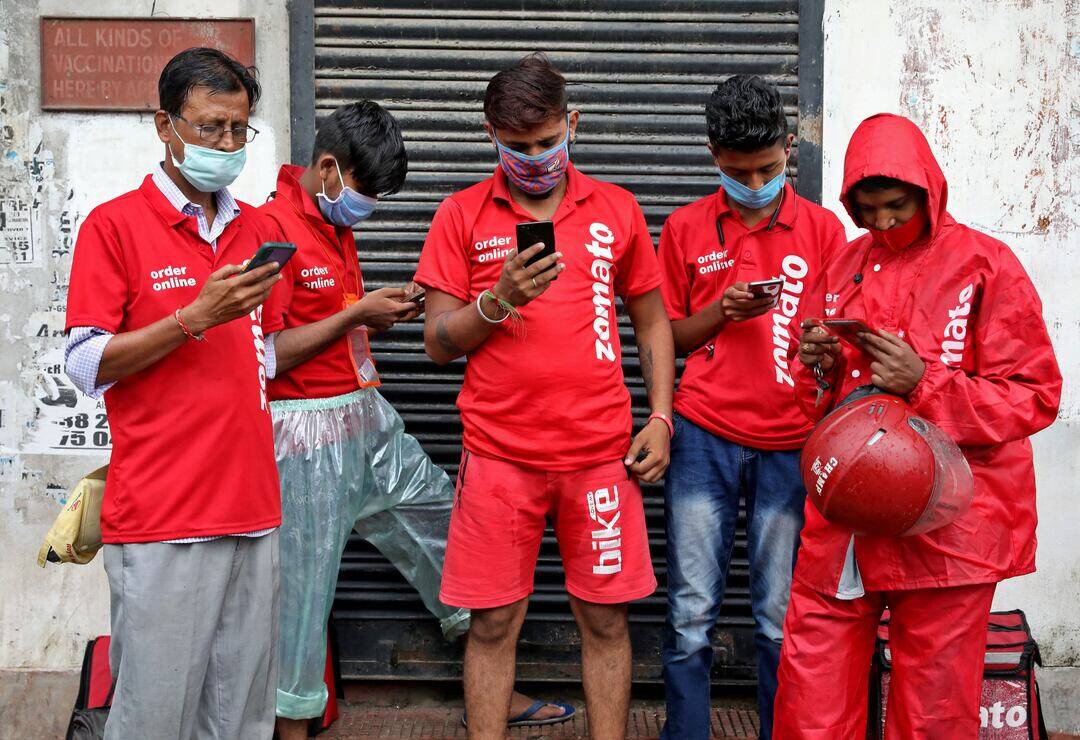
The gig economy has indeed brought about a significant change in the way we interact with the working class. With the advent of services like Uber, Ola, and Zomato, we are constantly reminded of the people who work behind the scenes to make our lives easier. However, this increased visibility has also brought about a sense of discomfort, as we are forced to confront the harsh realities of income inequality. As Goyal so aptly put it, “We aren’t just debating economics, we’re confronting guilt.”
One of the most striking aspects of Goyal’s statement is his observation that we tip awkwardly. This simple act of tipping has become a symbol of our awkwardness in dealing with the working class. We tip because we feel guilty about the low wages that these workers are paid, and we tip because we want to alleviate our own guilt. However, this act of tipping is also a reminder that we are not doing enough to address the systemic issues that lead to income inequality. As Goyal said, “We tip awkwardly…because inequality is no longer abstract.”
The gig economy has indeed made inequality less abstract, and more tangible. We can no longer ignore the fact that the people who deliver our food, drive us around, and clean our homes are struggling to make ends meet. The gig economy has humanized the working class, and has forced us to confront the harsh realities of income inequality. However, this increased awareness has also brought about a sense of responsibility, as we are forced to confront our own role in perpetuating these inequalities.
So, what can we do to address these inequalities? The first step is to acknowledge that the gig economy is not the problem, but rather a symptom of a larger issue. The gig economy has exposed the class divide that has always existed, but has been hidden from view. By acknowledging this divide, we can begin to work towards creating a more equitable society, where everyone has access to fair wages, benefits, and job security.
The second step is to demand more from the companies that operate in the gig economy. These companies have a responsibility to ensure that their workers are paid fairly, and that they have access to benefits and job security. We, as consumers, also have a responsibility to demand more from these companies, and to support those that prioritize the well-being of their workers.
Finally, we need to recognize that the gig economy is not just an economic issue, but also a social one. It is a reminder that we are not just individuals, but also members of a larger society. By acknowledging this, we can begin to work towards creating a more compassionate and equitable society, where everyone has access to the same opportunities and resources.
In conclusion, Deepinder Goyal’s statement has highlighted the uncomfortable truth that the gig economy has exposed. The gig economy has brought the prevailing class divide to light, forcing us to confront the harsh realities of systemic inequality. As Goyal so aptly put it, “We tip awkwardly…because inequality is no longer abstract.” By acknowledging this inequality, and by working towards creating a more equitable society, we can begin to address the systemic issues that lead to income inequality.
News source: https://x.com/deepigoyal/status/2007030873711927381
About the Author