Deepinder claims issue with gig economy is it exposed class divide, says ‘We tip awkwardly’
The gig economy has been a topic of discussion for many years, with its impact on workers, consumers, and the economy as a whole being debated by experts and stakeholders. Recently, billionaire Deepinder Goyal, the founder of Zomato, weighed in on the issue, offering a unique perspective on the problems plaguing the gig economy. According to Goyal, the main issue with the gig economy is not its economic model or the treatment of workers, but rather the fact that it has exposed the prevailing class divide in society.
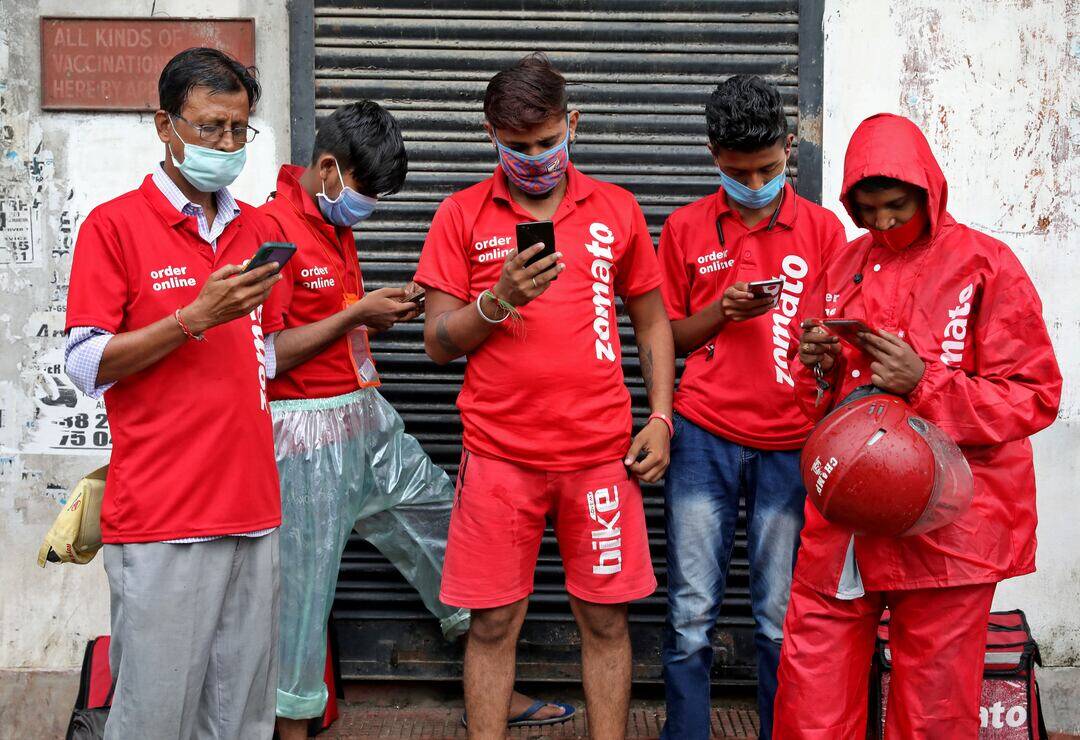
Goyal’s comments were made in a recent post, where he stated that the gig economy has brought to light the systemic inequality that exists in our society. He noted that in the past, the poor and marginalized were often hidden away from the consuming class, but the gig economy has changed that. With the rise of food delivery and ride-hailing services, workers from lower socio-economic backgrounds are now visible and interacting with the consuming class on a daily basis.
“Suddenly, the poor aren’t hidden away,” Goyal said. “They’re at our doorsteps, delivering food, driving us around. Now, every doorbell is a reminder of systemic inequality.” This visibility, according to Goyal, has made the issue of class divide more apparent and uncomfortable for many people. It has forced consumers to confront the reality of the economic disparities that exist in their communities and to question their own role in perpetuating these inequalities.
Goyal also noted that the gig economy has made it difficult for people to ignore the issue of class divide. “We aren’t just debating economics, we’re confronting guilt,” he said. “We tip awkwardly, not just because we’re unsure of the right amount, but because inequality is no longer abstract. It’s right in front of us, and we don’t know how to deal with it.” This awkwardness, according to Goyal, is a result of the gig economy’s ability to expose the class divide and make it a personal issue for consumers.
The issue of tipping is a good example of this awkwardness. When consumers are faced with the decision of how much to tip a delivery worker or driver, they are forced to consider the worker’s economic situation and the value of their labor. This can be an uncomfortable experience, especially for those who are not used to interacting with workers from lower socio-economic backgrounds. The act of tipping becomes a way of acknowledging the economic disparities that exist in society, and it can be a difficult thing to do, especially when the amount of the tip is uncertain.
Goyal’s comments highlight the complex and multifaceted nature of the gig economy. While it has created new opportunities for workers and consumers, it has also exposed deep-seated issues of class divide and economic inequality. The gig economy has made it clear that these issues are not just abstract concepts, but rather concrete problems that affect real people and communities.
The implications of Goyal’s comments are significant. They suggest that the gig economy is not just an economic system, but also a social and cultural phenomenon that reflects and shapes our values and attitudes towards work, class, and inequality. The fact that the gig economy has exposed the class divide and made it a personal issue for consumers is a significant development, and it has the potential to lead to greater awareness and action on issues of economic inequality.
In conclusion, Deepinder Goyal’s comments on the gig economy and class divide offer a unique perspective on the issues plaguing this economic system. By highlighting the ways in which the gig economy has exposed the prevailing class divide in society, Goyal has shed light on the complex and multifaceted nature of this issue. His comments also underscore the need for greater awareness and action on issues of economic inequality, and they suggest that the gig economy has the potential to be a catalyst for positive change.
Source: https://x.com/deepigoyal/status/2007030873711927381
About the Author