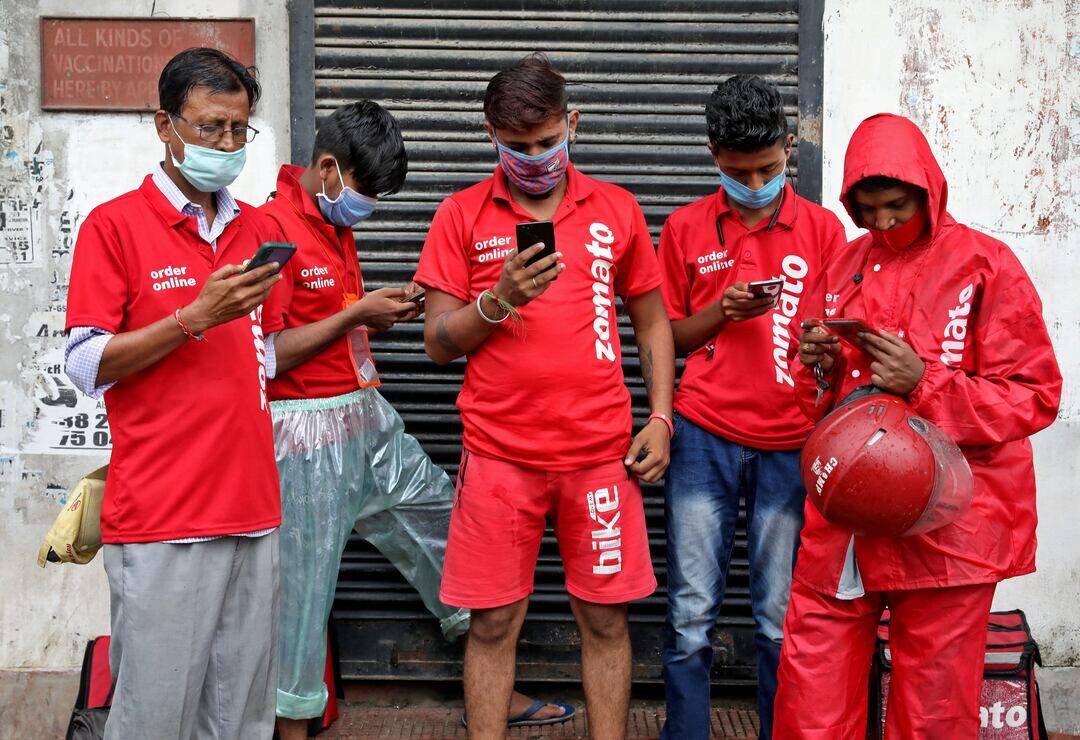
Deepinder claims issue with gig economy is it exposed class divide, says ‘We tip awkwardly’
The gig economy, which has revolutionized the way we work and live, has been a subject of intense debate in recent years. While it has provided numerous opportunities for people to earn a living and has made our lives more convenient, it has also been criticized for perpetuating inequality and exploiting workers. Recently, billionaire Deepinder Goyal, the founder of Zomato, weighed in on the issue, claiming that the problem with the gig economy is not its inherent nature, but the fact that it has exposed the prevailing class divide in our society.
According to Goyal, the gig economy has brought to light the stark reality of class inequality by ensuring that workers are seen by the consuming class. “Suddenly, poor aren’t hidden away,” he said. “Now, every doorbell is a reminder of systemic inequality.” This statement highlights the fact that the gig economy has made it impossible for us to ignore the existence of poverty and inequality in our society. With the rise of food delivery and ride-hailing services, we are constantly reminded of the people who are working behind the scenes to make our lives easier, and the fact that they are often struggling to make ends meet.
Goyal’s statement also sheds light on the psychological impact of the gig economy on the consuming class. “We aren’t just debating economics, we’re confronting guilt,” he said. This guilt is a result of the fact that we are constantly reminded of the inequality that exists in our society, and the fact that we are benefiting from the labor of people who are often poorly paid and exploited. This guilt can be uncomfortable, and it can lead to awkward interactions between the consuming class and the workers who are serving them.
One of the most striking aspects of Goyal’s statement is his comment on tipping. “We tip awkwardly…because inequality is no longer abstract,” he said. This statement highlights the fact that tipping has become a way for us to alleviate our guilt and to make up for the fact that the workers who are serving us are often poorly paid. However, this approach is problematic, as it does not address the root causes of inequality and exploitation. Instead, it perpetuates a system in which workers are forced to rely on the charity of their customers in order to make a living wage.
The issue of tipping is a complex one, and it is closely tied to the broader issue of inequality in the gig economy. On the one hand, tipping can provide a way for workers to earn a higher income and to be recognized for their hard work. On the other hand, it can also perpetuate a system in which workers are forced to rely on the charity of their customers, rather than being paid a fair wage by their employers. This approach can be problematic, as it can create a power imbalance between workers and customers, and it can make it difficult for workers to advocate for their rights and to organize for better working conditions.
In order to address the issue of inequality in the gig economy, it is essential that we take a more nuanced approach. Rather than simply relying on tipping to make up for low wages, we need to work towards creating a system in which workers are paid a fair wage and are treated with dignity and respect. This will require a fundamental transformation of the way that we think about work and labor, and it will require us to confront the systemic inequalities that are perpetuated by the gig economy.
Ultimately, Goyal’s statement highlights the need for a more nuanced and thoughtful approach to the gig economy. Rather than simply accepting the status quo, we need to work towards creating a system that is more equitable and just. This will require us to confront our own guilt and privilege, and to work towards creating a world in which all workers are treated with dignity and respect.
In conclusion, the gig economy is a complex and multifaceted issue, and it is essential that we approach it with nuance and thoughtfulness. By recognizing the ways in which the gig economy perpetuates inequality and exploitation, we can work towards creating a more just and equitable system. As Goyal so eloquently put it, “We tip awkwardly…because inequality is no longer abstract.” It is time for us to confront this inequality head-on, and to work towards creating a world in which all workers are treated with the dignity and respect that they deserve.
News source: https://x.com/deepigoyal/status/2007030873711927381
About the Author