Deepinder claims issue with gig economy is it exposed class divide, says ‘We tip awkwardly’
The gig economy has been a topic of discussion for several years now, with many debating its merits and drawbacks. While some see it as a convenient and flexible way to earn a living, others argue that it perpetuates inequality and exploits workers. Recently, billionaire Deepinder Goyal weighed in on the issue, claiming that the problem with the gig economy is not its inherent structure, but rather the fact that it has brought the prevailing class divide to light.
According to Goyal, the gig economy has made it impossible for the consuming class to ignore the existence of the working class. “Suddenly, the poor aren’t hidden away,” he said. “Now, every doorbell is a reminder of systemic inequality.” This statement highlights the uncomfortable truth that the gig economy has forced us to confront the harsh realities of economic disparity.
Goyal’s comments suggest that the issue with the gig economy is not just about economics, but also about the guilt and discomfort that comes with acknowledging the vast inequality that exists in our society. “We aren’t just debating economics, we’re confronting guilt,” he said. This guilt is palpable in the way we interact with gig workers, particularly when it comes to tipping.
Goyal’s statement, “We tip awkwardly…because inequality is no longer abstract,” is a poignant observation about the way we respond to the economic disparities that the gig economy has laid bare. Tipping has become a way for us to assuage our guilt, to make up for the fact that we are paying workers a pittance for their labor. However, this gesture is often performed with a sense of awkwardness, as if we are trying to make amends for a system that is fundamentally flawed.
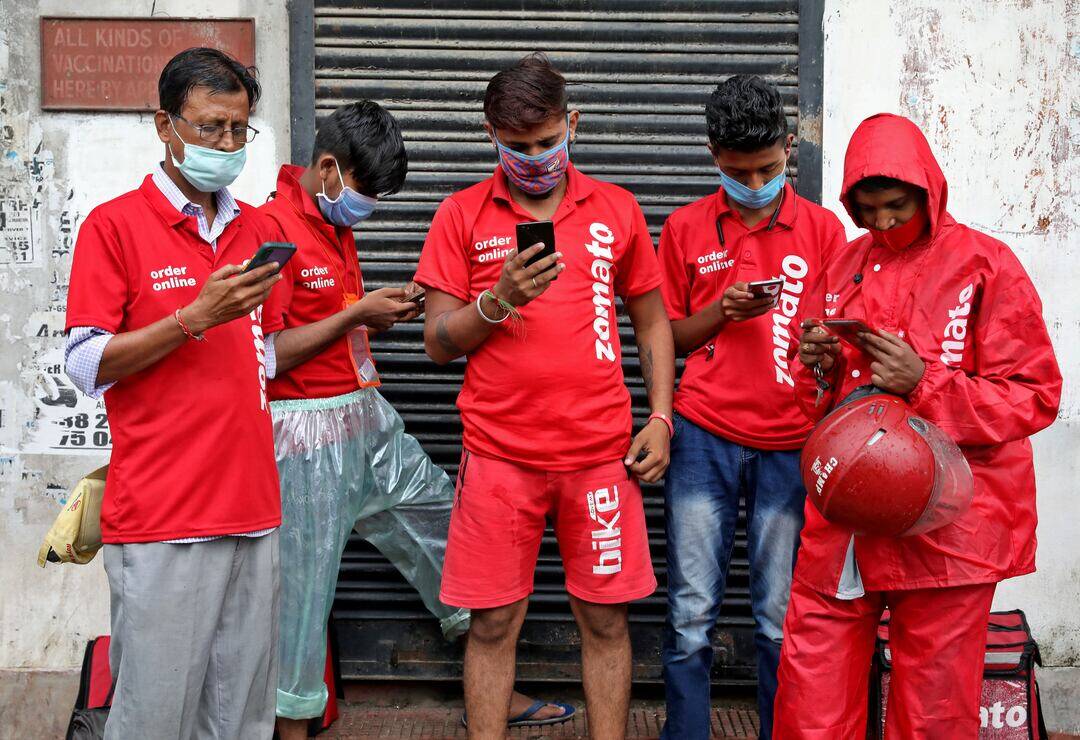
The gig economy has indeed made it difficult to ignore the class divide. With the rise of food delivery and ride-hailing services, we are constantly reminded of the people who are working behind the scenes to make our lives more convenient. We see them at our doorsteps, in our cars, and on our streets, and we are forced to confront the fact that they are not being paid a living wage.
This confrontation with inequality is uncomfortable, to say the least. It makes us question the values of our society and the way we treat our workers. It also makes us realize that the gig economy is not just a matter of personal choice, but also a reflection of the broader economic and social structures that govern our lives.
Goyal’s comments have sparked a necessary conversation about the gig economy and its impact on our society. They highlight the need for us to rethink our assumptions about work, class, and inequality. We need to ask ourselves whether the gig economy is a sustainable and equitable model for the future, or whether it is simply a way to perpetuate the existing power dynamics.
As we move forward, it is essential that we consider the human cost of the gig economy. We need to think about the workers who are struggling to make ends meet, who are working long hours for minimal pay, and who are often denied basic rights and benefits. We need to recognize that the gig economy is not just a matter of economics, but also a matter of social justice.
In conclusion, Deepinder Goyal’s comments about the gig economy are a timely reminder of the need to confront the class divide in our society. The gig economy has brought the prevailing inequality to light, and it is up to us to respond in a way that is just and equitable. We can start by recognizing the humanity of gig workers and advocating for their rights and dignity. We can also work towards creating a more sustainable and equitable model for the future, one that values the contributions of all workers, regardless of their background or occupation.
News Source: https://x.com/deepigoyal/status/2007030873711927381
About the Author